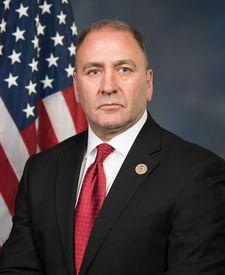
Official portrait of Clay Higgins
RepublicanU.S. House · LA-3

Clay Higgins

Louisiana · Official website · 202-225-2031
685
Positions recorded
119th Congress roll calls listing this member
18 of 685
Roll calls missed
Recorded "Not Voting" · House roll calls Jan 3, 2025 – Nov 12, 2026
39
Bills sponsored
119th Congress · Congress.gov
255
Bills cosponsored
119th Congress · Congress.gov

All figures are computed directly from the official House Clerk, senate.gov, and Congress.gov records for the 119th Congress. Methodology

Data last synced: votes Nov 17, 2026, 7:16 AM ET · bills Nov 17, 2026, 7:19 AM ET · floor remarks Nov 17, 2026, 8:56 AM ET · press releases Nov 17, 2026, 8:57 AM ET

119th CongressSponsored (39)Cosponsored (255)

H.R. 503Qualified Immunity Act of 2025

Progress: Introduction / referral onlyLatest action: Referred to the House Committee on the Judiciary.
119th CongressPolicy area: Civil Rights and Liberties, Minority Issues
  • CosponsorFeb 11, 2025
Official CRS summary
Official CRS summary (Introduced in House version) · Congress.gov(opens in a new tab)

This bill provides statutory authority for qualified immunity for law enforcement officers in civil cases involving constitutional violations.

Current law provides a statutory civil cause of action against state and local government actors (e.g., law enforcement officers) for violations of constitutional rights, also known as Section 1983 lawsuits. The Supreme Court has also found an implied cause of action against federal law enforcement officers in certain situations (e.g., Fourth Amendment violations), also known as Bivens lawsuits. However, under the judicial doctrine of qualified immunity, government officials performing discretionary duties are generally shielded from civil liability, unless their actions violate clearly established rights of which a reasonable person would have known.

The bill provides statutory authority for these principles with respect to law enforcement officers. Specifically, under the bill, law enforcement officers are entitled to qualified immunity if (1) at the time of the alleged violation, the constitutional right at issue was not clearly established or the state of the law was not sufficiently clear that every reasonable officer would have known that the conduct was unconstitutional; or (2) a court has held that the specific conduct at issue is constitutional.

The bill applies to federal, state, and local law enforcement officers. It also specifies that law enforcement agencies and local governments may not be held liable if their officers are entitled to qualified immunity.

Introduced Feb 11, 2025
Latest action Jan 16, 2025Congress.gov(opens in a new tab)GovInfo action history(opens in a new tab)Status checked Nov 13, 2026Record permalink

H.Con.Res. 10Emergency Border Control Resolution

Progress: Introduction / referral onlyLatest action: Referred to the House Committee on the Budget.
119th CongressPolicy area: Economics and Public Finance
  • Original cosponsorFeb 10, 2025
Official CRS summary
Official CRS summary (Introduced in House version) · Congress.gov(opens in a new tab)

This concurrent resolution establishes the congressional budget for the federal government for FY2025, sets forth budgetary levels for FY2026-FY2034, and provides reconciliation instructions for legislation that increases or decreases the deficit and increases the statutory debt limit by specified amounts.

The resolution recommends levels and amounts for FY2025-FY2034 for

  • federal revenues,
  • new budget authority,
  • budget outlays,
  • deficits (on-budget),
  • debt subject to limit,
  • debt held by the public, and
  • the major functional categories of spending.

The resolution includes reconciliation instructions that direct several House committees to submit legislation that will increase or decrease the deficit and increase the statutory debt limit by specified amounts. The committees must submit the legislation to the House Budget Committee by February 27, 2025.

(Under current law, reconciliation bills are considered by Congress using expedited legislative procedures that prevent a filibuster and restrict amendments in the Senate.)

Finally, the resolution specifies that it is the policy of this resolution that (1) federal spending levels should be restored to the levels that existed prior to the COVID-19 pandemic, adjusted to protect current Social Security and Medicare spending and reflect existing debt service obligations; and (2) it shall be the objective of the House to reach total budget outlays of $6.057 trillion or less this fiscal year.

Introduced Feb 10, 2025
Latest action Feb 10, 2025Congress.gov(opens in a new tab)GovInfo action history(opens in a new tab)Status checked Nov 13, 2026Record permalink

H.R. 1165Port Crane Security and Inspection Act of 2025

Progress: Other action recordedLatest action: Referred to the Subcommittee on Transportation and Maritime Security.
119th CongressPolicy area: Transportation and Public Works
  • Original cosponsorFeb 10, 2025
Official CRS summary
Official CRS summary (Introduced in House version) · Congress.gov(opens in a new tab)

This bill limits the operation of foreign cranes at U.S. ports. In general, foreign cranes are those that have information technology and operational technology components that (1) were manufactured by companies that are subject to the ownership, control, or influence of a country designated as a foreign adversary; and (2) connect to ports' cyber infrastructure.

Foreign cranes that are contracted for on or after the date of the bill's enactment may not operate at a U.S. port. Also, beginning five years after this bill is enacted, foreign cranes operating at U.S. ports may not use software or other technology manufactured by a company owned by a country designated as a foreign adversary.

Additionally, the Cybersecurity and Infrastructure Security Agency (CISA) must (1) inspect foreign cranes for potential security risks or threats before they are placed into operation, (2) assess the threat posed by security risks or threats of existing or newly constructed foreign cranes, and (3) take any crane that poses a security risk or threat offline until the crane can be certified as no longer being a risk or threat.

CISA must also report to Congress about security risks or threats posed by foreign cranes at U.S. ports.

Introduced Feb 10, 2025
Latest action Feb 10, 2025Congress.gov(opens in a new tab)GovInfo action history(opens in a new tab)Status checked Nov 13, 2026Record permalink

H.J.Res. 37Proposing an amendment to the Constitution of the United States to provide that Representatives shall be apportioned among the several States according to their respective numbers, counting the number of persons in each State who are citizens of the United States.

Progress: Introduction / referral onlyLatest action: Referred to the House Committee on the Judiciary.
119th CongressPolicy area: Congress
  • Original cosponsorFeb 6, 2025
Official CRS summary
Official CRS summary (Introduced in House version) · Congress.gov(opens in a new tab)

This joint resolution proposes a constitutional amendment to require that the seats in the House of Representatives be divided among the states based on their share of U.S. citizens rather than their share of the total U.S. population.

Introduced Feb 6, 2025
Latest action Feb 6, 2025Congress.gov(opens in a new tab)GovInfo action history(opens in a new tab)Status checked Nov 13, 2026Record permalink

H.R. 1000Cyber PIVOTT Act

Progress: Other action recordedLatest action: ASSUMING FIRST SPONSORSHIP - Mrs. Biggs (SC) asked unanimous consent that she may hereafter be considered as the first sponsor of H.R. 1000, a bill originally introduced by Representative Green (TN), for the purpose of adding cosponsors and requesting reprintings pursuant to clause 7 of rule XII. Agreed to without objection.
119th CongressPolicy area: Government Operations and Politics
  • Original cosponsorFeb 5, 2025
Introduced Feb 5, 2025
Latest action Sep 8, 2025Congress.gov(opens in a new tab)GovInfo action history(opens in a new tab)Status checked Nov 13, 2026Record permalink

H.R. 934Chinese Spy Balloon Assessment Act

Progress: Introduction / referral onlyLatest action: Referred to the House Committee on Armed Services.
119th CongressPolicy area: Armed Forces and National Security
  • Original cosponsorFeb 4, 2025
Official CRS summary
Official CRS summary (Introduced in House version) · Congress.gov(opens in a new tab)

This bill requires the Department of Defense to consult with the President and report on the effects on national security of surveillance conducted by China via the high-altitude surveillance balloon shot down in the United States in February 2023. The report must be submitted in an unclassified form, but may include a classified annex.

Introduced Feb 4, 2025
Latest action Feb 4, 2025Congress.gov(opens in a new tab)GovInfo action history(opens in a new tab)Status checked Nov 13, 2026Record permalink

H.R. 885Drug Cartel Terrorist Designation Act

Progress: Introduction / referral onlyLatest action: Referred to the House Committee on the Judiciary.
119th CongressPolicy area: International Affairs
  • Original cosponsorJan 31, 2025
Official CRS summary
Official CRS summary (Introduced in House version) · Congress.gov(opens in a new tab)

This bill directs the Department of State to designate four specified drug cartels as foreign terrorist organizations. (Among other things, such a designation allows the Department of the Treasury to require U.S. financial institutions to block transactions involving the organization.)

The four specified cartels in the bill are the Gulf Cartel, the Cartel Del Noreste, the Cartel de Sinaloa, and the Cartel de Jalisco Nueva Generacion.

The bill also requires the State Department to submit a detailed report on those four cartels and any other cartels it may identify. Based on this report, the State Department must designate as a foreign terrorist organization any such identified cartel (or faction thereof) that meets certain criteria for designation as a foreign terrorist organization.

The bill specifies that it may not be construed to expand eligibility for asylum.

Introduced Jan 31, 2025
Latest action Jan 31, 2025Congress.gov(opens in a new tab)GovInfo action history(opens in a new tab)Status checked Nov 13, 2026Record permalink

H.R. 850SHUSH Act

Progress: Introduction / referral onlyLatest action: Referred to the Committee on Ways and Means, and in addition to the Committee on the Judiciary, for a period to be subsequently determined by the Speaker, in each case for consideration of such provisions as fall within the jurisdiction of the committee concerned.
119th CongressPolicy area: Crime and Law Enforcement
  • Original cosponsorJan 31, 2025
Official CRS summary
Official CRS summary (Introduced in House version) · Congress.gov(opens in a new tab)

This bill removes silencers from regulation under certain federal statutes governing the sale, transfer, and possession of firearms.

Specifically, it removes silencers from the list of firearms subject to regulation (i.e., registration and licensing requirements) under the National Firearms Act (NFA). Additionally, it excludes a muffler or silencer from the list of firearms subject to regulation (e.g., background check requirements) under the Gun Control Act of 1968 (GCA).

Finally, the bill does the following:

  • preempts state or local laws that tax or regulate firearm silencers,
  • specifies that a person who lawfully acquires or possesses a silencer under provisions of the GCA meets the registration and licensing requirements of the NFA,
  • eliminates mandatory minimum prison terms for a crime of violence or drug trafficking offense in which a defendant uses or carries a firearm equipped with a silencer or muffler, and
  • permits active and retired law enforcement officers to carry a concealed silencer.
Introduced Jan 31, 2025
Latest action Jan 31, 2025Congress.gov(opens in a new tab)GovInfo action history(opens in a new tab)Status checked Nov 13, 2026Record permalink

H.R. 849No Regulation Through Litigation Act of 2025

Progress: Introduction / referral onlyLatest action: Referred to the House Committee on the Judiciary.
119th CongressPolicy area: Government Operations and Politics
  • Original cosponsorJan 31, 2025
Official CRS summary
Official CRS summary (Introduced in House version) · Congress.gov(opens in a new tab)

This bill specifies that a federal agency may not enter into a consent decree that exceeds the authority of the court that enters the order related to the decree. It also limits the inclusion of attorney fees or litigation costs in consent decrees or settlement agreements that result in a regulation or guidance document.

Introduced Jan 31, 2025
Latest action Jan 31, 2025Congress.gov(opens in a new tab)GovInfo action history(opens in a new tab)Status checked Nov 13, 2026Record permalink

H.R. 724CBO Show Your Work Act

Progress: Introduction / referral onlyLatest action: Referred to the House Committee on the Budget.
119th CongressPolicy area: Economics and Public Finance
  • Original cosponsorJan 24, 2025
Official CRS summary
Official CRS summary (Introduced in House version) · Congress.gov(opens in a new tab)

This bill requires the Congressional Budget Office (CBO) to make available to Congress and the public each fiscal model, policy model, and data preparation routine that the CBO uses to estimate the costs and other fiscal, social, or economic effects of legislation.

For each estimate of the costs and other fiscal effects of legislation, the CBO must also disclose, in a manner sufficient to permit replication by individuals not employed by the CBO, the data, programs, models, assumptions, and other details of the computations used to prepare the estimate.

For data that may not be disclosed, the CBO must make available to Congress and the public

  • a complete list of all data variables for the data;
  • descriptive statistics for all data variables for the data, to the extent that the descriptive statistics do not violate the rule against disclosure;
  • a reference to the statute requiring that the data not be disclosed; and
  • contact information for the individual or entity who has unrestricted access to the data.
Introduced Jan 24, 2025
Latest action Jan 24, 2025Congress.gov(opens in a new tab)GovInfo action history(opens in a new tab)Status checked Nov 13, 2026Record permalink

H.R. 722Life at Conception Act

Progress: Introduction / referral onlyLatest action: Referred to the House Committee on the Judiciary.
119th CongressPolicy area: Civil Rights and Liberties, Minority Issues
  • Original cosponsorJan 24, 2025
Official CRS summary
Official CRS summary (Introduced in House version) · Congress.gov(opens in a new tab)

This bill declares that the right to life guaranteed by the Constitution is vested in each human being at all stages of life, including the moment of fertilization, cloning, or other moment at which an individual comes into being.

Nothing in this bill shall be construed to authorize the prosecution of any woman for the death of her unborn child.

Introduced Jan 24, 2025
Latest action Jan 24, 2025Congress.gov(opens in a new tab)GovInfo action history(opens in a new tab)Status checked Nov 13, 2026Record permalink

H.R. 720Protecting Life in Health Savings Accounts Act

Progress: Introduction / referral onlyLatest action: Referred to the House Committee on Ways and Means.
119th CongressPolicy area: Taxation
  • Original cosponsorJan 24, 2025
Official CRS summary
Official CRS summary (Introduced in House version) · Congress.gov(opens in a new tab)

This bill excludes expenses paid for an abortion from qualified medical expenses eligible for reimbursement from certain tax-exempt savings accounts. (Some exceptions apply.)

Under the bill, amounts paid for an abortion, other than an excluded abortion, are not qualified medical expenses eligible for reimbursement from a health savings account, Archer medical savings account, health flexible spending arrangement, health reimbursement arrangement, or retiree health account.

The bill defines excluded abortion as any abortion (1) related to a pregnancy that is the result of rape or incest; or (2) performed because a woman is suffering from a physical disorder, injury, or illness (including a life-endangering physical condition caused by or arising from the pregnancy itself) that would, as certified by a physician, place the woman in danger of death if an abortion were not performed.

Introduced Jan 24, 2025
Latest action Jan 24, 2025Congress.gov(opens in a new tab)GovInfo action history(opens in a new tab)Status checked Nov 13, 2026Record permalink

H.R. 708SHIELD Against CCP Act

Progress: Passed / agreed in one chamberLatest action: Received in the Senate and Read twice and referred to the Committee on Homeland Security and Governmental Affairs.
119th CongressPolicy area: Immigration
  • Original cosponsorJan 23, 2025
Official CRS summary
Official CRS summary (Introduced in House version) · Congress.gov(opens in a new tab)

This bill requires the Department of Homeland Security (DHS) to form a working group tasked with duties related to countering terrorist, cybersecurity, border and port security, and transportation security threats posed to the United States by the Chinese Communist Party (CCP).

The working group must assess and annually report on current DHS efforts to counter the CCP’s (1) use of the U.S. immigration system, (2) economic and trade practices, and (3) support for illicit financial activity and trafficking controlled substances. The working group must terminate seven years after its establishment.

DHS must additionally carry out research and development on technologies and techniques for enhancing its security and situational awareness to these threats.

The Government Accountability Office must report on the implementation of this bill.

Introduced Jan 23, 2025
Latest action Mar 11, 2025Congress.gov(opens in a new tab)GovInfo action history(opens in a new tab)Status checked Nov 13, 2026Record permalink

H.R. 706DHS Biodetection Improvement Act

Progress: Passed / agreed in one chamberLatest action: Received in the Senate and Read twice and referred to the Committee on Homeland Security and Governmental Affairs.
119th CongressPolicy area: Government Operations and Politics
  • Original cosponsorJan 23, 2025
Official CRS summary
Official CRS summary (Introduced in House version) · Congress.gov(opens in a new tab)

This bill directs the Department of Homeland Security (DHS) to assess how it has utilized Department of Energy national laboratories and sites for research and development in carrying out DHS missions and to report to Congress a strategy for how DHS will conduct biodetection research and development in coordination with such laboratories and sites.

Introduced Jan 23, 2025
Latest action Mar 12, 2025Congress.gov(opens in a new tab)GovInfo action history(opens in a new tab)Status checked Nov 13, 2026Record permalink

H.R. 703Main Street Tax Certainty Act

Progress: Introduction / referral onlyLatest action: Referred to the House Committee on Ways and Means.
119th CongressPolicy area: Taxation
  • Original cosponsorJan 23, 2025
Official CRS summary
Official CRS summary (Introduced in House version) · Congress.gov(opens in a new tab)

This bill makes permanent the qualified business income (QBI) tax deduction.

Under current law, individuals, estates, and trusts may deduct the lower of (1) 20% of QBI from a qualified business, qualified real estate investment trust dividends, and qualified publicly traded partnership income; or (2) 20% of taxable income less net capital gain. (Some limitations apply.)

However, under current law, the QBI tax deduction expires after December 31, 2025.

Introduced Jan 23, 2025
Latest action Jan 23, 2025Congress.gov(opens in a new tab)GovInfo action history(opens in a new tab)Status checked Nov 13, 2026Record permalink

H.R. 685SAVE Moms and Babies Act of 2025

Progress: Introduction / referral onlyLatest action: Referred to the House Committee on Energy and Commerce.
119th CongressPolicy area: Health
  • Original cosponsorJan 23, 2025
Official CRS summary
Official CRS summary (Introduced in House version) · Congress.gov(opens in a new tab)

This bill prohibits the Food and Drug Administration (FDA) from approving any new drug (either as a brand-name drug or a generic) intended to terminate a pregnancy and imposes additional restrictions on such drugs that are already approved.

Under the bill, an already-approved drug intended to terminate a pregnancy may be dispensed to a patient only with a prescription. Furthermore, the FDA may not approve any labeling change that would authorize (1) using the drug after 70 days of gestation, or (2) dispensing the drug by any means other than in-person administration by the prescribing health care practitioner.

The FDA must also impose additional restrictions on such already-approved drugs, including by (1) requiring the prescribing health care practitioner to receive a special certification, (2) prohibiting the practitioner from also acting as the dispensing pharmacist, and (3) requiring the practitioner to have the ability to provide surgical intervention to the patient.

The bill also rescinds any investigational use exemption already granted to such a drug if the bill would have prohibited the FDA from granting the exemption. (Currently, the FDA may grant an exemption to certain market approval requirements if a drug is intended solely for use in safety and effectiveness investigations.)

Introduced Jan 23, 2025
Latest action Jan 23, 2025Congress.gov(opens in a new tab)GovInfo action history(opens in a new tab)Status checked Nov 13, 2026Record permalink

H.R. 679To nullify the modifications made by the Food and Drug Administration in January 2023 to the risk evaluation and mitigation strategy for the abortion pill mifepristone, and for other purposes.

Progress: Introduction / referral onlyLatest action: Referred to the House Committee on Energy and Commerce.
119th CongressPolicy area: Health
  • Original cosponsorJan 23, 2025
Official CRS summary
Official CRS summary (Introduced in House version) · Congress.gov(opens in a new tab)

This bill nullifies certain changes made by the Food and Drug Administration (FDA) to dispensing requirements for mifepristone. (Mifepristone is a drug that is approved to end pregnancies through 10 weeks gestation when used in conjunction with the drug misoprostol. The procedure is often referred to as medication abortion or the abortion pill.)

The FDA regulates the use of mifepristone through the Mifepristone Risk Evaluation and Mitigation Strategy (REMS) program. The program requires health care providers to comply with certain requirements in order to prescribe or dispense mifepristone to end a pregnancy; the program previously included an in-person dispensing requirement that required mifepristone to be directly dispensed to patients in clinics, medical offices, or hospitals. During the COVID-19 public health emergency, the FDA temporarily stopped enforcing the in-person dispensing requirement, which allowed mail-order pharmacies to fill and dispense mifepristone prescriptions.

In January 2023, the FDA modified program requirements so as to (1) remove the in-person dispensing requirement, and (2) require pharmacies to be certified in the program in order to dispense mifepristone. The modifications allow retail pharmacies, after receiving certification, to dispense mifepristone pursuant to prescriptions that are written by program-certified prescribers.

The bill nullifies the January 2023 changes and prohibits any similar changes in the future.

Introduced Jan 23, 2025
Latest action Jan 23, 2025Congress.gov(opens in a new tab)GovInfo action history(opens in a new tab)Status checked Nov 13, 2026Record permalink

H.R. 648Strengthening our Servicemembers with Milk Act

Progress: Introduction / referral onlyLatest action: Referred to the House Committee on Armed Services.
119th CongressPolicy area: Armed Forces and National Security
  • Original cosponsorJan 23, 2025
Official CRS summary
Official CRS summary (Introduced in House version) · Congress.gov(opens in a new tab)

This bill requires the Department of Defense (DOD) to provide varieties of fluid or powdered milk (e.g., unflavored or organic) to members of the Armed Forces at dining facilities on military installations. Under the bill, DOD is prohibited from purchasing such milk from an entity owned or controlled by a foreign adversary.

Introduced Jan 23, 2025
Latest action Jan 23, 2025Congress.gov(opens in a new tab)GovInfo action history(opens in a new tab)Status checked Nov 13, 2026Record permalink

H.R. 632Protecting Life on College Campus Act of 2025

Progress: Introduction / referral onlyLatest action: Referred to the House Committee on Education and Workforce.
119th CongressPolicy area: Education
  • Original cosponsorJan 22, 2025
Official CRS summary
Official CRS summary (Introduced in House version) · Congress.gov(opens in a new tab)

This bill prohibits the award of federal funds to an institution of higher education (IHE) that hosts or is affiliated with a school-based service site that provides abortion drugs or abortions to its students or to employees of the IHE or the site. An IHE that hosts or is affiliated with a site must, in order to remain eligible for federal funds, annually certify that the site does not provide abortion drugs or abortions to students or employees.

Introduced Jan 22, 2025
Latest action Jan 22, 2025Congress.gov(opens in a new tab)GovInfo action history(opens in a new tab)Status checked Nov 13, 2026Record permalink

H.R. 589FACE Act Repeal Act of 2025

Progress: Other action recordedLatest action: Ordered to be Reported in the Nature of a Substitute by the Yeas and Nays: 13 - 10.
119th CongressPolicy area: Crime and Law Enforcement
  • Original cosponsorJan 21, 2025
Official CRS summary
Official CRS summary (Introduced in House version) · Congress.gov(opens in a new tab)

This bill repeals provisions of federal criminal law that prohibit conduct intended to injure, intimidate, or interfere with persons who are seeking to (1) obtain or provide reproductive health services, or (2) exercise their right of religious freedom at a place of religious worship.

Introduced Jan 21, 2025
Latest action Jun 10, 2025Congress.gov(opens in a new tab)GovInfo action history(opens in a new tab)Status checked Nov 13, 2026Record permalink

H.R. 578Sarah’s Law

Progress: Introduction / referral onlyLatest action: Referred to the House Committee on the Judiciary.
119th CongressPolicy area: Immigration
  • Original cosponsorJan 21, 2025
Official CRS summary
Official CRS summary (Introduced in House version) · Congress.gov(opens in a new tab)

This bill requires the Department of Justice or the Department of Homeland Security (DHS) to detain a non-U.S. national (alien under federal law) who is unlawfully present in the United States and has been charged with, arrested for, convicted of, or admits to having committed acts that constitute the essential elements of a crime that resulted in the death or serious bodily injury of another person.

DHS must obtain information about the identity of any victims of the crimes for which the detained individual was charged or convicted. DHS shall provide the victim, or a relative or guardian of a deceased victim, with information about the detained individual, including name, date of birth, nationality, immigration status, criminal history, and a description of any related removal efforts.

Introduced Jan 21, 2025
Latest action Jan 21, 2025Congress.gov(opens in a new tab)GovInfo action history(opens in a new tab)Status checked Nov 13, 2026Record permalink

H.R. 563No Retaining Every Gun In a System That Restricts Your Rights Act

Progress: Introduction / referral onlyLatest action: Referred to the House Committee on the Judiciary.
119th CongressPolicy area: Crime and Law Enforcement
  • Original cosponsorJan 20, 2025
Official CRS summary
Official CRS summary (Introduced in House version) · Congress.gov(opens in a new tab)

This bill modifies the retention requirements for firearm transaction records of federal firearms licensees (FFLs) that go out of business.

Current law generally requires FFLs that go out of business to deliver their firearm transaction records to the Bureau of Alcohol, Tobacco, Firearms and Explosives (ATF).

This bill removes the requirement for FFLs that go out of business to deliver their firearm transaction records to the ATF. Further, the bill requires the ATF to destroy all out-of-business records it has collected from FFLs.

Introduced Jan 20, 2025
Latest action Jan 20, 2025Congress.gov(opens in a new tab)GovInfo action history(opens in a new tab)Status checked Nov 13, 2026Record permalink

H.R. 506Security First Act

Progress: Other action recordedLatest action: Referred to the Subcommittee on Counterterrorism and Intelligence.
119th CongressPolicy area: Immigration
  • Original cosponsorJan 16, 2025
Official CRS summary
Official CRS summary (Introduced in House version) · Congress.gov(opens in a new tab)

This bill reauthorizes the Operation Stonegarden program from FY2025 through FY2028 and addresses other border security issues. (Operation Stonegarden provides grants to enhance the border security capabilities of state, local, and tribal governments.)

From FY2025 through FY2028, the money from unreported monetary instruments seized from individuals crossing the U.S.-Mexico border and transferred into the Department of the Treasury general fund shall be made available without further appropriation to the Department of Homeland Security (DHS) to fund Operation Stonegarden.

DHS must report to Congress on (1) DHS hiring practices from 2018 to 2024, and (2) whether certain criminal gangs and Mexican drug cartels meet the criteria to be designated as foreign terrorist organizations. DHS must also periodically report to Congress about the technology needed to secure the U.S.-Mexico land border.

Introduced Jan 16, 2025
Latest action Jan 16, 2025Congress.gov(opens in a new tab)GovInfo action history(opens in a new tab)Status checked Nov 13, 2026Record permalink

H.R. 495Subterranean Border Defense Act

Progress: Passed / agreed in one chamberLatest action: Received in the Senate and Read twice and referred to the Committee on Homeland Security and Governmental Affairs.
119th CongressPolicy area: Immigration
  • Original cosponsorJan 16, 2025
Official CRS summary
Official CRS summary (Introduced in House version) · Congress.gov(opens in a new tab)

This bill requires recurring annual reporting by U.S. Customs and Border Protection (CBP) on the implementation of a strategic plan to counter illicit cross-border tunnel operations. Currently, CBP is only required to report once no later than one year after the plan's development.

Introduced Jan 16, 2025
Latest action Mar 11, 2025Congress.gov(opens in a new tab)GovInfo action history(opens in a new tab)Status checked Nov 13, 2026Record permalink

H.R. 473SHOW UP Act of 2025

Progress: Introduction / referral onlyLatest action: Referred to the House Committee on Oversight and Government Reform.
119th CongressPolicy area: Government Operations and Politics
  • Original cosponsorJan 16, 2025
Official CRS summary
Official CRS summary (Introduced in House version) · Congress.gov(opens in a new tab)

This bill requires each executive agency (other than the Government Accountability Office) to establish as its current policies the telework policies that were in place on December 31, 2019. Agencies may not implement expanded telework policies unless the Office of Personnel Management certifies that such policies, among other requirements, will have a positive effect on the agency's mission and operational costs.

Introduced Jan 16, 2025
Latest action Jan 16, 2025Congress.gov(opens in a new tab)GovInfo action history(opens in a new tab)Status checked Nov 13, 2026Record permalink

H.Res. 49Prohibiting Members of the House of Representatives from bringing or displaying a flag of a foreign nation on the floor of the House, and for other purposes.

Progress: Introduction / referral onlyLatest action: Referred to the House Committee on Rules.
119th CongressPolicy area: Congress
  • Original cosponsorJan 16, 2025
Official CRS summary
Official CRS summary (Introduced in House version) · Congress.gov(opens in a new tab)

This resolution prohibits a Member, Delegate, or Resident Commissioner from bringing or displaying any flag of a foreign nation on the House floor while it is in session. However, the prohibition does not apply to a Member wearing a flag of a foreign nation as a lapel pin or using a depiction of such a flag as part of an exhibit during a speech or debate under House rules.

Introduced Jan 16, 2025
Latest action Jan 16, 2025Congress.gov(opens in a new tab)GovInfo action history(opens in a new tab)Status checked Nov 13, 2026Record permalink

H.R. 419Protecting America From Spies Act

Progress: Introduction / referral onlyLatest action: Referred to the House Committee on the Judiciary.
119th CongressPolicy area: Immigration
  • Original cosponsorJan 15, 2025
Official CRS summary
Official CRS summary (Introduced in House version) · Congress.gov(opens in a new tab)

This bill expands the grounds for barring non-U.S. nationals (aliens under federal law) from entering the United States on the basis of espionage or sabotage.

Currently, an individual is inadmissible if the individual seeks to enter the United States to engage in an act that (1) violates a U.S. law relating to espionage or sabotage; or (2) violates any U.S. law prohibiting the export of goods, technology, or sensitive information. Under the bill, an individual is inadmissible if the individual engages, has engaged, or will engage in such an act or in an act that would violate any U.S. law relating to espionage or sabotage if it occurred in the United States.

Furthermore, the bill expands these grounds of inadmissibility and other security-related grounds to cover the spouse or child of the barred individual if the act occurred in the last five years.

Introduced Jan 15, 2025
Latest action Jan 15, 2025Congress.gov(opens in a new tab)GovInfo action history(opens in a new tab)Status checked Nov 10, 2026Record permalink

H.R. 416No Welfare for the Wealthy Act of 2025

Progress: Other action recordedLatest action: Referred to the Subcommittee on Nutrition and Foreign Agriculture.
119th CongressPolicy area: Agriculture and Food
  • Original cosponsorJan 15, 2025
Official CRS summary
Official CRS summary (Introduced in House version) · Congress.gov(opens in a new tab)

This bill requires all households participating in the Supplemental Nutrition Assistance Program (SNAP) to meet the program's income and asset requirements, thereby eliminating certain alternative SNAP eligibility pathways.

Currently, a household may be eligible for SNAP by meeting program-specific federal eligibility requirements, which include both income and asset tests. A household may also be automatically or categorically eligible for SNAP based on eligibility for or receiving cash benefits from other specified low-income assistance programs (e.g., Temporary Assistance for Needy Families [TANF]). Under this categorical eligibility, households that already meet financial eligibility rules in a program like TANF are not required to go through a SNAP financial eligibility determination.

A majority of states also provide broad-based categorical eligibility (BBCE), a policy that makes most households with an income below a certain threshold categorically eligible for SNAP. Under BBCE, these states typically make households categorically eligible through receiving or being authorized to receive a minimal non-cash TANF benefit or service (e.g., a pamphlet). A state may set its own BBCE financial eligibility requirements for a household so long as the gross income requirement is below a certain level. A state's requirements do not have to match SNAP program-specific eligibility requirements. For example, most states that provide BBCE do not have an asset test for SNAP eligibility.

The bill requires all SNAP households, including those that qualify under categorical eligibility, to meet the program's income and asset requirements.

Introduced Jan 15, 2025
Latest action Feb 14, 2025Congress.gov(opens in a new tab)GovInfo action history(opens in a new tab)Status checked Nov 10, 2026Record permalink

H.R. 45FIND Act

Progress: Introduction / referral onlyLatest action: Referred to the House Committee on Oversight and Government Reform.
119th CongressPolicy area: Government Operations and Politics
  • Original cosponsorJan 3, 2025
Official CRS summary
Official CRS summary (Introduced in House version) · Congress.gov(opens in a new tab)

This bill prohibits the federal government from entering into contracts with an entity that discriminates against firearm trade associations or businesses that deal in firearms, ammunition, or related products.

Specifically, the bill requires a federal agency to include in each contract for the procurement of goods or services awarded by the agency a clause requiring the prime contractor to certify that it (1) has no policy, practice, guidance, or directive that discriminates against a firearm entity or firearm trade association; and (2) will not adopt a policy, practice, guidance, or directive that discriminates against a firearm entity or firearm trade association during the term of the contract.

The bill establishes (1) a similar requirement with respect to subcontracts, and (2) penalties for violations.

The bill makes such prohibition inapplicable to a contract for the procurement of goods or services that is a sole-source contract.

Introduced Jan 15, 2025
Latest action Jan 3, 2025Congress.gov(opens in a new tab)GovInfo action history(opens in a new tab)Status checked Nov 17, 2026Record permalink

H.R. 21Born-Alive Abortion Survivors Protection Act

Progress: Passed / agreed in one chamberLatest action: Received in the Senate and Read twice and referred to the Committee on the Judiciary.
119th CongressPolicy area: Crime and Law Enforcement
  • CosponsorJan 6, 2025
Official CRS summary
Official CRS summary (Introduced in House version) · Congress.gov(opens in a new tab)

This bill establishes requirements for the degree of care a health care practitioner must provide in the case of a child born alive following an abortion or attempted abortion.

Specifically, a health care practitioner who is present must (1) exercise the same degree of care as would reasonably be provided to any other child born alive at the same gestational age, and (2) ensure the child is immediately admitted to a hospital. Additionally, a health care practitioner or other employee who has knowledge of a failure to comply with the degree-of-care requirements must immediately report such failure to law enforcement.

A health care practitioner who fails to provide the required degree of care, or a health care practitioner or other employee who fails to report such failure, is subject to criminal penalties—a fine, up to five years in prison, or both.

An individual who intentionally kills or attempts to kill a child born alive is subject to prosecution for murder.

The bill bars the criminal prosecution of a mother of a child born alive under this bill and allows her to bring a civil action against a health care practitioner or other employee for violations.

Introduced Jan 15, 2025
Latest action Jan 24, 2025Congress.gov(opens in a new tab)GovInfo action history(opens in a new tab)Status checked Nov 17, 2026Record permalink

H.R. 401No Taxpayer Funding for the World Health Organization Act

Progress: Introduction / referral onlyLatest action: Referred to the House Committee on Foreign Affairs.
119th CongressPolicy area: International Affairs
  • Original cosponsorJan 14, 2025
Official CRS summary
Official CRS summary (Introduced in House version) · Congress.gov(opens in a new tab)

This bill prohibits the United States from providing any assessed or voluntary contributions to the World Health Organization.

Introduced Jan 14, 2025
Latest action Jan 14, 2025Congress.gov(opens in a new tab)GovInfo action history(opens in a new tab)Status checked Nov 10, 2026Record permalink

H.R. 378Thin Blue Line Act

Progress: Introduction / referral onlyLatest action: Referred to the House Committee on the Judiciary.
119th CongressPolicy area: Crime and Law Enforcement
  • Original cosponsorJan 14, 2025
Official CRS summary
Official CRS summary (Introduced in House version) · Congress.gov(opens in a new tab)

This bill expands the list of statutory aggravating factors in death penalty determinations to also include killing or targeting a law enforcement officer, firefighter, or other first responder.

Introduced Jan 14, 2025
Latest action Jan 14, 2025Congress.gov(opens in a new tab)GovInfo action history(opens in a new tab)Status checked Nov 10, 2026Record permalink

H.Con.Res. 3Expressing support for the Geneva Consensus Declaration on Promoting Women's Health and Strengthening the Family and urging that the United States rejoin this historic declaration.

Progress: Introduction / referral onlyLatest action: Referred to the House Committee on Foreign Affairs.
119th CongressPolicy area: International Affairs
  • Original cosponsorJan 13, 2025
Official CRS summary
Official CRS summary (Introduced in House version) · Congress.gov(opens in a new tab)

This concurrent resolution affirms the commitments in the Geneva Consensus Declaration on Promoting Women's Health and Strengthening the Family and applauds the signatory countries for their dedication to advancing women's health, protecting life at every stage while affirming that there is no international right to abortion, and upholding the importance of the family as foundational to society.

The resolution also states that Congress will work with the executive branch to ensure that the United States does not conduct or fund abortions, abortion lobbying, or coercive family planning in foreign countries.

Introduced Jan 13, 2025
Latest action Jan 13, 2025Congress.gov(opens in a new tab)GovInfo action history(opens in a new tab)Status checked Nov 13, 2026Record permalink

H.R. 318Border Safety and Security Act of 2025

Progress: Other action recordedLatest action: Referred to the Subcommittee on Border Security and Enforcement.
119th CongressPolicy area: Immigration
  • Original cosponsorJan 9, 2025
Official CRS summary
Official CRS summary (Introduced in House version) · Congress.gov(opens in a new tab)

This bill requires the Department of Homeland Security (DHS) to suspend the entry of any non-U.S. nationals (aliens under federal law) without valid entry documents during any period when DHS cannot detain such an individual or return the individual to a foreign country contiguous to the United States. A state may sue DHS to enforce this requirement.

(Under current law, non-U.S. nationals who arrive at the border without entry documents are generally subject to expedited removal. However, if such an individual is found to have a credible fear of persecution, they are typically subject to detention while their asylum claim is being considered.)

The bill also authorizes DHS to suspend the entry of non-U.S. nationals without entry documents at the border if DHS determines that such a suspension is necessary to achieve operational control over such a border.

Introduced Jan 9, 2025
Latest action Jan 9, 2025Congress.gov(opens in a new tab)GovInfo action history(opens in a new tab)Status checked Nov 13, 2026Record permalink

H.R. 275Special Interest Alien Reporting Act of 2025

Progress: Passed / agreed in one chamberLatest action: Received in the Senate and Read twice and referred to the Committee on Homeland Security and Governmental Affairs.
119th CongressPolicy area: Immigration
  • Original cosponsorJan 9, 2025
Official CRS summary
Official CRS summary (Introduced in House version) · Congress.gov(opens in a new tab)

This bill requires the Department of Homeland Security (DHS) to report every month on non-U.S. nationals (aliens under federal law) who attempt to unlawfully enter the United States and who potentially pose a national security risk. DHS must report on (1) the number of individuals, (2) the nationalities or countries of last residence of these individuals, and (3) the location of the encounters.

Introduced Jan 9, 2025
Latest action Jun 27, 2025Congress.gov(opens in a new tab)GovInfo action history(opens in a new tab)Status checked Nov 13, 2026Record permalink

H.R. 274Sunset Chevron Act

Progress: Introduction / referral onlyLatest action: Referred to the Committee on the Judiciary, and in addition to the Committees on Oversight and Government Reform, and Rules, for a period to be subsequently determined by the Speaker, in each case for consideration of such provisions as fall within the jurisdiction of the committee concerned.
119th CongressPolicy area: Government Operations and Politics
  • Original cosponsorJan 9, 2025
Official CRS summary
Official CRS summary (Introduced in House version) · Congress.gov(opens in a new tab)

This bill requires the Government Accountability Office (GAO) to compile a list of federal agency rules that were upheld under the administrative law doctrine of Chevron deference. It also establishes sunset dates for the rules and requires the GAO list to include the dates.

(In Loper Bright Enterprises v. Raimondo, the Supreme Court overturned Chevron v. Natural Resources Defense Council and held that courts must exercise their independent judgment in deciding whether an agency has acted within its statutory authority. Under Loper, the courts may not defer to an agency interpretation of the law simply because a statute is ambiguous, as the Chevron doctrine required.)

The GAO list must include each federal court decision that (1) upheld a rule based on Chevron deference, (2) was not subsequently overturned, and (3) pertains to a rule that is in effect on the date of enactment of this bill. The list must also include a sunset date for each identified rule.

The sunset date for each agency's most recent rule on the list must be 30 days after the list is published. The sunset date for each prior rule of the agency must be 30 days after the sunset date of the rule preceding it on the list.

Further, rules identified on the list are subject to a joint resolution of disapproval under the Congressional Review Act without regard to the 60-legislative-day limit on the period for filing such a resolution after a rule has been received by Congress.

Introduced Jan 9, 2025
Latest action Jan 9, 2025Congress.gov(opens in a new tab)GovInfo action history(opens in a new tab)Status checked Nov 13, 2026Record permalink

H.R. 273REMAIN in Mexico Act of 2025

Progress: Introduction / referral onlyLatest action: Referred to the House Committee on the Judiciary.
119th CongressPolicy area: Immigration
  • Original cosponsorJan 9, 2025
Official CRS summary
Official CRS summary (Introduced in House version) · Congress.gov(opens in a new tab)

This bill requires the Department of Homeland Security (DHS) to implement the Migrant Protection Protocols as outlined in the January 25, 2019, memo titled Policy Guidance for Implementation of the Migrant Protection Protocols.

(The protocols generally required aliens who are not clearly admissible, including those seeking asylum, arriving by land along the U.S.-Mexico border to be returned to Mexico while their immigration proceedings are pending, rather than remain in the United States. On January 21, 2021, DHS stopped applying the protocols to newly-arrived individuals.)

Introduced Jan 9, 2025
Latest action Jan 9, 2025Congress.gov(opens in a new tab)GovInfo action history(opens in a new tab)Status checked Nov 13, 2026Record permalink

H.Res. 26Deeming certain conduct of members of Antifa as domestic terrorism and designating Antifa as a domestic terrorist organization.

Progress: Introduction / referral onlyLatest action: Referred to the House Committee on the Judiciary.
119th CongressPolicy area: Crime and Law Enforcement
  • Original cosponsorJan 9, 2025
Official CRS summary
Official CRS summary (Introduced in House version) · Congress.gov(opens in a new tab)

This resolution deems certain conduct of members of antifa as domestic terrorism and designates antifa as a domestic terrorist organization.

The resolution calls on the Department of Justice to (1) prosecute crimes of domestic terrorism by antifa, and (2) use all available tools and resources to combat the spread of such terrorism by antifa.

Introduced Jan 9, 2025
Latest action Jan 9, 2025Congress.gov(opens in a new tab)GovInfo action history(opens in a new tab)Status checked Nov 13, 2026Record permalink

H.R. 27HALT Fentanyl Act

Progress: Passed / agreed in one chamberLatest action: Received in the Senate and Read twice and referred to the Committee on the Judiciary.
119th CongressPolicy area: Crime and Law Enforcement
  • CosponsorJan 7, 2025
Official CRS summary
Official CRS summary (Introduced in House version) · Congress.gov(opens in a new tab)

This bill permanently places fentanyl-related substances as a class into schedule I of the Controlled Substances Act. A schedule I controlled substance is a drug, substance, or chemical that has a high potential for abuse; has no currently accepted medical value; and is subject to regulatory controls and administrative, civil, and criminal penalties under the Controlled Substances Act.

Under the bill, offenses involving fentanyl-related substances are triggered by the same quantity thresholds and subject to the same penalties as offenses involving fentanyl analogues (e.g., offenses involving 100 grams or more trigger a 10-year mandatory minimum prison term).

Additionally, the bill establishes a new, alternative registration process for certain schedule I research.

The bill also makes several other changes to registration requirements for conducting research with controlled substances, including

  • permitting a single registration for related research sites in certain circumstances,
  • waiving the requirement for a new inspection in certain situations, and
  • allowing a registered researcher to perform certain manufacturing activities with small quantities of a substance without obtaining a manufacturing registration.

Finally, the bill expresses the sense that Congress agrees with the interpretation of Controlled Substances Act in United States v. McCray, a 2018 case decided by the U.S. District Court for the Western District of New York. In that case, the court held that butyryl fentanyl, a controlled substance, can be considered an analogue of fentanyl even though, under the Controlled Substances Act, the term controlled substance analogue specifically excludes a controlled substance.

Introduced Jan 7, 2025
Latest action Feb 10, 2025Congress.gov(opens in a new tab)GovInfo action history(opens in a new tab)Status checked Nov 13, 2026Record permalink

H.R. 215Adoption Information Act

Progress: Introduction / referral onlyLatest action: Referred to the House Committee on Energy and Commerce.
119th CongressPolicy area: Health
  • Original cosponsorJan 6, 2025
Official CRS summary
Official CRS summary (Introduced in House version) · Congress.gov(opens in a new tab)

This bill requires federally funded family planning programs to provide each person who inquires about medical or abortion services with specified information about adoption centers in their region. The Department of Health and Human Services must provide the programs with pamphlets containing the required information.

Introduced Jan 6, 2025
Latest action Jan 6, 2025Congress.gov(opens in a new tab)GovInfo action history(opens in a new tab)Status checked Nov 13, 2026Record permalink

H.Res. 15Rescinding the subpoenas issued by the January 6th Select Committee on September 23, 2021, October 6, 2021, and February 9, 2022, and withdrawing the recommendations finding Stephen K. Bannon, Mark Randall Meadows, Daniel Scavino, Jr., and Peter K. Navarro in contempt of Congress.

Progress: Introduction / referral onlyLatest action: Referred to the Committee on Rules, and in addition to the Committee on the Judiciary, for a period to be subsequently determined by the Speaker, in each case for consideration of such provisions as fall within the jurisdiction of the committee concerned.
119th CongressPolicy area: Congress
  • Original cosponsorJan 6, 2025
Official CRS summary
Official CRS summary (Introduced in House version) · Congress.gov(opens in a new tab)

This resolution rescinds subpoenas and recommendations issued by the House Select Committee to Investigate the January 6th Attack on the United States Capitol.

Specifically, the resolution rescinds subpoenas issued on September 23, 2021, October 6, 2021, and February 9, 2022, to Steve Bannon, Mark Meadows, Peter Navarro, and Dan Scavino. The resolution also withdraws, dismisses, and concludes resolutions that the House find Steve Bannon, Mark Meadows, Peter Navarro, and Dan Scavino in contempt of Congress.

Introduced Jan 6, 2025
Latest action Jan 6, 2025Congress.gov(opens in a new tab)GovInfo action history(opens in a new tab)Status checked Nov 13, 2026Record permalink

H.R. 196Family and Small Business Taxpayer Protection Act

Progress: Introduction / referral onlyLatest action: Referred to the House Committee on Ways and Means.
119th CongressPolicy area: Taxation
  • Original cosponsorJan 3, 2025
Official CRS summary
Official CRS summary (Introduced in House version) · Congress.gov(opens in a new tab)

This bill rescinds unobligated funds that were provided by the Inflation Reduction Act of 2022 to the Internal Revenue Service (IRS) for enforcement activities related to the determination and collection of taxes, for operations support for taxpayer services and enforcement activities, and for a task force to research options for a free, direct electronic filing (e-filing) tax return system.

The bill also rescinds unobligated funds that were provided by the Inflation Reduction Act of 2022 for expenses of the

  • Treasury Inspector General for Tax Administration,
  • Office of Tax Policy,
  • U.S. Tax Court, and
  • offices within the Department of the Treasury that provide oversight and support for the IRS.
Introduced Jan 3, 2025
Latest action Jan 3, 2025Congress.gov(opens in a new tab)GovInfo action history(opens in a new tab)Status checked Nov 13, 2026Record permalink

H.R. 151Equal Representation Act of 2025

Progress: Other action recordedLatest action: Placed on the Union Calendar, Calendar No. 536.
119th CongressPolicy area: Government Operations and Politics
  • Original cosponsorJan 3, 2025
Official CRS summary
Official CRS summary (Introduced in House version) · Congress.gov(opens in a new tab)

This bill requires that the statement sent by the President to Congress after the decennial census indicating the number of persons in each state exclude noncitizens. (This statement is the basis for reapportionment of U.S. Representatives.)

The bill also requires any questionnaire used in the decennial census to include a checkbox or other similar option for respondents to indicate whether the respondent and each household member is (1) a U.S. citizen, (2) a U.S. national but not a citizen, (3) a non-U.S. national (alien under federal law) lawfully residing in the United States, or (4) a non-U.S. national unlawfully residing in the United States.

The Department of Commerce must make public the number of persons in each state, disaggregated by each of these four categories.

Introduced Jan 3, 2025
Latest action Apr 21, 2026Congress.gov(opens in a new tab)GovInfo action history(opens in a new tab)Status checked Nov 13, 2026Record permalink

H.R. 142Regulations from the Executive in Need of Scrutiny Act of 2025

Progress: Introduction / referral onlyLatest action: Referred to the Committee on the Judiciary, and in addition to the Committees on Rules, and the Budget, for a period to be subsequently determined by the Speaker, in each case for consideration of such provisions as fall within the jurisdiction of the committee concerned.
119th CongressPolicy area: Government Operations and Politics
  • Original cosponsorJan 3, 2025
Official CRS summary
Official CRS summary (Introduced in House version) · Congress.gov(opens in a new tab)

This bill revises provisions relating to congressional review of agency rulemaking.

Specifically, the bill establishes a congressional approval process for a major rule. A major rule may only take effect if Congress approves of the rule. A major rule is a rule that has resulted in or is likely to result in (1) an annual effect on the economy of $100 million or more; (2) a major increase in costs or prices for consumers, individual industries, government agencies, or geographic regions; or (3) significant adverse effects on competition, employment, investment, productivity, innovation, or the ability of U.S.-based enterprises to compete with foreign-based enterprises.

The bill generally preserves the current congressional review process for a nonmajor rule.

Introduced Jan 3, 2025
Latest action Jan 3, 2025Congress.gov(opens in a new tab)GovInfo action history(opens in a new tab)Status checked Nov 13, 2026Record permalink

H.R. 75HOUSE Act of 2025

Progress: Other action recordedLatest action: Referred to the Subcommittee on Economic Opportunity.
119th CongressPolicy area: Energy
  • Original cosponsorJan 3, 2025
Official CRS summary
Official CRS summary (Introduced in House version) · Congress.gov(opens in a new tab)

This bill directs the Department of Housing and Urban Development (HUD) and the Department of Agriculture (USDA) to withdraw the final determination titled Adoption of Energy Efficiency Standards for New Construction of HUD- and USDA-Financed Housing and published on April 26, 2024.

The determination adopted updated minimum energy efficiency standards for newly built homes (except manufactured housing) financed through certain HUD and USDA programs. Specifically, it adopted the (1) 2021 International Energy Conservation Code (IECC), which applies to single family homes and multifamily low-rise buildings up to three stories; and (2) 2019 American National Standards Institute/American Society of Heating, Refrigerating, and Air-Conditioning Engineers/Illuminating Electrical Society (ANSI/ASHRAE/IES) Standard 90.1, which applies to multifamily residential buildings with four or more stories. HUD and USDA must also revert to using the energy efficiency standards required before the determination.

In addition, the bill prohibits HUD, USDA, and the Department of Veterans Affairs from taking actions or using federal funds to implement or enforce the determination or any substantially similar determination. It also prohibits the Federal Housing Finance Agency from finalizing, implementing, or enforcing a determination or rule relating to energy efficiency standards for single and multifamily housing.

Finally, the bill prohibits HUD and USDA from adopting updates to the IECC or ANSI/ASHRAE/IES Standard 90.1 in certain circumstances unless at least 26 states have adopted codes or standards that meet or exceed the update's requirements.

Introduced Jan 3, 2025
Latest action Feb 6, 2025Congress.gov(opens in a new tab)GovInfo action history(opens in a new tab)Status checked Nov 13, 2026Record permalink

H.R. 54WHO Withdrawal Act

Progress: Introduction / referral onlyLatest action: Referred to the House Committee on Foreign Affairs.
119th CongressPolicy area: International Affairs
  • Original cosponsorJan 3, 2025
Official CRS summary
Official CRS summary (Introduced in House version) · Congress.gov(opens in a new tab)

This bill requires the President to immediately withdraw the United States from the World Health Organization (WHO) and prohibits using any federal funds to provide for U.S. participation in the WHO.

The bill also repeals the 1948 act authorizing the United States to join the WHO.

Introduced Jan 3, 2025
Latest action Jan 3, 2025Congress.gov(opens in a new tab)GovInfo action history(opens in a new tab)Status checked Nov 13, 2026Record permalink

H.R. 38Constitutional Concealed Carry Reciprocity Act of 2025

Progress: Other action recordedLatest action: Placed on the Union Calendar, Calendar No. 289.
119th CongressPolicy area: Crime and Law Enforcement
  • Original cosponsorJan 3, 2025
Official CRS summary
Official CRS summary (Introduced in House version) · Congress.gov(opens in a new tab)

This bill establishes a federal statutory framework to regulate the carry or possession of concealed firearms across state lines.

Specifically, an individual who is eligible to carry a concealed firearm in one state may carry or possess a concealed handgun (other than a machine gun or destructive device) in another state that allows its residents to carry concealed firearms.

It sets forth requirements for lawful concealed carry across state lines. The bill preempts most state and local laws related to concealed carry and establishes a private right of action for a person adversely affected by interference with a concealed-carry right established by this bill.

Introduced Jan 3, 2025
Latest action Oct 3, 2025Congress.gov(opens in a new tab)GovInfo action history(opens in a new tab)Status checked Nov 13, 2026Record permalink