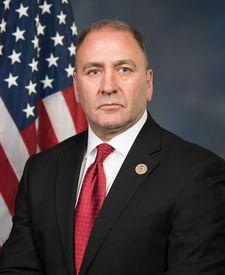
Official portrait of Clay Higgins
RepublicanU.S. House · LA-3

Clay Higgins

Louisiana · Official website · 202-225-2031
685
Positions recorded
119th Congress roll calls listing this member
18 of 685
Roll calls missed
Recorded "Not Voting" · House roll calls Jan 3, 2025 – Nov 12, 2026
39
Bills sponsored
119th Congress · Congress.gov
255
Bills cosponsored
119th Congress · Congress.gov

All figures are computed directly from the official House Clerk, senate.gov, and Congress.gov records for the 119th Congress. Methodology

Data last synced: votes Nov 17, 2026, 7:16 AM ET · bills Nov 17, 2026, 7:19 AM ET · floor remarks Nov 17, 2026, 8:56 AM ET · press releases Nov 17, 2026, 8:57 AM ET

119th CongressSponsored (39)Cosponsored (255)

H.R. 5172Strong Sentences for Safer D.C. Streets Act of 2025

Progress: Other action recordedLatest action: Placed on the Union Calendar, Calendar No. 279.
119th CongressPolicy area: Crime and Law Enforcement
  • CosponsorSep 9, 2025
Official CRS summary
Official CRS summary (Introduced in House version) · Congress.gov(opens in a new tab)

This bill establishes and increases mandatory minimum sentences of imprisonment for specified crimes in the District of Columbia.

First, the bill mandates a sentence of life imprisonment without parole for first-degree murder (currently, the mandatory minimum sentence is 30 years imprisonment and the maximum sentence is life imprisonment without parole). The bill also repeals provisions that prohibit the sentencing of individuals under the age of 18 to life imprisonment without parole for first-degree murder.

The bill also establishes a mandatory minimum sentence of

  • 10 years imprisonment for second-degree murder,
  • 10 years imprisonment for kidnapping,
  • 25 years imprisonment for first- degree sexual abuse, and
  • 25 years imprisonment for rape.

Finally, the bill increases the mandatory minimum sentence for

  • first-degree burglary from 5 years to 10 years imprisonment,
  • unarmed carjacking from 7 years to 10 years imprisonment,
  • armed carjacking from 15 years to 20 years imprisonment, and
  • rape with a prior conviction of a crime of violence from 7 years to 30 years imprisonment.
Introduced Sep 9, 2025
Latest action Oct 3, 2025Congress.gov(opens in a new tab)GovInfo action history(opens in a new tab)Status checked Nov 12, 2026Record permalink

H.R. 5140To lower the age at which a minor may be tried as an adult for certain criminal offenses in the District of Columbia to 14 years of age.

Progress: Passed / agreed in one chamberLatest action: Received in the Senate.
119th CongressPolicy area: Crime and Law Enforcement
  • CosponsorSep 9, 2025
Official CRS summary
Official CRS summary (Introduced in House version) · Congress.gov(opens in a new tab)

This bill lowers the age at which an individual may be tried as an adult for certain criminal offenses in the District of Columbia (DC) to 14 years of age.

Under current DC law, an individual who is under 18 years of age is tried as a juvenile in family court. However, an individual who is 16 years of age or older may be tried as an adult if the individual is charged with murder, first-degree sexual abuse, burglary in the first degree, robbery while armed, or assault with intent to commit any such offense. Additionally, an individual who is 15 years of age or older may be tried as an adult if the individual is alleged to have committed a felony and it is determined that (1) it is in the interest of the public welfare to try the individual as an adult, and (2) there are no reasonable prospects for the individual's rehabilitation.

The bill lowers the minimum age to be tried as an adult in these cases to 14 years of age.

Introduced Sep 9, 2025
Latest action Sep 17, 2025Congress.gov(opens in a new tab)GovInfo action history(opens in a new tab)Status checked Nov 12, 2026Record permalink

H.R. 5125District of Columbia Judicial Nominations Reform Act of 2025

Progress: Passed / agreed in one chamberLatest action: Received in the Senate.
119th CongressPolicy area: Law
  • CosponsorSep 9, 2025
Official CRS summary
Official CRS summary (Introduced in House version) · Congress.gov(opens in a new tab)

This bill terminates the District of Columbia (DC) Judicial Nomination Commission.

Currently, the commission recommends to the President nominees for judges for DC's Superior Court and Court of Appeals, who must then be confirmed by the Senate. The commission also appoints the chief judges for these courts. The bill terminates the commission's involvement in nominations and requires the President to appoint the chief judges.

Introduced Sep 9, 2025
Latest action Sep 18, 2025Congress.gov(opens in a new tab)GovInfo action history(opens in a new tab)Status checked Nov 12, 2026Record permalink

H.R. 5103Make the District of Columbia Safe and Beautiful Act of 2025

Progress: Passed / agreed in one chamberLatest action: Read twice. Placed on Senate Legislative Calendar under General Orders. Calendar No. 437.
119th CongressPolicy area: Public Lands and Natural Resources
  • CosponsorSep 9, 2025
Official CRS summary
Official CRS summary (Introduced in House version) · Congress.gov(opens in a new tab)

This bill establishes a commission in the executive branch to advise on certain criminal and immigration matters in the District of Columbia (DC). It also establishes a federal program to ensure that commonly visited areas in DC are cleaned and maintained. (On March 27, 2025, President Donald Trump issued an executive order titled Making the District of Columbia Safe and Beautiful, which established a similar task force and program.)

First, the bill establishes a commission made up of representatives from the U.S. Attorneys' Offices for DC, Maryland, and Virginia; specified federal agencies; and other designated federal entities. The commission must recommend actions to, among other tasks, address enforcement of federal immigration law in DC, facilitate the provision of federal resources to reduce crime, and assist with recruitment and retention of DC's Metropolitan Police Department officers.

Next, the bill directs the Department of the Interior to establish a program to coordinate and maintain the cleanliness of commonly visited areas in DC, including monuments, parks, and roads. The program must also restore damaged or removed federal public monuments and similar properties.

The bill's provisions terminate on January 2, 2029.

Introduced Sep 9, 2025
Latest action Jun 16, 2026Congress.gov(opens in a new tab)GovInfo action history(opens in a new tab)Status checked Nov 12, 2026Record permalink

H.R. 4922D. C. Criminal Reforms to Immediately Make Everyone Safe Act of 2025

Progress: Passed / agreed in one chamberLatest action: Received in the Senate.
119th CongressPolicy area: Crime and Law Enforcement
  • CosponsorSep 9, 2025
Official CRS summary
Official CRS summary (Introduced in House version) · Congress.gov(opens in a new tab)

This bill limits the authority of the District of Columbia (DC) government over its criminal sentencing laws.

The bill eliminates the DC government’s authority to enact any act, resolution, or rule to change any criminal liability sentence in effect on the date of the bill's enactment.

The bill also (1) reduces the maximum age of a youth offender from 24 years to 18 years, and (2) repeals a provision that allows a DC criminal court to issue a sentence to a youth offender that is less than the mandatory minimum term otherwise required by law. A DC criminal court currently has the discretion to reduce or modify certain criminal sentences for a youth offender under specified circumstances. For example, a DC court may sentence a youth offender to probation in lieu of confinement. (However, this discretion does not apply to several specified violent crimes.)

Additionally, the bill directs the Office of the Attorney General for DC to publish, and update monthly, certain youth offender crime data on a publicly accessible website.

Introduced Sep 9, 2025
Latest action Sep 17, 2025Congress.gov(opens in a new tab)GovInfo action history(opens in a new tab)Status checked Nov 12, 2026Record permalink

H.R. 5116Empower Parents to Protect their Kids Act

Progress: Introduction / referral onlyLatest action: Referred to the House Committee on Education and Workforce.
119th CongressPolicy area: Education
  • CosponsorSep 4, 2025
Official CRS summary
Official CRS summary (Introduced in House version) · Congress.gov(opens in a new tab)

This bill prohibits an elementary or secondary school from receiving federal funds unless the school notifies parents about a student's gender identity and obtains parental consent for any associated school accommodations.

Among other requirements, school employees may not withhold information from parents about a minor student's purported identity that is incongruent with the student's sex, the student's discomfort with their sex, or the student's desire to undergo a gender transition procedure. Schools must also obtain parental consent before proceeding with any accommodations for such students. The Department of Justice or a parent or guardian may bring a civil action against a school for violations.

Introduced Sep 4, 2025
Latest action Sep 3, 2025Congress.gov(opens in a new tab)GovInfo action history(opens in a new tab)Status checked Nov 12, 2026Record permalink

H.R. 5109Transportation Worker Identification Credential Efficiency Act

Progress: Passed / agreed in one chamberLatest action: Received in the Senate and Read twice and referred to the Committee on Commerce, Science, and Transportation.
119th CongressPolicy area: Transportation and Public Works
  • Original cosponsorSep 3, 2025
Official CRS summary
Official CRS summary (Introduced in House version) · Congress.gov(opens in a new tab)

This bill directs the Transportation Security Administration (TSA) to develop guidelines to improve access to a Transportation Worker Identification Credential (TWIC) for prisoners prior to their release.

Specifically, TSA must develop guidelines to assist individuals in federal, state, and local prisons in (1) pre-applying or preparing an application for a TWIC card; and (2) requesting an appeal or waiver of a preliminary determination of ineligibility for a TWIC card.

As background, a TWIC card is required by the Maritime Transportation Security Act for workers who need access to secure areas of U.S. maritime facilities and vessels. TSA conducts a background check to determine a person’s eligibility and issues the credential.

Introduced Sep 3, 2025
Latest action Sep 16, 2026Congress.gov(opens in a new tab)GovInfo action history(opens in a new tab)Status checked Oct 30, 2026Record permalink

H.R. 5107Common-Sense Law Enforcement and Accountability Now in DC Act of 2025

Progress: Passed / agreed in one chamberLatest action: Received in the Senate.
119th CongressPolicy area: Crime and Law Enforcement
  • Original cosponsorSep 3, 2025
Official CRS summary
Official CRS summary (Introduced in House version) · Congress.gov(opens in a new tab)

This bill repeals the Comprehensive Policing and Justice Reform Amendment Act of 2022, enacted by the Council of the District of Columbia.

Any provision of law amended or repealed by that act is restored or revived as if it had not been enacted.

(The act sets forth a variety of measures that focus on policing, including measures prohibiting the use of certain neck restraints by law enforcement officers, requiring additional procedures related to body-worn cameras, and expanding access to police disciplinary records.)

Introduced Sep 3, 2025
Latest action Nov 20, 2025Congress.gov(opens in a new tab)GovInfo action history(opens in a new tab)Status checked Nov 12, 2026Record permalink

H.Res. 664Observing the 20th anniversary of the dates on which Hurricane Katrina and Hurricane Rita devastated the Gulf Coast and recognizing the progress of efforts to rebuild the affected Gulf Coast region.

Progress: Other action recordedLatest action: Referred to the Subcommittee on Economic Development, Public Buildings, and Emergency Management.
119th CongressPolicy area: Government Operations and Politics
  • Original cosponsorAug 29, 2025
Introduced Aug 29, 2025
Latest action Aug 30, 2025Congress.gov(opens in a new tab)GovInfo action history(opens in a new tab)Status checked Nov 4, 2026Record permalink

H.R. 5054Freedom From Union Violence Act of 2025

Progress: Introduction / referral onlyLatest action: Referred to the House Committee on the Judiciary.
119th CongressPolicy area: Crime and Law Enforcement
  • Original cosponsorAug 26, 2025
Official CRS summary
Official CRS summary (Introduced in House version) · Congress.gov(opens in a new tab)

This bill broadens the scope of conduct that constitutes extortion under the federal criminal statute commonly known as the Hobbs Act. The Hobbs Act prohibits robbery or extortion affecting interstate commerce.

Currently, an extortion offense includes obtaining property of another through the wrongful use of force, violence, or fear. Typically, Hobbs Act violations are investigated by the Federal Bureau of Investigation and prosecuted by the U.S. Attorney's Office.

In 1973, in United States v. Enmons, the U.S. Supreme Court held that the use of violence by union members during a strike did not constitute extortion under the Hobbs Act because its purpose —to achieve legitimate union objectives—was not wrongful.

This bill eliminates the requirement that the use of force, violence, or fear of force or violence to obtain property must be wrongful. The bill specifies that the use of fear not involving force or violence must still be wrongful.

Finally, the bill exempts from the Hobbs Act prohibition conduct that (1) is incidental to peaceful picketing during a labor dispute, (2) consists solely of minor bodily injury or property damage, and (3) is not part of a pattern of violent conduct or of coordinated violent activity. A violation involving exempted conduct is subject to prosecution by state and local authorities.

Introduced Aug 26, 2025
Latest action Aug 26, 2025Congress.gov(opens in a new tab)GovInfo action history(opens in a new tab)Status checked Nov 12, 2026Record permalink

H.R. 5015To amend the District of Columbia Home Rule Act to extend the emergency period during which the President may exercise control over the Metropolitan Police Department.

Progress: Introduction / referral onlyLatest action: Referred to the House Committee on Oversight and Government Reform.
119th CongressPolicy area: Government Operations and Politics
  • Original cosponsorAug 22, 2025
Introduced Aug 22, 2025
Latest action Aug 22, 2025Congress.gov(opens in a new tab)GovInfo action history(opens in a new tab)Status checked Nov 12, 2026Record permalink

H.R. 5005Sanctuary Penalty and Public Protection Act of 2025

Progress: Introduction / referral onlyLatest action: Referred to the Committee on the Judiciary, and in addition to the Committee on Oversight and Government Reform, for a period to be subsequently determined by the Speaker, in each case for consideration of such provisions as fall within the jurisdiction of the committee concerned.
119th CongressPolicy area: Immigration
  • CosponsorAug 22, 2025
Introduced Aug 22, 2025
Latest action Aug 19, 2025Congress.gov(opens in a new tab)GovInfo action history(opens in a new tab)Status checked Nov 12, 2026Record permalink

H.R. 4706Protecting Our Farms and Homes from China Act

Progress: Introduction / referral onlyLatest action: Referred to the Committee on Agriculture, and in addition to the Committee on Foreign Affairs, for a period to be subsequently determined by the Speaker, in each case for consideration of such provisions as fall within the jurisdiction of the committee concerned.
119th CongressPolicy area: Agriculture and Food
  • CosponsorAug 12, 2025
Official CRS summary
Official CRS summary (Introduced in House version) · Congress.gov(opens in a new tab)

This bill prohibits certain foreign entities and individuals connected to China or the Chinese government from (1) acquiring, leasing, or owning any interest in U.S. agricultural land; or (2) purchasing or owning U.S. residential real estate for two years (with an option for the President to extend the prohibition).

Specifically, these prohibitions apply to certain foreign individuals and entities with connections to China, including (1) a business incorporated in China; (2) a person, company, university, or organization that can legally enter into contracts, own properties, or pay taxes on behalf of the Chinese government; and (3) an individual or organization affiliated with the Chinese Communist Party.

A covered entity or individual must

  • divest from any ownership or leased interest in U.S. agricultural land within one year of the bill's enactment,
  • sign a letter of intent to divest from interests in the agricultural land within 180 days of enactment, and
  • divest from any ownership of U.S. residential real estate within one year of the bill's enactment.

The bill establishes civil and criminal penalties for violations.

Further, for violations involving agricultural land, the bill (1) provides for property forfeiture and sale by public auction, and (2) nullifies any noncompete agreement between a covered foreign entity or individual with an ownership or leased interest in U.S. agricultural land and an employee of the entity.

Finally, the Department of Agriculture and the Department of Commerce must establish offices to monitor compliance and impose civil fines.

Introduced Aug 12, 2025
Latest action Jul 23, 2025Congress.gov(opens in a new tab)GovInfo action history(opens in a new tab)Status checked Nov 12, 2026Record permalink

H.Res. 631Recognizing the national debt as a threat to national security.

Progress: Introduction / referral onlyLatest action: Referred to the Committee on the Budget, and in addition to the Committee on Ways and Means, for a period to be subsequently determined by the Speaker, in each case for consideration of such provisions as fall within the jurisdiction of the committee concerned.
119th CongressPolicy area: Economics and Public Finance
  • CosponsorAug 8, 2025
Official CRS summary
Official CRS summary (Introduced in House version) · Congress.gov(opens in a new tab)

This resolution recognizes that the national debt is a threat to national security and that deficits are unsustainable, irresponsible, and dangerous. It also commits to (1) restoring regular order to the appropriations process, and (2) addressing the fiscal crisis faced by the United States.

Introduced Aug 8, 2025
Latest action Aug 5, 2025Congress.gov(opens in a new tab)GovInfo action history(opens in a new tab)Status checked Nov 12, 2026Record permalink
Introduced Jul 29, 2025
Latest action Jul 29, 2025Congress.gov(opens in a new tab)GovInfo action history(opens in a new tab)Status checked Nov 12, 2026Record permalink

H.Res. 618Commending the Coast Guard, Air Station Corpus Christi, and the crew of CG-6553 for their heroic efforts and courageous response to the catastrophic flooding across central Texas.

Progress: Other action recordedLatest action: Referred to the Subcommittee on Coast Guard and Maritime Transportation.
119th CongressPolicy area: Transportation and Public Works
  • Original cosponsorJul 29, 2025
Official CRS summary
Official CRS summary (Introduced in House version) · Congress.gov(opens in a new tab)

This resolution commends the Coast Guard for its courageous and swift response to the July 2025 flooding disaster in Texas.

It also extends gratitude to all of the federal, state, and local first responders and volunteers who responded to this tragedy.

Introduced Jul 29, 2025
Latest action Jul 30, 2025Congress.gov(opens in a new tab)GovInfo action history(opens in a new tab)Status checked Nov 12, 2026Record permalink

H.R. 4668End the Vaccine Carveout Act

Progress: Introduction / referral onlyLatest action: Referred to the House Committee on Energy and Commerce.
119th CongressPolicy area: Health
  • Original cosponsorJul 23, 2025
Official CRS summary
Official CRS summary (Introduced in House version) · Congress.gov(opens in a new tab)

This bill removes liability protections for manufacturers and administrators for vaccine-related injuries, and removes limitations on bringing civil actions for vaccine-related injuries or seeking compensation, under the National Vaccine Injury Compensation Program (VICP). It also excludes COVID-19 vaccines from liability protections under the Countermeasures Injury Compensation Program (CICP).

Under current law, the VICP provides compensation for alleged injuries caused by certain routinely administered vaccines. Individuals generally may not file a civil action in court unless a VICP claim is filed and the resulting judgement is rejected. The VICP also limits the types of claims and amount of damages that may be sought (e.g., no liability for unavoidable side effects or failure to directly warn), and it imposes deadlines for filing claims. The bill removes the requirement to first file a claim under the VICP before pursuing a civil action, so individuals alleging vaccine-related injuries may choose to either bring a civil action or utilize the VICP. It also removes the restrictions on the types of civil actions and damages. The bill also removes the deadlines for filing claims under the VICP and applies this change retroactively.

Additionally, under current law, the CICP provides compensation for alleged injuries caused by certain medical countermeasures during public health emergencies, including COVID-19 vaccines. The bill excludes COVID-19 vaccines from being considered as medical countermeasures. Therefore, under the bill, individuals may file civil actions against manufacturers of COVID-19 vaccines rather than filing claims under the CICP.

Introduced Jul 23, 2025
Latest action Jul 23, 2025Congress.gov(opens in a new tab)GovInfo action history(opens in a new tab)Status checked Nov 10, 2026Record permalink

H.R. 425Repealing Big Brother Overreach Act

Progress: Other action recordedLatest action: Placed on the Union Calendar, Calendar No. 609.
119th CongressPolicy area: Finance and Financial Sector
  • CosponsorFeb 10, 2025
Official CRS summary
Official CRS summary (Introduced in House version) · Congress.gov(opens in a new tab)

This bill repeals the Corporate Transparency Act. The act requires existing companies and newly created companies to report beneficial ownership information to the Department of the Treasury’s Financial Crimes Enforcement Network for purposes of addressing the financing of terrorism and money laundering.

Introduced Jul 17, 2025
Latest action Jun 18, 2026Congress.gov(opens in a new tab)GovInfo action history(opens in a new tab)Status checked Nov 17, 2026Record permalink

H.Res. 583Denouncing the attack on a U.S. Border Patrol facility in McAllen, Texas, on July 7, 2025.

Progress: Introduction / referral onlyLatest action: Referred to the House Committee on Homeland Security.
119th CongressPolicy area: Immigration
  • Original cosponsorJul 15, 2025
Introduced Jul 15, 2025
Latest action Jul 15, 2025Congress.gov(opens in a new tab)GovInfo action history(opens in a new tab)Status checked Nov 12, 2026Record permalink

H.Res. 571A resolution solemnly marking the one-year anniversary of the attempted assassination of President Donald J. Trump, condemning the multiple attempts against the President's life, condemning those who incite violence against political officials, and honoring the victims of the shooting.

Progress: Introduction / referral onlyLatest action: Referred to the House Committee on Oversight and Government Reform.
119th CongressPolicy area: Government Operations and Politics
  • Original cosponsorJul 10, 2025
Introduced Jul 10, 2025
Latest action Jul 10, 2025Congress.gov(opens in a new tab)GovInfo action history(opens in a new tab)Status checked Nov 12, 2026Record permalink

H.Res. 570Commending Petty Officer 3d Class Scott Ruskan for his heroic efforts to rescue victims during the devastating flooding in central Texas.

Progress: Other action recordedLatest action: Referred to the Subcommittee on Coast Guard and Maritime Transportation.
119th CongressPolicy area: Transportation and Public Works
  • Original cosponsorJul 10, 2025
Official CRS summary
Official CRS summary (Introduced in House version) · Congress.gov(opens in a new tab)

This resolution commends and congratulates Petty Officer Third Class Scott Ruskan for his bravery and heroic efforts to rescue 165 victims during the July 2025 catastrophic flooding in central Texas.

It also extends gratitude to all members of the Coast Guard, other federal and state agencies, first responders, and volunteers who risked their lives to protect and rescue others.

Introduced Jul 10, 2025
Latest action Jul 11, 2025Congress.gov(opens in a new tab)GovInfo action history(opens in a new tab)Status checked Nov 12, 2026Record permalink

H.R. 4229To amend the Impoundment Control Act of 1974 to require prior approval from Congress before the Comptroller General may pursue a civil action under such Act, and for other purposes.

Progress: Introduction / referral onlyLatest action: Referred to the Committee on the Budget, and in addition to the Committee on the Judiciary, for a period to be subsequently determined by the Speaker, in each case for consideration of such provisions as fall within the jurisdiction of the committee concerned.
119th CongressPolicy area: Economics and Public Finance
  • Original cosponsorJun 27, 2025
Official CRS summary
Official CRS summary (Introduced in House version) · Congress.gov(opens in a new tab)

This bill prohibits the Government Accountability Office (GAO) from bringing a civil action under the Impoundment Control Act of 1974 (ICA) to compel the release of appropriated funds unless Congress has enacted a concurrent resolution authorizing GAO to bring the action.

The ICA generally limits the authority of the President to impound (i.e., withhold from obligation or expenditure) funds that have been appropriated by Congress and establishes related procedures. Under current law, GAO is authorized to bring a civil action to compel a federal agency to release budget authority for obligation if the budget authority is required to be released under the ICA, and the agency has not released the funds. This bill prohibits GAO from bringing such an action without prior congressional approval.

Introduced Jun 27, 2025
Latest action Jun 27, 2025Congress.gov(opens in a new tab)GovInfo action history(opens in a new tab)Status checked Nov 12, 2026Record permalink

H.R. 2853Combating Organized Retail Crime Act of 2025

Progress: Passed / agreed in one chamberLatest action: Received in the Senate and Read twice and referred to the Committee on the Judiciary.
119th CongressPolicy area: Crime and Law Enforcement
  • CosponsorJun 27, 2025
Official CRS summary
Official CRS summary (Reported to House version) · Congress.gov(opens in a new tab)

This bill expands federal enforcement of criminal offenses related to organized retail and supply chain crime. The term organized retail and supply chain crime includes criminal offenses involving the interstate transportation of stolen property, the sale or receipt of stolen goods, or theft from an interstate or foreign shipment that is committed by, in coordination with, or at the instruction of an organization.

First, with respect to criminal offenses involving the interstate transportation of stolen property or the sale or receipt of stolen goods, the bill broadens the scope of conduct that qualifies as offenses by allowing prosecutions to be based on the aggregate value of stolen items over a 12-month period. Additionally, the bill makes the offenses predicate offenses (i.e., underlying offenses) for prosecutions under the federal money laundering statute and authorizes the criminal forfeiture of any property obtained from the proceeds of an offense.

Second, with respect to criminal offenses involving theft from an interstate or foreign shipment, the bill also makes an offense an underlying offense for prosecution under the federal money laundering statute and authorizes the criminal forfeiture of any associated property.

Third, the bill expands the federal money laundering statute to include offenses involving general-use prepaid cards, gift certificates, or store gift cards.

Finally, the bill temporarily establishes a center within the Department of Homeland Security to coordinate federal law enforcement activities related to organized retail and supply chain crime.

Introduced Jun 27, 2025
Latest action May 13, 2026Congress.gov(opens in a new tab)GovInfo action history(opens in a new tab)Status checked Nov 12, 2026Record permalink

H.R. 4070Tren de Aragua Border Security Threat Assessment Act

Progress: Passed / agreed in one chamberLatest action: Received in the Senate and Read twice and referred to the Committee on Homeland Security and Governmental Affairs.
119th CongressPolicy area: Immigration
  • Original cosponsorJun 23, 2025
Official CRS summary
Official CRS summary (Introduced in House version) · Congress.gov(opens in a new tab)

This bill requires the Department of Homeland Security (DHS) to submit a border threat assessment and strategic plan regarding Tren de Aragua and other transnational criminal organizations. (Tren de Aragua is a gang that originated in Venezuela.)

The threat assessment must include current and potential criminal threats from Tren de Aragua and a description of its origins, strategic aims, funding sources, and U.S. growth and presence.

DHS must submit a strategic plan not later than one year after submission of the threat assessment. The plan must include, for example, a consideration of the threat assessment and mitigation efforts regarding Tren de Aragua and other transnational criminal organizations and efforts to disseminate information between DHS and other departments, agencies, and law enforcement entities with missions associated with the border.

Introduced Jun 23, 2025
Latest action Nov 20, 2025Congress.gov(opens in a new tab)GovInfo action history(opens in a new tab)Status checked Nov 12, 2026Record permalink

H.R. 3982To establish a Tariff Response and Damages to Exports fund, and for other purposes.

Progress: Introduction / referral onlyLatest action: Referred to the Committee on Ways and Means, and in addition to the Committee on Agriculture, for a period to be subsequently determined by the Speaker, in each case for consideration of such provisions as fall within the jurisdiction of the committee concerned.
119th CongressPolicy area: Foreign Trade and International Finance
  • CosponsorJun 30, 2025
Official CRS summary
Official CRS summary (Introduced in House version) · Congress.gov(opens in a new tab)

This bill establishes the Tariff Response And Damages to Exports Fund within the Treasury, authorizes certain revenues collected from duties (e.g., tariffs) on certain agricultural products to be deposited into the fund, and requires the Department of Agriculture (USDA) to use the fund to make payments to agricultural producers affected by trade-related market disruptions.

Specifically, the bill authorizes the President to deposit into this fund any revenues collected from duties on imported products that are classified under Chapters 1-24 of the Harmonized Tariff Schedule of the United States (which includes, among other products, live animals, animal and vegetable products, seafood, prepared foodstuffs, and beverages).

USDA must use any amounts deposited into the fund to make payments to agricultural producers that have been affected by trade-related marketed disruptions, including losses USDA determines are due to (1) decreased exports, (2) tariff or non-tariff barriers imposed by foreign countries, or (3) increases in the costs of items and goods necessary for the production of agricultural commodities and livestock.

USDA must annually report to Congress on the total revenues transferred into the fund, the economic impacts on affected agricultural producers, and a summary of assistance provided to these agricultural producers.

The authorities provided by the bill terminate on September 30, 2030, and the bill permanently rescinds the unobligated balances of all amounts available in the fund as of this date.

Introduced Jun 12, 2025
Latest action Jun 12, 2025Congress.gov(opens in a new tab)GovInfo action history(opens in a new tab)Status checked Nov 17, 2026Record permalink

H.R. 3961To prohibit the Secretary of Defense from entering into software source code contracts with entities with certain relationships with China, and for other purposes.

Progress: Introduction / referral onlyLatest action: Referred to the House Committee on Armed Services.
119th CongressPolicy area: Armed Forces and National Security
  • Original cosponsorJun 12, 2025
Introduced Jun 12, 2025
Latest action Jun 12, 2025Congress.gov(opens in a new tab)GovInfo action history(opens in a new tab)Status checked Nov 12, 2026Record permalink

H.Res. 506Expressing the sense of the House of Representatives that Social Security should be preserved and protected for current beneficiaries, and for future generations to come.

Progress: Introduction / referral onlyLatest action: Referred to the House Committee on Ways and Means.
119th CongressPolicy area: Social Welfare
  • Original cosponsorJun 11, 2025
Introduced Jun 11, 2025
Latest action Jun 11, 2025Congress.gov(opens in a new tab)GovInfo action history(opens in a new tab)Status checked Nov 12, 2026Record permalink

H.R. 3881Stop Dangerous Sanctuary Cities Act

Progress: Introduction / referral onlyLatest action: Referred to the Committee on the Judiciary, and in addition to the Committees on Transportation and Infrastructure, and Financial Services, for a period to be subsequently determined by the Speaker, in each case for consideration of such provisions as fall within the jurisdiction of the committee concerned.
119th CongressPolicy area: Immigration
  • Original cosponsorJun 10, 2025
Official CRS summary
Official CRS summary (Introduced in House version) · Congress.gov(opens in a new tab)

This bill addresses issues related to state and local government cooperation with federal immigration enforcement efforts, including by prohibiting uncooperative jurisdictions from receiving certain grants.

Specifically, the bill prohibits a sanctuary jurisdiction from receiving grants under certain Economic Development Assistance Programs and the Community Development Block Grant Program. Under the bill, a sanctuary jurisdiction is a state or local government that has in effect a statute, policy, or practice that prohibits or restricts (1) information sharing with another government entity about an individual's immigration status, or (2) compliance with a lawfully issued Department of Homeland Security (DHS) detainer request or notification of release request.

When complying with a DHS-issued detainer, a state or local government shall be deemed to be acting as an agent of DHS with all authority available to DHS officers and employees. The bill also limits the legal liability of a state or local government for complying with a detainer.

Introduced Jun 10, 2025
Latest action Jun 10, 2025Congress.gov(opens in a new tab)GovInfo action history(opens in a new tab)Status checked Nov 12, 2026Record permalink

H.R. 309National Law Enforcement Officers Remembrance, Support, and Community Outreach Act

Progress: Passed / agreed in one chamberLatest action: Received in the Senate.
119th CongressPolicy area: Crime and Law Enforcement
  • Original cosponsorJan 9, 2025
Official CRS summary
Official CRS summary (Introduced in House version) · Congress.gov(opens in a new tab)

This bill temporarily directs the Department of the Interior to award a grant to the National Law Enforcement Officers Memorial Fund for the expenses associated with operating and enhancing the community outreach, public education, and officer safety and wellness programs of the National Law Enforcement Museum.

Introduced Jun 9, 2025
Latest action Sep 15, 2026Congress.gov(opens in a new tab)GovInfo action history(opens in a new tab)Status checked Nov 17, 2026Record permalink

H.R. 3770FIREARM Act

Progress: Other action recordedLatest action: Ordered to be Reported (Amended) by the Yeas and Nays: 15 - 8.
119th CongressPolicy area: Crime and Law Enforcement
  • Original cosponsorJun 5, 2025
Official CRS summary
Official CRS summary (Introduced in House version) · Congress.gov(opens in a new tab)

This bill prohibits the Bureau of Alcohol, Tobacco, Firearms and Explosives (ATF) from bringing an enforcement action to revoke or deny renewal of a federal firearms license on the basis of a self-reported violation that is correctable, so long as the violation did not involve the transfer of a firearm to a prohibited person.

The term self-reported violation means a violation of a statutory provision or implementing regulation by a federal firearms licensee (e.g., a gun dealer) that the licensee reports to the ATF before it is discovered during a compliance inspection.

The bill applies retroactively.

Introduced Jun 5, 2025
Latest action Sep 10, 2025Congress.gov(opens in a new tab)GovInfo action history(opens in a new tab)Status checked Nov 12, 2026Record permalink

H.R. 3764Death Penalty for Dealing Fentanyl Act of 2025

Progress: Introduction / referral onlyLatest action: Referred to the Committee on the Judiciary, and in addition to the Committee on Energy and Commerce, for a period to be subsequently determined by the Speaker, in each case for consideration of such provisions as fall within the jurisdiction of the committee concerned.
119th CongressPolicy area: Crime and Law Enforcement
  • Original cosponsorJun 5, 2025
Introduced Jun 5, 2025
Latest action Jun 5, 2025Congress.gov(opens in a new tab)GovInfo action history(opens in a new tab)Status checked Nov 12, 2026Record permalink

H.R. 3492Protect Children’s Innocence Act

Progress: Passed / agreed in one chamberLatest action: Received in the Senate and Read twice and referred to the Committee on the Judiciary.
119th CongressPolicy area: Crime and Law Enforcement
  • Original cosponsorMay 19, 2025
Official CRS summary
Official CRS summary (Introduced in House version) · Congress.gov(opens in a new tab)

This bill establishes federal criminal offenses for providing gender-affirming care to minors. The bill also changes the existing federal criminal offense that prohibits female genital mutilation (FGM) and related conduct.

Specifically, the bill makes it a federal crime to knowingly perform or attempt to perform procedures or provide medications (e.g., hormonal treatments) to a minor for the purpose of changing their body to correspond to a sex that differs from their biological sex. The bill provides exceptions for specified types of surgeries or procedures, including those for treating (1) individuals who have both ovarian and testicular tissue or abnormal sex chromosome structure or hormones, or (2) infections or other harms that result from a previous gender-transition procedure. A violation is punishable by a fine, a prison term of up to 10 years, or both. The bill prohibits the arrest or prosecution of an individual who undergoes gender-affirming procedures or medications.

Additionally, the bill makes changes to the existing federal criminal prohibition on performing FGM on a minor and related conduct. Among the changes, the bill broadens the scope of prohibited conduct to include the facilitation or consent to FGM by any person (currently, prohibited facilitation or consent applies only to a parent, guardian, or caretaker of the minor). The bill also prohibits the arrest or prosecution of an individual who undergoes FGM. The bill does not change the applicable criminal penalty of a fine, a prison term of up to 10 years, or both.

Introduced May 19, 2025
Latest action Dec 18, 2025Congress.gov(opens in a new tab)GovInfo action history(opens in a new tab)Status checked Nov 12, 2026Record permalink

H.R. 3095To direct the United States Postal Service to designate single, unique ZIP Codes for certain communities, and for other purposes.

Progress: Passed / agreed in one chamberLatest action: Received in the Senate and Read twice and referred to the Committee on Homeland Security and Governmental Affairs.
119th CongressPolicy area: Government Operations and Politics
  • Original cosponsorApr 30, 2025
Official CRS summary
Official CRS summary (Introduced in House version) · Congress.gov(opens in a new tab)

This bill requires the U.S Postal Service to designate a single, unique ZIP Code for each of the following 74 communities:

  • Canyon Lake, California
  • Eastvale, California
  • Hidden Hills, California
  • Industry, California
  • North Tustin, California
  • Tehachapi, California
  • Castle Pines, Colorado
  • Centennial, Colorado
  • Cherry Hills Village, Colorado
  • Greenwood Village, Colorado
  • Highlands Ranch, Colorado
  • Keystone, Colorado
  • Lone Tree, Colorado
  • Mountain Village, Colorado
  • Mt Crested Butte, Colorado
  • Severance, Colorado
  • Silver Cliff, Colorado
  • Sterling Ranch, Colorado
  • Superior, Colorado
  • Telluride, Colorado
  • Scotland, Connecticut
  • Estero, Florida
  • Ft Myers, Florida
  • Hollywood, Florida
  • Oakland Park, Florida
  • Lighthouse Point, Florida
  • Coconut Creek, Florida
  • Parkland, Florida
  • Deerfield Beach, Florida
  • Wilton Manors, Florida
  • Burr Ridge, Illinois
  • Carmel, Indiana
  • Noblesville, Indiana
  • Westfield, Indiana
  • Zionsville, Indiana
  • Urbandale, Iowa
  • Louisiana State University, Baton Rouge, Louisiana
  • Montz, Louisiana
  • Springwater Township, Minnesota
  • Grass Valley, Nevada
  • Swanzey, New Hampshire
  • Kinnelon, New Jersey
  • Mendham Township, New Jersey
  • Flanders, New York
  • Glendale, New York
  • Riverside, New York
  • Pendelton, New York
  • Northampton, New York
  • Harnett County, North Carolina
  • Weddington, North Carolina
  • Goose Creek, South Carolina
  • Fairview, Texas
  • Fate, Texas
  • Heath, Texas
  • Murphy, Texas
  • Northlake, Texas
  • Parker, Texas
  • Sargent, Texas
  • Fairlawn, Virginia
  • Caledonia, Wisconsin
  • Franklin, Wisconsin
  • Glendale, Wisconsin
  • Greenfield, Wisconsin
  • Village of Mount Pleasant, Wisconsin
  • Village of Somers, Wisconsin
  • Village of Harrison, Wisconsin
  • Mills, Wyoming
  • Hochatown, Oklahoma
  • North Enid, Oklahoma
  • Green, Ohio
  • Rochester, Wisconsin
  • Quartzite Township, Minnesota
  • Frederick, Colorado
  • Camargo, Kentucky
Introduced May 19, 2025
Latest action Jul 22, 2025Congress.gov(opens in a new tab)GovInfo action history(opens in a new tab)Status checked Nov 17, 2026Record permalink

H.R. 2189To modernize Federal firearms laws to account for advancements in technology and less-than-lethal weapons, and for other purposes.

Progress: Passed / agreed in one chamberLatest action: Received in the Senate.
119th CongressPolicy area: Crime and Law Enforcement
  • CosponsorMay 15, 2025
Official CRS summary
Official CRS summary (Reported to House version) · Congress.gov(opens in a new tab)

This bill removes less-than-lethal projectile devices (e.g., certain TASERs) from regulation under the Gun Control Act.

The term less-than-lethal projectile device means a device that (1) is not designed or intended to expel (and may not be readily converted to discharge) commonly used ammunition or projectiles exceeding a velocity of 500 feet per second; (2) is designed and intended to be used in a manner not likely to cause death or serious bodily injury; and (3) does not accept (and cannot be readily modified to accept) an ammunition feeding device.

The bill also requires the Bureau of Alcohol, Tobacco, Firearms and Explosives to determine whether a device satisfies the definition of a less-than-lethal projectile device within 90 days of a request.

Introduced May 15, 2025
Latest action Feb 24, 2026Congress.gov(opens in a new tab)GovInfo action history(opens in a new tab)Status checked Nov 4, 2026Record permalink

H.R. 1897ESA Amendments Act of 2025

Progress: Other action recordedLatest action: Rules Committee Resolution H. Res. 1189 Reported to House. Rule provides for consideration of H.R. 4690, H. Res. 1182, H.R. 1897 and H.R. 5587. The resolution provides for consideration of H.R. 4690, H. Res. 1182, H.R. 1897, and H.R. 5587 under a closed rule with one hour of general debate on each measure. The resolution provides for one motion to recommit on H.R. 4690, H.R. 1897, and H.R. 5587.
119th CongressPolicy area: Environmental Protection
  • CosponsorMay 15, 2025
Official CRS summary
Official CRS summary (Reported to House version) · Congress.gov(opens in a new tab)

This bill reauthorizes through FY2031 the Endangered Species Act and generally narrows protections provided under the act.

The bill directs the Fish and Wildlife Service and the National Marine Fisheries Service to submit a National Listing Work Plan that establishes a five-year schedule and plan for addressing listing of endangered or threatened species and designation of critical habitats for such species. Under the plan, the bill gives the Services flexibility on the timing of acting on listing petitions and eliminates the requirement for the Services to act within 12 months on listing petitions.

The bill limits what land may be designated as critical habitat for an endangered or threatened species.

It also limits protections provided to threatened species and allows a state to regulate the recovery of such species if the Services determine the state's proposed recovery strategy would conserve the species.

The bill provides statutory authority for Conservation Benefit Agreements, which allow private landowners to voluntarily enter agreements to reduce threats to candidate species in exchange for being allowed to continue their operations if the species is later listed.

The bill also modifies the permitting process for certain other voluntary conservation agreements, including by exempting incidental take permits (e.g., permits to harm or kill a species) from environmental review requirements.

The bill also makes a variety of other changes to the act, including limiting consultation requirements, judicial review, and awards for attorneys’ fees in certain cases.

Introduced May 15, 2025
Latest action Apr 20, 2026Congress.gov(opens in a new tab)GovInfo action history(opens in a new tab)Status checked Nov 12, 2026Record permalink

H.R. 1151Freedom to Invest in Tomorrow’s Workforce Act

Progress: Introduction / referral onlyLatest action: Referred to the House Committee on Ways and Means.
119th CongressPolicy area: Taxation
  • CosponsorMay 15, 2025
Official CRS summary
Official CRS summary (Introduced in House version) · Congress.gov(opens in a new tab)

This bill expands the expenses eligible for tax-free withdrawals from a qualified tuition program (known as a 529 plan) to include tuition, fees (including test fees), books, supplies, equipment, and other expenses related to the enrollment or attendance in a recognized postsecondary credentialing program.

Under the bill, a recognized postsecondary credentialing program includes certain programs identified by a state as providing training services, a program listed in the Web Enabled Approval Management System (WEAMS) maintained by the Department of Veterans Affairs, certain examinations required to obtain or maintain a credential, and other reputable credentialing programs.

Further, under the bill, such programs must be designed for an individual to obtain

  • an industry-recognized postsecondary employment credential (e.g., project management professional certificate, advanced emergency medical technician certificate, and welding supervisor certificate),
  • a certificate of completion of a registered and certified apprenticeship,
  • an occupational or professional license issued or recognized by a state or the federal government (and any certification required for obtaining such license), or
  • an associate or baccalaureate degree.
Introduced May 15, 2025
Latest action Feb 7, 2025Congress.gov(opens in a new tab)GovInfo action history(opens in a new tab)Status checked Nov 8, 2026Record permalink

H.R. 3312SERVICE Act of 2025

Progress: Introduction / referral onlyLatest action: Referred to the House Committee on the Judiciary.
119th CongressPolicy area: Crime and Law Enforcement
  • Original cosponsorMay 8, 2025
Official CRS summary
Official CRS summary (Introduced in House version) · Congress.gov(opens in a new tab)

This bill authorizes the Office of Community Oriented Policing Services within the Department of Justice to make grants to support the creation and operation of veterans' response teams in state, local, and tribal law enforcement agencies.

Introduced May 8, 2025
Latest action May 8, 2025Congress.gov(opens in a new tab)GovInfo action history(opens in a new tab)Status checked Nov 12, 2026Record permalink

H.R. 3228Constitutional Hearing Protection Act

Progress: Introduction / referral onlyLatest action: Referred to the Committee on Ways and Means, and in addition to the Committee on the Judiciary, for a period to be subsequently determined by the Speaker, in each case for consideration of such provisions as fall within the jurisdiction of the committee concerned.
119th CongressPolicy area: Taxation
  • Original cosponsorMay 7, 2025
Introduced May 7, 2025
Latest action May 7, 2025Congress.gov(opens in a new tab)GovInfo action history(opens in a new tab)Status checked Nov 12, 2026Record permalink