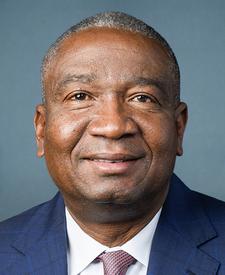
Official portrait of Cleo Fields
DemocraticU.S. House · LA-6

Cleo Fields

Louisiana · Official website · 202-225-3901
685
Positions recorded
119th Congress roll calls listing this member
20 of 685
Roll calls missed
Recorded "Not Voting" · House roll calls Jan 3, 2025 – Nov 12, 2026
9
Bills sponsored
119th Congress · Congress.gov
382
Bills cosponsored
119th Congress · Congress.gov

All figures are computed directly from the official House Clerk, senate.gov, and Congress.gov records for the 119th Congress. Methodology

Data last synced: votes Nov 17, 2026, 7:16 AM ET · bills Nov 17, 2026, 7:19 AM ET · floor remarks Nov 17, 2026, 8:56 AM ET · press releases Nov 17, 2026, 8:57 AM ET

119th CongressSponsored (9)Cosponsored (382)

H.Res. 697Recognizing suicide as a serious public health problem and expressing support for the designation of September as "National Suicide Prevention Month" as well as September 10, 2025, as "World Suicide Prevention Day".

Progress: Introduction / referral onlyLatest action: Referred to the House Committee on Energy and Commerce.
119th CongressPolicy area: Health
  • Original cosponsorSep 10, 2025
Official CRS summary
Official CRS summary (Introduced in House version) · Congress.gov(opens in a new tab)

This resolution expresses support for the designation of National Suicide Prevention Month and World Suicide Prevention Day.

Introduced Sep 10, 2025
Latest action Sep 10, 2025Congress.gov(opens in a new tab)GovInfo action history(opens in a new tab)Status checked Nov 7, 2026Record permalink

H.R. 5217Rural Behavioral Health Improvement Act of 2025

Progress: Introduction / referral onlyLatest action: Referred to the Committee on Energy and Commerce, and in addition to the Committee on Ways and Means, for a period to be subsequently determined by the Speaker, in each case for consideration of such provisions as fall within the jurisdiction of the committee concerned.
119th CongressPolicy area: Health
  • Original cosponsorSep 8, 2025
Introduced Sep 8, 2025
Latest action Sep 8, 2025Congress.gov(opens in a new tab)GovInfo action history(opens in a new tab)Status checked Nov 7, 2026Record permalink

H.R. 5178Sickle Cell Disease Comprehensive Care Act

Progress: Introduction / referral onlyLatest action: Referred to the House Committee on Energy and Commerce.
119th CongressPolicy area: Health
  • Original cosponsorSep 8, 2025
Official CRS summary
Official CRS summary (Introduced in House version) · Congress.gov(opens in a new tab)

This bill allows state Medicaid programs to establish health homes to provide coordinated care for individuals with sickle-cell disease. (Under current law, state Medicaid programs may establish health homes to provide coordinated care for individuals with specified chronic conditions.) States must ensure that such care includes dental and vision services.

The Centers for Medicare & Medicaid Services must issue best practices for states on how to design and implement such health homes.

Introduced Sep 8, 2025
Latest action Sep 8, 2025Congress.gov(opens in a new tab)GovInfo action history(opens in a new tab)Status checked Nov 4, 2026Record permalink

H.R. 4862LOAN Act

Progress: Introduction / referral onlyLatest action: Referred to the Committee on Education and Workforce, and in addition to the Committee on the Budget, for a period to be subsequently determined by the Speaker, in each case for consideration of such provisions as fall within the jurisdiction of the committee concerned.
119th CongressPolicy area: Education
  • CosponsorSep 8, 2025
Official CRS summary
Official CRS summary (Introduced in House version) · Congress.gov(opens in a new tab)

This bill revises federal student aid programs, including the Federal Pell Grant program and the Public Service Loan Forgiveness (PSLF) program. It also repeals the education provisions that were enacted under P.L. 119-21 (commonly known as the One Big Beautiful Bill Act).

Among other provisions, the bill revises the Federal Pell Grant program by (1) providing funding to increase the maximum award for each eligible student, and (2) allowing income-eligible graduate students to utilize their remaining Pell Grant eligibility toward their first graduate degree.

Changes to the PSLF program include (1) reducing the number of monthly loan payments required for loan forgiveness, and (2) removing the requirement that a borrower must be employed in a public service job at the time of forgiveness.

The bill makes Dreamer students (i.e., students who have been granted Deferred Action for Childhood Arrivals status and who entered the United States before the age of 18) who meet certain educational criteria eligible for federal financial aid.

The bill also (1) establishes refinancing programs for federal and private student loans; (2) creates a new income-driven repayment plan; and (3) repeals origination fees for Direct Subsidized Loans, Direct Unsubsidized Loans, and Direct PLUS Loans.

The bill repeals the education provisions that were enacted under P.L. 119-21. For example, the act addressed the amount of federal financial aid available to students by changing the mix and availability of student loans. (For more information, see CRS Report R48727.)

Introduced Sep 8, 2025
Latest action Aug 1, 2025Congress.gov(opens in a new tab)GovInfo action history(opens in a new tab)Status checked Nov 7, 2026Record permalink
Introduced Sep 4, 2025
Latest action Jul 22, 2025Congress.gov(opens in a new tab)GovInfo action history(opens in a new tab)Status checked Nov 4, 2026Record permalink

H.Res. 677Affirming the independence of the Federal Reserve System, its Chairman, and the Board of Governors.

Progress: Introduction / referral onlyLatest action: Referred to the House Committee on Financial Services.
119th CongressPolicy area: Finance and Financial Sector
  • Original cosponsorSep 4, 2025
Introduced Sep 4, 2025
Latest action Sep 4, 2025Congress.gov(opens in a new tab)GovInfo action history(opens in a new tab)Status checked Nov 7, 2026Record permalink

H.R. 5094Protect Patients from Costly Care Act

Progress: Introduction / referral onlyLatest action: Referred to the Committee on Energy and Commerce, and in addition to the Committee on Ways and Means, for a period to be subsequently determined by the Speaker, in each case for consideration of such provisions as fall within the jurisdiction of the committee concerned.
119th CongressPolicy area: Health
  • Original cosponsorSep 2, 2025
Introduced Sep 2, 2025
Latest action Sep 2, 2025Congress.gov(opens in a new tab)GovInfo action history(opens in a new tab)Status checked Nov 7, 2026Record permalink

H.R. 484Food Deserts Act

Progress: Other action recordedLatest action: Referred to the Subcommittee on Commodity Markets, Digital Assets, and Rural Development.
119th CongressPolicy area: Agriculture and Food
  • CosponsorSep 2, 2025
Official CRS summary
Official CRS summary (Introduced in House version) · Congress.gov(opens in a new tab)

This bill establishes a grant program within the Department of Agriculture to reduce food deserts. Under the program, grants are provided to states for revolving funds that support the establishment and operation of grocery stores in underserved communities. Underserved communities are communities that have (1) limited access to affordable, healthy foods, including fresh fruits and vegetables, in grocery retail stores or farmer-to-consumer direct markets; and (2) a high rate of hunger, a high rate of food insecurity, or a high poverty rate.

The bill requires states to use such funds for loans that support grocery stores in underserved communities, including for opening a store (excluding new construction), or supporting an existing store.

In order to qualify for loans, grocery stores must meet criteria enumerated in the bill. For example, grocery stores must (1) emphasize unprocessed, healthful foods; (2) provide staple foods and a variety of raw fruits and vegetables; and (3) charge affordable prices at or below market values.

Further, states must prioritize loan applications from entities that meet criteria related to

  • hiring workers from the underserved community,
  • providing classes or educational information about a healthful diet,
  • sourcing food from local urban farms and gardens, and
  • demonstrating existing supply chain relationships in the grocery industry.
Introduced Sep 2, 2025
Latest action Feb 14, 2025Congress.gov(opens in a new tab)GovInfo action history(opens in a new tab)Status checked Nov 4, 2026Record permalink

H.Res. 664Observing the 20th anniversary of the dates on which Hurricane Katrina and Hurricane Rita devastated the Gulf Coast and recognizing the progress of efforts to rebuild the affected Gulf Coast region.

Progress: Other action recordedLatest action: Referred to the Subcommittee on Economic Development, Public Buildings, and Emergency Management.
119th CongressPolicy area: Government Operations and Politics
  • Original cosponsorAug 29, 2025
Introduced Aug 29, 2025
Latest action Aug 30, 2025Congress.gov(opens in a new tab)GovInfo action history(opens in a new tab)Status checked Nov 4, 2026Record permalink

H.R. 1171SAFE Act

Progress: Introduction / referral onlyLatest action: Referred to the Committee on Energy and Commerce, and in addition to the Committee on Ways and Means, for a period to be subsequently determined by the Speaker, in each case for consideration of such provisions as fall within the jurisdiction of the committee concerned.
119th CongressPolicy area: Health
  • CosponsorAug 26, 2025
Official CRS summary
Official CRS summary (Introduced in House version) · Congress.gov(opens in a new tab)

This bill incorporates risk assessments and prevention services for falls into annual wellness visits and initial preventive physical exams under Medicare, as well as associated services provided by physical therapists and occupational therapists.

Introduced Aug 26, 2025
Latest action Feb 10, 2025Congress.gov(opens in a new tab)GovInfo action history(opens in a new tab)Status checked Nov 7, 2026Record permalink

H.J.Res. 115Terminating the emergency determined by the President on August 11, 2025, in the Executive Order titled "Declaring a crime emergency in the District of Columbia".

Progress: Introduction / referral onlyLatest action: Referred to the House Committee on Oversight and Government Reform.
119th CongressPolicy area: Crime and Law Enforcement
  • CosponsorAug 22, 2025
Introduced Aug 22, 2025
Latest action Aug 15, 2025Congress.gov(opens in a new tab)GovInfo action history(opens in a new tab)Status checked Nov 4, 2026Record permalink

H.R. 4849Protecting Health Care and Lowering Costs Act of 2025

Progress: Introduction / referral onlyLatest action: Referred to the Committee on Ways and Means, and in addition to the Committee on Energy and Commerce, for a period to be subsequently determined by the Speaker, in each case for consideration of such provisions as fall within the jurisdiction of the committee concerned.
119th CongressPolicy area: Taxation
  • CosponsorAug 15, 2025
Official CRS summary
Official CRS summary (Introduced in House version) · Congress.gov(opens in a new tab)

This bill makes permanent temporary provisions that generally expand eligibility for and increase the amount of the premium tax credit. This bill also repeals multiple Medicaid, Medicare, and health-related tax provisions enacted by the One Big Beautiful Bill Act (OBBBA).

Currently, eligible taxpayers may claim the premium tax credit, which applies toward the cost of obtaining health insurance through health insurance exchanges. To qualify, a taxpayer’s household income must meet or exceed 100% of the federal poverty level (FPL) and, after 2025, may not exceed 400% of the FPL (maximum income limit). For 2021-2025, the maximum income limit is eliminated, which generally expands eligibility for the premium tax credit.

Further, under current law, the amount of the premium tax credit is partially based on the taxpayer’s household income multiplied by the applicable percentage. The applicable percentage varies depending on which of six income ranges (adjusted for inflation after 2025) the taxpayer’s household income falls within. For 2021-2025, the applicable percentages are lowered and the adjustment of the applicable percentages for inflation is eliminated, which generally increases the amount of the premium tax credit.

The bill permanently eliminates the 400% maximum income limit, lowers the applicable percentages, and eliminates the inflation adjustment for the applicable percentages.

Finally, the bill repeals multiple Medicaid, Medicare, and health-related tax provisions enacted by the OBBBA, including

  • certain Medicare and Medicare eligibility and verification requirements,
  • the reduced window for retroactive Medicaid coverage, and
  • premium tax credit verification requirements.
Introduced Aug 15, 2025
Latest action Aug 1, 2025Congress.gov(opens in a new tab)GovInfo action history(opens in a new tab)Status checked Nov 4, 2026Record permalink

H.R. 4967Keep Seniors Fed Act

Progress: Introduction / referral onlyLatest action: Referred to the House Committee on Agriculture.
119th CongressPolicy area: Agriculture and Food
  • Original cosponsorAug 12, 2025
Official CRS summary
Official CRS summary (Introduced in House version) · Congress.gov(opens in a new tab)

This bill amends the Supplemental Nutrition Assistance Program (SNAP) to exempt certain Social Security benefits (e.g., retirement and disability benefits) from household income for the purposes of determining program eligibility.

Introduced Aug 12, 2025
Latest action Aug 12, 2025Congress.gov(opens in a new tab)GovInfo action history(opens in a new tab)Status checked Nov 7, 2026Record permalink

H.R. 4204Medicare Patient Choice Act

Progress: Introduction / referral onlyLatest action: Referred to the Committee on Ways and Means, and in addition to the Committee on Energy and Commerce, for a period to be subsequently determined by the Speaker, in each case for consideration of such provisions as fall within the jurisdiction of the committee concerned.
119th CongressPolicy area: Health
  • CosponsorAug 8, 2025
Introduced Aug 8, 2025
Latest action Jun 26, 2025Congress.gov(opens in a new tab)GovInfo action history(opens in a new tab)Status checked Nov 7, 2026Record permalink

H.R. 4917Expanding the VOTE Act

Progress: Introduction / referral onlyLatest action: Referred to the Committee on the Judiciary, and in addition to the Committee on House Administration, for a period to be subsequently determined by the Speaker, in each case for consideration of such provisions as fall within the jurisdiction of the committee concerned.
119th CongressPolicy area: Government Operations and Politics
  • Original cosponsorAug 5, 2025
Official CRS summary
Official CRS summary (Introduced in House version) · Congress.gov(opens in a new tab)

This bill expands access to voting materials for individuals with limited proficiency in the English language.

Section 203 of the Voting Rights Act of 1965 (VRA) requires covered states and political subdivisions to provide voting materials and other language assistance to persons who are American Indian, Asian American, Alaskan Natives, or of Spanish heritage and whose ability to speak or understand English limits electoral participation. A state or political subdivision that is subject to Section 203 is prohibited from providing English-only voting materials in an election. Among other requirements, this bill (1) requires the Department of Justice to issue a notice of prohibition, including the trigger threshold at which the prohibition applies, to certain states and political subdivisions; and (2) requires covered states and political subdivisions to provide written translations of all voting materials, with the consent of any applicable tribal government, to election workers.

Additionally, the bill requires the Election Assistance Commission to make incentive grants for states and political subdivisions to provide translated voting materials.

The bill also directs the Government Accountability Office to study and report on the impact of (1) reducing the threshold requirement under Section 203 of the VRA, and (2) expanding the definition of language minorities to include native speakers of additional languages.

Introduced Aug 5, 2025
Latest action Aug 5, 2025Congress.gov(opens in a new tab)GovInfo action history(opens in a new tab)Status checked Nov 7, 2026Record permalink

H.R. 4916Youth Voting Rights Act

Progress: Introduction / referral onlyLatest action: Referred to the Committee on House Administration, and in addition to the Committee on the Judiciary, for a period to be subsequently determined by the Speaker, in each case for consideration of such provisions as fall within the jurisdiction of the committee concerned.
119th CongressPolicy area: Government Operations and Politics
  • Original cosponsorAug 5, 2025
Official CRS summary
Official CRS summary (Introduced in House version) · Congress.gov(opens in a new tab)

This bill expands voting access for youth.

Specifically, the bill establishes a private right of action to enforce the Twenty-Sixth Amendment, which prohibits denying or abridging the right to vote based on age. Further, the bill authorizes the Department of Justice to enforce the Twenty-Sixth Amendment against age-based restrictions for voting by mail.

Additionally, the bill directs each state to

  • designate as voter registration agencies all offices within public institutions of higher education (IHEs) that provide assistance to students,
  • implement a preregistration process to allow minors who are 16 years or older to register to vote in federal elections that take place when or after the preregistered individual turns age 18, and
  • ensure the availability of polling places on campuses of IHEs (with the availability of waivers).

The bill prohibits durational residency requirements for voting in all federal elections. Currently, this prohibition applies only to voting for the offices of President and Vice President.

States and local jurisdictions with voter identification requirements must treat IHE-issued student identification cards as voter identification.

The Election Assistance Commission (EAC) must make grants to states to increase the involvement of individuals under age 18 in public election activities.

The Government Accountability Office must report to Congress on trends related to voter registration, absentee voting, and provisional voting. The EAC must also collect and make publicly available certain data from states.

Introduced Aug 5, 2025
Latest action Aug 5, 2025Congress.gov(opens in a new tab)GovInfo action history(opens in a new tab)Status checked Nov 4, 2026Record permalink

H.R. 4915Election Mail Act

Progress: Introduction / referral onlyLatest action: Referred to the Committee on House Administration, and in addition to the Committee on Oversight and Government Reform, for a period to be subsequently determined by the Speaker, in each case for consideration of such provisions as fall within the jurisdiction of the committee concerned.
119th CongressPolicy area: Government Operations and Politics
  • Original cosponsorAug 5, 2025
Official CRS summary
Official CRS summary (Introduced in House version) · Congress.gov(opens in a new tab)

This bill addresses the delivery and processing of election mail for federal elections, including by establishing certain standards for mail-in ballots.

Specifically, the bill requires the U.S. Postal Service (USPS) to

  • ensure (to the maximum extent practicable) same-day processing of mail-in ballots,
  • postmark each ballot,
  • carry election mail (e.g., voter registration applications and mail-in ballots) as first-class mail that is free of postage,
  • appoint an election mail coordinator at each area office and district office, and
  • consult annually with Indian tribes regarding barriers to voting for eligible voters living on Indian lands.

The bill prohibits the USPS, within 120 days of a federal election, from making any operational change that would restrict the prompt and reliable delivery of election mail.

Each state and jurisdiction must provide with each mail-in ballot a return envelope with an intelligent mail barcode. This requirement does not apply to a state or jurisdiction that uses an alternative system that enables voters to track the ballot through the mail.

The bill requires election officials to count mail-in ballots that are postmarked by election day and arrive within seven days after the election.

Introduced Aug 5, 2025
Latest action Aug 5, 2025Congress.gov(opens in a new tab)GovInfo action history(opens in a new tab)Status checked Nov 7, 2026Record permalink

H.R. 4914Unhoused Voter Opportunity Through Elections Act

Progress: Introduction / referral onlyLatest action: Referred to the Committee on House Administration, and in addition to the Committees on Financial Services, and the Judiciary, for a period to be subsequently determined by the Speaker, in each case for consideration of such provisions as fall within the jurisdiction of the committee concerned.
119th CongressPolicy area: Government Operations and Politics
  • Original cosponsorAug 5, 2025
Official CRS summary
Official CRS summary (Introduced in House version) · Congress.gov(opens in a new tab)

This bill expands voter registration and voting access for unhoused individuals.

The bill specifies that no state or political subdivision may deny or abridge the right of any U.S. citizen to vote because the citizen resides at or in a nontraditional abode.

Additionally, the bill requires jurisdictions that allow for ballot drop boxes to ensure that these drop boxes are available for in-person use and are accessible and clearly labeled.

If a state requires individuals to show proof of residence in order to vote in a federal election, then the state must accept the individual’s written attestation of residence. A state may not prohibit an individual who is residing in a homeless shelter from using the shelter as the individual’s residence for purposes of voting in a federal election.

The bill requires chief state election officials to conduct outreach to unhoused individuals.

The bill directs the Election Assistance Commission to (1) develop best practices for election officials regarding voter registration and voting access for unhoused individuals, and (2) make grants to eligible states and local governments for programs and activities to support access to voting for unhoused individuals.

The bill also revises the National Voter Registration Act of 1993, including by (1) treating emergency shelters as voter registration agencies, and (2) allowing an unhoused individual to use an unsheltered street location as the individual's place of residence for purposes of a voter registration application.

Introduced Aug 5, 2025
Latest action Aug 5, 2025Congress.gov(opens in a new tab)GovInfo action history(opens in a new tab)Status checked Nov 4, 2026Record permalink

H.R. 4911POLL Act

Progress: Introduction / referral onlyLatest action: Referred to the House Committee on House Administration.
119th CongressPolicy area: Government Operations and Politics
  • Original cosponsorAug 5, 2025
Official CRS summary
Official CRS summary (Introduced in House version) · Congress.gov(opens in a new tab)

This bill sets forth provisions related to voting and the administration of federal elections.

Specifically, the bill requires states to ensure that voters wait no more than 30 minutes at any polling place to cast their vote in a federal election, establishes a private right of action for voters who experience longer waiting times, and directs the Election Assistance Commission to make payments to eligible states to prevent unreasonable waiting times.

Next, the bill requires each state to provide for the minimum required number of voting systems, poll workers, and other election resources for each polling location on the day of any federal election and each day of early voting. The Department of Justice's Civil Rights Division must issue uniform standards regarding the minimum number and distribution of such systems, workers, and other resources.

The bill also prohibits a chief state election administration official from taking an active part in political management or in a political campaign with respect to any federal election over which the official has supervisory authority, with certain exceptions.

Introduced Aug 5, 2025
Latest action Aug 5, 2025Congress.gov(opens in a new tab)GovInfo action history(opens in a new tab)Status checked Nov 7, 2026Record permalink

H.R. 4910Sustaining Our Democracy Act

Progress: Introduction / referral onlyLatest action: Referred to the House Committee on House Administration.
119th CongressPolicy area: Government Operations and Politics
  • Original cosponsorAug 5, 2025
Official CRS summary
Official CRS summary (Introduced in House version) · Congress.gov(opens in a new tab)

This bill establishes and provides funds through FY2035 for the State Election Assistance and Innovation Trust Fund for purposes of promoting election activities.

Specifically, the bill establishes the Democracy Advancement and Innovation Program, through which the Office of Democracy Advancement and Innovation (also established by this bill) shall make allocations to states for carrying out democracy promotion activities. These activities include improving the administration of federal elections, recruiting and training nonpartisan election officials and poll workers, and increasing voting access.

The bill requires each state, in order to receive allocated funds, to (1) submit a plan for approval that describes how the state will distribute resources and carry out democracy promotion activities, and (2) establish uniform and nondiscriminatory state-based administrative complaint procedures.

The bill prohibits states from using funds for certain activities, including any activity that diminishes the ability of any eligible voter to participate in the electoral process.

Introduced Aug 5, 2025
Latest action Aug 5, 2025Congress.gov(opens in a new tab)GovInfo action history(opens in a new tab)Status checked Nov 4, 2026Record permalink

H.R. 4908Time Off to Vote Act

Progress: Introduction / referral onlyLatest action: Referred to the House Committee on Education and Workforce.
119th CongressPolicy area: Government Operations and Politics
  • Original cosponsorAug 5, 2025
Official CRS summary
Official CRS summary (Introduced in House version) · Congress.gov(opens in a new tab)

This bill requires an employer, upon the request of an employee, to provide the employee with a minimum of two consecutive hours of paid leave while polls or sites that facilitate voting-related activity are open on the day of a federal election. This allotted time may be used to vote, return a mail-in ballot, or perform other voting-related activities.

The employer may determine the two-hour period, excluding any lunch break or other break.

Taking such leave shall not result in the employee losing accrued employment benefits.

The bill makes it unlawful for an employer to interfere with the right to take such leave or for an employer to discriminate against an employee for taking such leave. Further, the bill makes it unlawful for any employer to retaliate against an employee for (1) opposing any practice made unlawful by this bill; (2) filing a charge, or instituting or causing to be instituted any proceeding, under or related to this bill; or (3) testifying or preparing to testify in an inquiry or proceeding relating to such leave.

The bill specifies penalties for employers who violate these provisions.

Introduced Aug 5, 2025
Latest action Aug 5, 2025Congress.gov(opens in a new tab)GovInfo action history(opens in a new tab)Status checked Nov 4, 2026Record permalink

H.R. 4894Deceptive Practices and Voter Intimidation Prevention Act of 2025

Progress: Introduction / referral onlyLatest action: Referred to the House Committee on the Judiciary.
119th CongressPolicy area: Government Operations and Politics
  • Original cosponsorAug 5, 2025
Official CRS summary
Official CRS summary (Introduced in House version) · Congress.gov(opens in a new tab)

This bill generally prohibits deceptive communications and voter interference regarding federal elections.

Specifically, the bill prohibits any person, within 60 days before a federal election, from communicating, causing to be communicated, or producing for communication certain information on voting, if the person (1) knows such information to be materially false, and (2) has the intent to impede or prevent another person from voting in an election.

Additionally, the bill prohibits any person, within 60 days before a federal election, from using an artificial intelligence system to produce certain information on voting, if the person has the intent to use the system to (1) produce false information, and (2) impede or prevent another person from voting in an election.

The bill also prohibits hindering, interfering with, or preventing voting or registering to vote.

A private right of action for preventive relief is established for persons aggrieved by violations of these prohibitions.

Criminal penalties are also established for violations.

If the Department of Justice (DOJ) receives a credible report that materially false information has been or is being communicated in violation of the prohibitions on deceptive communications, and state and local election officials have not adequately communicated corrected information, then DOJ must communicate to the public accurate information designed to correct the materially false information.

The bill extends the prohibition on certain types of intimidation in federal elections to also prohibit intimidation for processing ballots or tabulating, canvassing, or certifying votes.
Introduced Aug 5, 2025
Latest action Aug 5, 2025Congress.gov(opens in a new tab)GovInfo action history(opens in a new tab)Status checked Nov 4, 2026Record permalink

H.Res. 569Affirming that diversity, equity, inclusion, and accessibility are fundamental values of the United States and emphasizing the ongoing need to address discrimination and inequality in the workplace, elementary, secondary, and higher education systems, government programs, the military, and our society.

Progress: Introduction / referral onlyLatest action: Referred to the House Committee on Oversight and Government Reform.
119th CongressPolicy area: Civil Rights and Liberties, Minority Issues
  • CosponsorAug 1, 2025
Introduced Aug 1, 2025
Latest action Jul 10, 2025Congress.gov(opens in a new tab)GovInfo action history(opens in a new tab)Status checked Nov 7, 2026Record permalink

H.Res. 619Supporting the goals and ideals of "Minority Mental Health Awareness Month" and recognizing the disproportionate impacts of mental health conditions and struggles on minority populations and communities.

Progress: Introduction / referral onlyLatest action: Referred to the House Committee on Energy and Commerce.
119th CongressPolicy area: Health
  • Original cosponsorJul 29, 2025
Introduced Jul 29, 2025
Latest action Jul 29, 2025Congress.gov(opens in a new tab)GovInfo action history(opens in a new tab)Status checked Nov 7, 2026Record permalink

H.R. 4774Fix Our Flooded Basements Act of 2025

Progress: Other action recordedLatest action: Referred to the Subcommittee on Economic Development, Public Buildings, and Emergency Management.
119th CongressPolicy area: Emergency Management
  • Original cosponsorJul 25, 2025
Official CRS summary
Official CRS summary (Introduced in House version) · Congress.gov(opens in a new tab)

This bill expands the disaster assistance provided to individuals and households for repairs to and property in flood-damaged basements. It also expands eligibility and coverage for certain group flood insurance.

Under current law, the Individual Assistance (IA) program of the Federal Emergency Management Agency (FEMA) limits home repair assistance for flood-damaged basements to damage affecting the safety, sanitation, or functionality of the home (e.g., structural damage, hazardous conditions). The bill allows home repair assistance for disaster-caused mold, mildew, and moisture damage in basements regardless of whether the damage affects safety, sanitation, or functionality. Additionally, flood-damaged basements are eligible for home repair assistance even when the basement is not required for occupying the dwelling.

Also, currently, IA assistance for flood-damaged personal property in basements is limited to washers, dryers, and property essential for occupying the dwelling. The bill expands IA personal property assistance to more broadly cover property damaged by disaster-caused flooding in basements. The scope of such assistance must at least equal the coverage for such damage by a standard policy under the National Flood Insurance Program (e.g., covering air conditioning units and freezers in basements).

Additionally, FEMA must expand the eligibility and coverage of the group flood insurance it provides to IA recipients, including increasing the maximum coverage and expanding coverage for basements.

The bill also excludes from the maximum for IA housing assistance expenses for (1) hazard mitigation measures in flood-damaged basements, and (2) premiums for group flood insurance policies.

Introduced Jul 25, 2025
Latest action Jul 26, 2025Congress.gov(opens in a new tab)GovInfo action history(opens in a new tab)Status checked Nov 7, 2026Record permalink

H.R. 4763PTO Act

Progress: Introduction / referral onlyLatest action: Referred to the Committee on Education and Workforce, and in addition to the Committees on House Administration, Oversight and Government Reform, the Judiciary, and Transportation and Infrastructure, for a period to be subsequently determined by the Speaker, in each case for consideration of such provisions as fall within the jurisdiction of the committee concerned.
119th CongressPolicy area: Labor and Employment
  • Original cosponsorJul 25, 2025
Introduced Jul 25, 2025
Latest action Jul 25, 2025Congress.gov(opens in a new tab)GovInfo action history(opens in a new tab)Status checked Nov 4, 2026Record permalink

H.R. 2715Destruction of Hazardous Imports Act

Progress: Passed / agreed in one chamberLatest action: Received in the Senate and Read twice and referred to the Committee on Health, Education, Labor, and Pensions.
119th CongressPolicy area: Health
  • CosponsorApr 27, 2026
Official CRS summary
Official CRS summary (Reported to House version) · Congress.gov(opens in a new tab)

This bill expands the Food and Drug Administration’s (FDA’s) authority to require the destruction of certain items that are refused import into the United States and pose a risk to public health.

Under current law, imported food, drugs, medical devices, tobacco products, and cosmetics are subject to FDA review. If an imported item is deficient in a specified manner (e.g., counterfeit, misbranded, or manufactured under insanitary conditions), the item is generally refused admission to the United States. An item refused admission may generally be exported, except that the FDA may destroy a drug, medical device, or tobacco product that is valued under $2,500 without the opportunity for export.

Under the bill, the FDA may order the destruction, without the opportunity for export, of any food, drug, medical device, tobacco product, or cosmetic that is refused admission if the item presents a significant public health concern. If such an order is issued, the item’s owner or consignee must destroy it within 90 days at their own cost.

The bill also prohibits the unauthorized movement (e.g., export) of an item subject to a destruction order. A violator is subject to a fine, a prison term of up to one year, or both.

The FDA must promulgate regulations to carry out these provisions. These regulations must provide for due process for the owner or consignee of an item subject to a destruction order, including notice and an opportunity to appear before the item is destroyed.

Introduced Jul 25, 2025
Latest action Jul 21, 2026Congress.gov(opens in a new tab)GovInfo action history(opens in a new tab)Status checked Nov 17, 2026Record permalink

H.R. 4719Freedom to Move Act

Progress: Other action recordedLatest action: Referred to the Subcommittee on Highways and Transit.
119th CongressPolicy area: Transportation and Public Works
  • Original cosponsorJul 23, 2025
Official CRS summary
Official CRS summary (Introduced in House version) · Congress.gov(opens in a new tab)

This bill directs the Department of Transportation to award competitive five-year grants (i.e., Freedom to Move Grants) to states, local governments, transit agencies, and nonprofit organizations in both rural and urban areas to cover the lost fare revenue for fare-free public transportation and improve public transportation.

Grants must be used to support (1) implementing a fare-free transit program; and (2) efforts to improve public transportation, particularly in underserved communities, such as costs associated with efforts to provide more safe, frequent, and reliable bus service, including bus stop safety and accessibility improvements, and pedestrian and bike shelters.

Introduced Jul 23, 2025
Latest action Jul 24, 2025Congress.gov(opens in a new tab)GovInfo action history(opens in a new tab)Status checked Nov 6, 2026Record permalink
Introduced Jul 23, 2025
Latest action Jul 23, 2025Congress.gov(opens in a new tab)GovInfo action history(opens in a new tab)Status checked Nov 6, 2026Record permalink