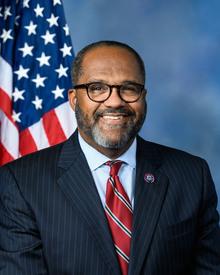
Official portrait of Troy A. Carter
DemocraticU.S. House · LA-2

Troy A. Carter

Louisiana · Official website · 202-225-6636
685
Positions recorded
119th Congress roll calls listing this member
9 of 685
Roll calls missed
Recorded "Not Voting" · House roll calls Jan 3, 2025 – Nov 12, 2026
35
Bills sponsored
119th Congress · Congress.gov
645
Bills cosponsored
119th Congress · Congress.gov

All figures are computed directly from the official House Clerk, senate.gov, and Congress.gov records for the 119th Congress. Methodology

Data last synced: votes Nov 17, 2026, 7:16 AM ET · bills Nov 17, 2026, 7:19 AM ET · floor remarks Nov 17, 2026, 8:56 AM ET · press releases Nov 17, 2026, 8:57 AM ET

119th CongressSponsored (35)Cosponsored (645)

H.R. 1464MODERN WIC Act of 2025

Progress: Introduction / referral onlyLatest action: Referred to the House Committee on Education and Workforce.
119th CongressPolicy area: Agriculture and Food
  • CosponsorAug 8, 2025
Official CRS summary
Official CRS summary (Introduced in House version) · Congress.gov(opens in a new tab)

This bill permanently allows individuals to remotely certify their eligibility for, and receive benefits through, the Special Supplemental Nutrition Program for Women, Infants, and Children (WIC).

Specifically, the bill requires that a state agency allow an individual seeking a WIC certification, recertification, or a nutritional risk evaluation to do so by phone or through video teleconference, in addition to the in-person option.

A state agency has 90 days to collect data for a nutritional risk evaluation for a remotely certified individual. Further, a state agency may consider an applicant who meets the income eligibility standards to be temporarily eligible on an interim basis to participate in the program and may certify the individual for immediate participation without waiting for a nutritional risk evaluation.

The bill also allows states to provide benefits on WIC electronic benefit transfer cards through mail or remote issuance instead of requiring participants to pick up or reload benefits in person at a WIC office.

Further, the Department of Agriculture must report to Congress about the use of remote technologies and other digital tools in the WIC program.

Currently, individuals are generally required to be physically present to certify their WIC eligibility and receive benefits, with exceptions. The Food and Nutrition Service has temporarily waived these requirements and allowed remote certification and benefits using authorities that were provided by laws that were enacted to address COVID-19.

Introduced Aug 8, 2025
Latest action Feb 21, 2025Congress.gov(opens in a new tab)GovInfo action history(opens in a new tab)Status checked Nov 4, 2026Record permalink

H.R. 4916Youth Voting Rights Act

Progress: Introduction / referral onlyLatest action: Referred to the Committee on House Administration, and in addition to the Committee on the Judiciary, for a period to be subsequently determined by the Speaker, in each case for consideration of such provisions as fall within the jurisdiction of the committee concerned.
119th CongressPolicy area: Government Operations and Politics
  • CosponsorOct 1, 2026
Official CRS summary
Official CRS summary (Introduced in House version) · Congress.gov(opens in a new tab)

This bill expands voting access for youth.

Specifically, the bill establishes a private right of action to enforce the Twenty-Sixth Amendment, which prohibits denying or abridging the right to vote based on age. Further, the bill authorizes the Department of Justice to enforce the Twenty-Sixth Amendment against age-based restrictions for voting by mail.

Additionally, the bill directs each state to

  • designate as voter registration agencies all offices within public institutions of higher education (IHEs) that provide assistance to students,
  • implement a preregistration process to allow minors who are 16 years or older to register to vote in federal elections that take place when or after the preregistered individual turns age 18, and
  • ensure the availability of polling places on campuses of IHEs (with the availability of waivers).

The bill prohibits durational residency requirements for voting in all federal elections. Currently, this prohibition applies only to voting for the offices of President and Vice President.

States and local jurisdictions with voter identification requirements must treat IHE-issued student identification cards as voter identification.

The Election Assistance Commission (EAC) must make grants to states to increase the involvement of individuals under age 18 in public election activities.

The Government Accountability Office must report to Congress on trends related to voter registration, absentee voting, and provisional voting. The EAC must also collect and make publicly available certain data from states.

Introduced Aug 5, 2025
Latest action Aug 5, 2025Congress.gov(opens in a new tab)GovInfo action history(opens in a new tab)Status checked Nov 4, 2026Record permalink

H.R. 4914Unhoused Voter Opportunity Through Elections Act

Progress: Introduction / referral onlyLatest action: Referred to the Committee on House Administration, and in addition to the Committees on Financial Services, and the Judiciary, for a period to be subsequently determined by the Speaker, in each case for consideration of such provisions as fall within the jurisdiction of the committee concerned.
119th CongressPolicy area: Government Operations and Politics
  • CosponsorOct 1, 2026
Official CRS summary
Official CRS summary (Introduced in House version) · Congress.gov(opens in a new tab)

This bill expands voter registration and voting access for unhoused individuals.

The bill specifies that no state or political subdivision may deny or abridge the right of any U.S. citizen to vote because the citizen resides at or in a nontraditional abode.

Additionally, the bill requires jurisdictions that allow for ballot drop boxes to ensure that these drop boxes are available for in-person use and are accessible and clearly labeled.

If a state requires individuals to show proof of residence in order to vote in a federal election, then the state must accept the individual’s written attestation of residence. A state may not prohibit an individual who is residing in a homeless shelter from using the shelter as the individual’s residence for purposes of voting in a federal election.

The bill requires chief state election officials to conduct outreach to unhoused individuals.

The bill directs the Election Assistance Commission to (1) develop best practices for election officials regarding voter registration and voting access for unhoused individuals, and (2) make grants to eligible states and local governments for programs and activities to support access to voting for unhoused individuals.

The bill also revises the National Voter Registration Act of 1993, including by (1) treating emergency shelters as voter registration agencies, and (2) allowing an unhoused individual to use an unsheltered street location as the individual's place of residence for purposes of a voter registration application.

Introduced Aug 5, 2025
Latest action Aug 5, 2025Congress.gov(opens in a new tab)GovInfo action history(opens in a new tab)Status checked Nov 4, 2026Record permalink

H.R. 4910Sustaining Our Democracy Act

Progress: Introduction / referral onlyLatest action: Referred to the House Committee on House Administration.
119th CongressPolicy area: Government Operations and Politics
  • CosponsorOct 1, 2026
Official CRS summary
Official CRS summary (Introduced in House version) · Congress.gov(opens in a new tab)

This bill establishes and provides funds through FY2035 for the State Election Assistance and Innovation Trust Fund for purposes of promoting election activities.

Specifically, the bill establishes the Democracy Advancement and Innovation Program, through which the Office of Democracy Advancement and Innovation (also established by this bill) shall make allocations to states for carrying out democracy promotion activities. These activities include improving the administration of federal elections, recruiting and training nonpartisan election officials and poll workers, and increasing voting access.

The bill requires each state, in order to receive allocated funds, to (1) submit a plan for approval that describes how the state will distribute resources and carry out democracy promotion activities, and (2) establish uniform and nondiscriminatory state-based administrative complaint procedures.

The bill prohibits states from using funds for certain activities, including any activity that diminishes the ability of any eligible voter to participate in the electoral process.

Introduced Aug 5, 2025
Latest action Aug 5, 2025Congress.gov(opens in a new tab)GovInfo action history(opens in a new tab)Status checked Nov 4, 2026Record permalink

H.R. 4908Time Off to Vote Act

Progress: Introduction / referral onlyLatest action: Referred to the House Committee on Education and Workforce.
119th CongressPolicy area: Government Operations and Politics
  • CosponsorOct 1, 2026
Official CRS summary
Official CRS summary (Introduced in House version) · Congress.gov(opens in a new tab)

This bill requires an employer, upon the request of an employee, to provide the employee with a minimum of two consecutive hours of paid leave while polls or sites that facilitate voting-related activity are open on the day of a federal election. This allotted time may be used to vote, return a mail-in ballot, or perform other voting-related activities.

The employer may determine the two-hour period, excluding any lunch break or other break.

Taking such leave shall not result in the employee losing accrued employment benefits.

The bill makes it unlawful for an employer to interfere with the right to take such leave or for an employer to discriminate against an employee for taking such leave. Further, the bill makes it unlawful for any employer to retaliate against an employee for (1) opposing any practice made unlawful by this bill; (2) filing a charge, or instituting or causing to be instituted any proceeding, under or related to this bill; or (3) testifying or preparing to testify in an inquiry or proceeding relating to such leave.

The bill specifies penalties for employers who violate these provisions.

Introduced Aug 5, 2025
Latest action Aug 5, 2025Congress.gov(opens in a new tab)GovInfo action history(opens in a new tab)Status checked Nov 4, 2026Record permalink

H.R. 4894Deceptive Practices and Voter Intimidation Prevention Act of 2025

Progress: Introduction / referral onlyLatest action: Referred to the House Committee on the Judiciary.
119th CongressPolicy area: Government Operations and Politics
  • Original cosponsorAug 5, 2025
Official CRS summary
Official CRS summary (Introduced in House version) · Congress.gov(opens in a new tab)

This bill generally prohibits deceptive communications and voter interference regarding federal elections.

Specifically, the bill prohibits any person, within 60 days before a federal election, from communicating, causing to be communicated, or producing for communication certain information on voting, if the person (1) knows such information to be materially false, and (2) has the intent to impede or prevent another person from voting in an election.

Additionally, the bill prohibits any person, within 60 days before a federal election, from using an artificial intelligence system to produce certain information on voting, if the person has the intent to use the system to (1) produce false information, and (2) impede or prevent another person from voting in an election.

The bill also prohibits hindering, interfering with, or preventing voting or registering to vote.

A private right of action for preventive relief is established for persons aggrieved by violations of these prohibitions.

Criminal penalties are also established for violations.

If the Department of Justice (DOJ) receives a credible report that materially false information has been or is being communicated in violation of the prohibitions on deceptive communications, and state and local election officials have not adequately communicated corrected information, then DOJ must communicate to the public accurate information designed to correct the materially false information.

The bill extends the prohibition on certain types of intimidation in federal elections to also prohibit intimidation for processing ballots or tabulating, canvassing, or certifying votes.
Introduced Aug 5, 2025
Latest action Aug 5, 2025Congress.gov(opens in a new tab)GovInfo action history(opens in a new tab)Status checked Nov 4, 2026Record permalink

H.R. 4797EATS Act of 2025

Progress: Introduction / referral onlyLatest action: Referred to the House Committee on Agriculture.
119th CongressPolicy area: Agriculture and Food
  • Original cosponsorJul 29, 2025
Official CRS summary
Official CRS summary (Introduced in House version) · Congress.gov(opens in a new tab)

This bill expands eligibility for the Supplemental Nutrition Assistance Program (SNAP) for certain students.

Specifically, the bill removes the restriction on SNAP eligibility for students to allow otherwise eligible students who are attending institutions of higher education (IHEs) at least half time to participate in SNAP. Under current law, students 18-49 years old are restricted from participating in SNAP, with exceptions (e.g., caring for a child under the age of 6 or employed for at least 20 hours a week). The Consolidated Appropriations Act, 2021 temporarily exempted some students from certain SNAP eligibility requirements; these temporary student exemptions expired after the end of the COVID-19 public health emergency on May 11, 2023.

Further, the bill provides that students enrolled at least half time in a recognized school, training program, or IHE constitute individual households (not residents of institutions) and may be eligible for SNAP benefits. (Participation in SNAP is limited to households.)

Introduced Jul 29, 2025
Latest action Jul 29, 2025Congress.gov(opens in a new tab)GovInfo action history(opens in a new tab)Status checked Nov 4, 2026Record permalink

H.R. 4763PTO Act

Progress: Introduction / referral onlyLatest action: Referred to the Committee on Education and Workforce, and in addition to the Committees on House Administration, Oversight and Government Reform, the Judiciary, and Transportation and Infrastructure, for a period to be subsequently determined by the Speaker, in each case for consideration of such provisions as fall within the jurisdiction of the committee concerned.
119th CongressPolicy area: Labor and Employment
  • CosponsorJun 30, 2026
Introduced Jul 25, 2025
Latest action Jul 25, 2025Congress.gov(opens in a new tab)GovInfo action history(opens in a new tab)Status checked Nov 4, 2026Record permalink

H.R. 2715Destruction of Hazardous Imports Act

Progress: Passed / agreed in one chamberLatest action: Received in the Senate and Read twice and referred to the Committee on Health, Education, Labor, and Pensions.
119th CongressPolicy area: Health
  • Original cosponsorApr 8, 2025
Official CRS summary
Official CRS summary (Reported to House version) · Congress.gov(opens in a new tab)

This bill expands the Food and Drug Administration’s (FDA’s) authority to require the destruction of certain items that are refused import into the United States and pose a risk to public health.

Under current law, imported food, drugs, medical devices, tobacco products, and cosmetics are subject to FDA review. If an imported item is deficient in a specified manner (e.g., counterfeit, misbranded, or manufactured under insanitary conditions), the item is generally refused admission to the United States. An item refused admission may generally be exported, except that the FDA may destroy a drug, medical device, or tobacco product that is valued under $2,500 without the opportunity for export.

Under the bill, the FDA may order the destruction, without the opportunity for export, of any food, drug, medical device, tobacco product, or cosmetic that is refused admission if the item presents a significant public health concern. If such an order is issued, the item’s owner or consignee must destroy it within 90 days at their own cost.

The bill also prohibits the unauthorized movement (e.g., export) of an item subject to a destruction order. A violator is subject to a fine, a prison term of up to one year, or both.

The FDA must promulgate regulations to carry out these provisions. These regulations must provide for due process for the owner or consignee of an item subject to a destruction order, including notice and an opportunity to appear before the item is destroyed.

Introduced Jul 25, 2025
Latest action Jul 21, 2026Congress.gov(opens in a new tab)GovInfo action history(opens in a new tab)Status checked Nov 17, 2026Record permalink

H.Res. 603Reaffirming the principles of the United States Constitution, including separation of powers and the rule of law, and condemning efforts to undermine the same.

Progress: Introduction / referral onlyLatest action: Referred to the House Committee on the Judiciary.
119th CongressPolicy area: Law
  • Original cosponsorJul 23, 2025
Introduced Jul 23, 2025
Latest action Jul 23, 2025Congress.gov(opens in a new tab)GovInfo action history(opens in a new tab)Status checked Nov 1, 2026Record permalink

H.R. 4621320th Barrage Balloon Battalion Gold Medal Act

Progress: Introduction / referral onlyLatest action: Referred to the Committee on Financial Services, and in addition to the Committee on House Administration, for a period to be subsequently determined by the Speaker, in each case for consideration of such provisions as fall within the jurisdiction of the committee concerned.
119th CongressPolicy area: Armed Forces and National Security
  • Original cosponsorJul 22, 2025
Introduced Jul 22, 2025
Latest action Jul 22, 2025Congress.gov(opens in a new tab)GovInfo action history(opens in a new tab)Status checked Nov 1, 2026Record permalink

H.R. 3045West Bank Violence Prevention Act of 2025

Progress: Introduction / referral onlyLatest action: Referred to the Committee on Foreign Affairs, and in addition to the Committee on the Judiciary, for a period to be subsequently determined by the Speaker, in each case for consideration of such provisions as fall within the jurisdiction of the committee concerned.
119th CongressPolicy area: International Affairs
  • CosponsorJul 21, 2025
Introduced Jul 21, 2025
Latest action Apr 28, 2025Congress.gov(opens in a new tab)GovInfo action history(opens in a new tab)Status checked Nov 4, 2026Record permalink

H.R. 4529Black Farmers and Socially Disadvantaged Farmers Increased Market Share Act

Progress: Introduction / referral onlyLatest action: Referred to the Committee on Agriculture, and in addition to the Committee on Ways and Means, for a period to be subsequently determined by the Speaker, in each case for consideration of such provisions as fall within the jurisdiction of the committee concerned.
119th CongressPolicy area: Agriculture and Food
  • Original cosponsorJul 17, 2025
Introduced Jul 17, 2025
Latest action Jul 17, 2025Congress.gov(opens in a new tab)GovInfo action history(opens in a new tab)Status checked Nov 4, 2026Record permalink

H.R. 4443Asunción Valdivia Heat Illness, Injury, and Fatality Prevention Act of 2025

Progress: Introduction / referral onlyLatest action: Referred to the House Committee on Education and Workforce.
119th CongressPolicy area: Labor and Employment
  • Original cosponsorJul 16, 2025
Introduced Jul 16, 2025
Latest action Jul 16, 2025Congress.gov(opens in a new tab)GovInfo action history(opens in a new tab)Status checked Nov 4, 2026Record permalink

H.Res. 585Recognizing the threat of extreme weather to children's health and well-being, and expressing the sense of Congress that solutions must be rapidly and equitably developed and deployed to address the unique vulnerabilities and needs of children.

Progress: Introduction / referral onlyLatest action: Referred to the House Committee on Energy and Commerce.
119th CongressPolicy area: Environmental Protection
  • Original cosponsorJul 16, 2025
Official CRS summary
Official CRS summary (Introduced in House version) · Congress.gov(opens in a new tab)

This resolution expresses the sense that adaptations to and protections from extreme weather conditions must be developed and deployed rapidly and equitably, with consideration for the physical and mental health needs of current and future generations of young people.

Introduced Jul 16, 2025
Latest action Jul 16, 2025Congress.gov(opens in a new tab)GovInfo action history(opens in a new tab)Status checked Nov 4, 2026Record permalink

H.R. 4395Stephanie Tubbs Jones Uterine Fibroid Research and Education Act of 2025

Progress: Introduction / referral onlyLatest action: Referred to the House Committee on Energy and Commerce.
119th CongressPolicy area: Health
  • Original cosponsorJul 15, 2025
Official CRS summary
Official CRS summary (Introduced in House version) · Congress.gov(opens in a new tab)

This bill directs the Department of Health and Human Services (HHS) to expand research on, and take other actions to address, uterine fibroids. These are muscular tumors that grow in the wall of the uterus and may cause pain, heavy menstrual bleeding, and reproductive issues.

In coordination with the National Institutes of Health and appropriate federal agencies, HHS must undertake research activities on uterine fibroids.

In addition, HHS must establish a database of services furnished to individuals diagnosed with uterine fibroids under Medicaid or the Children's Health Insurance Program and must develop a report on federal and state expenditures for such services.

Additionally, HHS must disseminate information on uterine fibroids to the public and to health care providers, including information on the elevated risk for minority women and available treatments.

Introduced Jul 15, 2025
Latest action Jul 15, 2025Congress.gov(opens in a new tab)GovInfo action history(opens in a new tab)Status checked Nov 4, 2026Record permalink

H.R. 3962ESTUARIES Act

Progress: Passed / agreed in one chamberLatest action: Received in the Senate and Read twice and referred to the Committee on Environment and Public Works.
119th CongressPolicy area: Environmental Protection
  • CosponsorJul 15, 2025
Official CRS summary
Official CRS summary (Introduced in House version) · Congress.gov(opens in a new tab)

This bill reauthorizes through FY2031 grants provided under the National Estuary Program to protect and restore estuaries of national significance. Estuaries are coastal waterbodies where freshwater from rivers and streams mixes with the ocean’s saltwater. Under the existing program, the Environmental Protection Agency provides grants for (1) developing and implementing comprehensive conservation and management plans for estuaries of national significance, and (2) addressing issues that threaten the ecological and economic well-being of such estuaries. The existing program provides grants to states, regional water pollution control agencies and entities, state coastal zone management agencies, interstate agencies, other public or nonprofit private agencies, institutions, organizations, and individuals.

Introduced Jul 15, 2025
Latest action Dec 16, 2025Congress.gov(opens in a new tab)GovInfo action history(opens in a new tab)Status checked Nov 4, 2026Record permalink

H.Res. 579Supporting the designation of July as Uterine Fibroids Awareness Month.

Progress: Introduction / referral onlyLatest action: Referred to the House Committee on Energy and Commerce.
119th CongressPolicy area: Health
  • Original cosponsorJul 14, 2025
Official CRS summary
Official CRS summary (Introduced in House version) · Congress.gov(opens in a new tab)

This resolution supports the goals and ideals of Uterine Fibroids Awareness Month.

Introduced Jul 14, 2025
Latest action Jul 14, 2025Congress.gov(opens in a new tab)GovInfo action history(opens in a new tab)Status checked Nov 4, 2026Record permalink

H.Res. 577Demanding the immediate release of all Federal documents relating to Jeffrey Epstein.

Progress: Introduction / referral onlyLatest action: Referred to the House Committee on the Judiciary.
119th CongressPolicy area: Crime and Law Enforcement
  • Original cosponsorJul 14, 2025
Introduced Jul 14, 2025
Latest action Jul 14, 2025Congress.gov(opens in a new tab)GovInfo action history(opens in a new tab)Status checked Nov 4, 2026Record permalink

H.R. 4336CBP SPACE Act

Progress: Introduction / referral onlyLatest action: Referred to the House Committee on Ways and Means.
119th CongressPolicy area: Foreign Trade and International Finance
  • Original cosponsorJul 10, 2025
Official CRS summary
Official CRS summary (Introduced in House version) · Congress.gov(opens in a new tab)

This bill expands the authorities for adjusting the rate for merchandise processing fees and the requirements for using certain customs user fees. It also prohibits U.S. Customs and Border Protection (CBP) from requiring sea ports of entry to provide or maintain certain facilities for CBP inspection services.

Specifically, the bill authorizes the Department of the Treasury to adjust the ad valorem rate for merchandise processing and the related limits on the amount of the fees to offset CBP's capital costs for processing entries and releases of merchandise. (Currently, Treasury may only adjust the rate and limits to offset CBP's related salaries and expenses.) The bill also requires Treasury to use certain customs user fees to reimburse CBP for paying capital costs associated with passenger inspection services.

Additionally, the bill (1) prohibits CBP from requesting or requiring a sea port of entry to provide or maintain administrative, training, or recreational facilities at the port for purposes of facilitating CBP's inspection services; and (2) requires CBP to submit an annual report to appropriate congressional committees on the amount and use of proceeds from merchandise processing fees.

Introduced Jul 10, 2025
Latest action Jul 10, 2025Congress.gov(opens in a new tab)GovInfo action history(opens in a new tab)Status checked Nov 4, 2026Record permalink

H.R. 1423Guard and Reserve GI Bill Parity Act of 2025

Progress: Other action recordedLatest action: Forwarded by Subcommittee to Full Committee by Voice Vote.
119th CongressPolicy area: Armed Forces and National Security
  • CosponsorJul 10, 2025
Official CRS summary
Official CRS summary (Introduced in House version) · Congress.gov(opens in a new tab)

This bill expands eligibility for Post-9/11 educational assistance for members of the reserve components of the Armed Forces and members of the National Guard. Specifically, the bill expands the types of activities that count towards Post-9/11 GI Bill eligibility to include active duty, inactive-duty training, annual training duty, and full-time National Guard duty or active duty. (Generally, under current law, only federal active duty counts towards educational assistance eligibility.)

Introduced Jul 10, 2025
Latest action Apr 9, 2025Congress.gov(opens in a new tab)GovInfo action history(opens in a new tab)Status checked Nov 4, 2026Record permalink

H.Res. 575Expressing support for the designation of July 10th as Journeyman Lineworkers Recognition Day.

Progress: Introduction / referral onlyLatest action: Referred to the House Committee on Energy and Commerce.
119th CongressPolicy area: Labor and Employment
  • Original cosponsorJul 10, 2025
Official CRS summary
Official CRS summary (Introduced in House version) · Congress.gov(opens in a new tab)

This resolution expresses support for the designation of Journeyman Lineworkers Recognition Day. (A journeyman lineworker is a person who builds and maintains electrical power systems.)

Introduced Jul 10, 2025
Latest action Jul 10, 2025Congress.gov(opens in a new tab)GovInfo action history(opens in a new tab)Status checked Nov 4, 2026Record permalink

H.R. 2343John W. Walsh Alpha-1 Home Infusion Act of 2025

Progress: Introduction / referral onlyLatest action: Referred to the Committee on Energy and Commerce, and in addition to the Committee on Ways and Means, for a period to be subsequently determined by the Speaker, in each case for consideration of such provisions as fall within the jurisdiction of the committee concerned.
119th CongressPolicy area: Health
  • CosponsorJun 30, 2025
Official CRS summary
Official CRS summary (Introduced in House version) · Congress.gov(opens in a new tab)

This bill provides for Medicare coverage of treatment for alpha-1 antitrypsin (AAT) deficiency (a protein deficiency that raises the risk of lung and other diseases). Specifically, the bill provides for coverage of at-home augmentation therapy for beneficiaries with emphysema as a result of severe hereditary AAT deficiency. Treatment must be provided through qualified home infusion therapy suppliers; beneficiaries must be under the care of a physician, nurse practitioner, or physician assistant.

Introduced Jun 30, 2025
Latest action Mar 25, 2025Congress.gov(opens in a new tab)GovInfo action history(opens in a new tab)Status checked Nov 4, 2026Record permalink

H.R. 1477Animal Cruelty Enforcement Act of 2025

Progress: Introduction / referral onlyLatest action: Referred to the House Committee on the Judiciary.
119th CongressPolicy area: Crime and Law Enforcement
  • CosponsorJun 30, 2025
Official CRS summary
Official CRS summary (Introduced in House version) · Congress.gov(opens in a new tab)

This bill establishes a new section in the Environment and Natural Resources Division of the Department of Justice to enforce federal laws concerning animal cruelty.

Introduced Jun 30, 2025
Latest action Feb 21, 2025Congress.gov(opens in a new tab)GovInfo action history(opens in a new tab)Status checked Nov 4, 2026Record permalink

H.Con.Res. 40Directing the President, pursuant to section 5(c) of the War Powers Resolution, to remove United States Armed Forces from hostilities with Iran.

Progress: Other action recordedLatest action: Motion to reconsider laid on the table Agreed to without objection.
119th CongressPolicy area: International Affairs
  • CosponsorJun 24, 2025
Official CRS summary
Official CRS summary (Introduced in House version) · Congress.gov(opens in a new tab)

This concurrent resolution directs the President to remove U.S. Armed Forces from hostilities against Iran unless explicitly authorized by a declaration of war or a congressional authorization for use of military force against Iran.

Elements of the U.S. Armed Forces needed to defend the United States, an ally, or a partner from imminent attack are not covered by this requirement provided the President complies with a specified provision of the War Powers Resolution. (The provision generally requires the President to remove U.S. Armed Forces from hostilities no more than 60 days after the President notifies or is required to notify Congress of such involvement, unless Congress authorizes such use. For more information on the War Powers Resolution, see CRS In Focus 13134.)

Introduced Jun 27, 2025
Latest action Apr 16, 2026Congress.gov(opens in a new tab)GovInfo action history(opens in a new tab)Status checked Nov 4, 2026Record permalink

H.R. 4228Original Justice for living survivors of the 1921 Tulsa/Greenwood Race Massacre Act

Progress: Introduction / referral onlyLatest action: Referred to the House Committee on the Judiciary.
119th CongressPolicy area: Crime and Law Enforcement
  • Original cosponsorJun 27, 2025
Introduced Jun 27, 2025
Latest action Jun 27, 2025Congress.gov(opens in a new tab)GovInfo action history(opens in a new tab)Status checked Nov 4, 2026Record permalink

H.R. 4188VA Flood Preparedness Act

Progress: Other action recordedLatest action: Referred to the Subcommittee on Health.
119th CongressPolicy area: Armed Forces and National Security
  • Original cosponsorJun 26, 2025
Official CRS summary
Official CRS summary (Introduced in House version) · Congress.gov(opens in a new tab)

This bill authorizes the Department of Veterans Affairs (VA) to make contributions to local authorities to mitigate the risk of flooding on local property adjacent to VA medical facilities.

Introduced Jun 26, 2025
Latest action Jun 28, 2025Congress.gov(opens in a new tab)GovInfo action history(opens in a new tab)Status checked Nov 4, 2026Record permalink