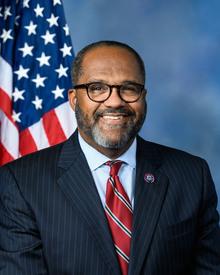
Official portrait of Troy A. Carter
DemocraticU.S. House · LA-2

Troy A. Carter

Louisiana · Official website · 202-225-6636
685
Positions recorded
119th Congress roll calls listing this member
9 of 685
Roll calls missed
Recorded "Not Voting" · House roll calls Jan 3, 2025 – Nov 12, 2026
35
Bills sponsored
119th Congress · Congress.gov
645
Bills cosponsored
119th Congress · Congress.gov

All figures are computed directly from the official House Clerk, senate.gov, and Congress.gov records for the 119th Congress. Methodology

Data last synced: votes Nov 17, 2026, 7:16 AM ET · bills Nov 17, 2026, 7:19 AM ET · floor remarks Nov 17, 2026, 8:56 AM ET · press releases Nov 17, 2026, 8:57 AM ET

119th CongressSponsored (35)Cosponsored (645)

H.R. 3324Safer Shrimp Imports Act

Progress: Introduction / referral onlyLatest action: Referred to the House Committee on Energy and Commerce.
119th CongressPolicy area: Agriculture and Food
  • Original cosponsorMay 13, 2025
Official CRS summary
Official CRS summary (Introduced in House version) · Congress.gov(opens in a new tab)

This bill prohibits the importation of shrimp from countries that do not have food inspection systems equivalent to the Food and Drug Administration (FDA) inspection system for shrimp, or that have not entered into an agreement with the FDA facilitating U.S. inspection of their food facilities.

Specifically, the FDA must seek to enter into arrangements and agreements with the government of each country with at least one facility that manufactures, processes, packs, or holds shrimp for consumption in the United States to facilitate FDA inspection of such facilities.

The bill prohibits the importation of shrimp that is manufactured, processed, packed, or held in a country (1) that has not entered into an inspection arrangement or agreement with the FDA, or (2) the food inspection system of which is not equivalent to the FDA’s food inspection system with respect to shrimp. To be considered equivalent, a country’s food inspection system must include staffing that ensures uniform enforcement of applicable laws and regulations, and must provide for the enforcement of laws and regulations that address conditions under which shrimp are raised and transported to processing facilities.

Further, shrimp imported or offered for import into the United States that have been manufactured, processed, packed, or held in a country that is not compliant with these requirements are deemed adulterated, and thus may not be introduced into interstate commerce.

Introduced May 13, 2025
Latest action May 13, 2025Congress.gov(opens in a new tab)GovInfo action history(opens in a new tab)Status checked Nov 5, 2026Record permalink

H.R. 3296MIL FMLA Act

Progress: Introduction / referral onlyLatest action: Referred to the Committee on Education and Workforce, and in addition to the Committees on Oversight and Government Reform, and House Administration, for a period to be subsequently determined by the Speaker, in each case for consideration of such provisions as fall within the jurisdiction of the committee concerned.
119th CongressPolicy area: Armed Forces and National Security
  • Original cosponsorMay 8, 2025
Introduced May 8, 2025
Latest action May 8, 2025Congress.gov(opens in a new tab)GovInfo action history(opens in a new tab)Status checked Nov 5, 2026Record permalink

H.R. 3281To prohibit the reduction, elimination, or suspension of funding for land-grant colleges and universities.

Progress: Introduction / referral onlyLatest action: Referred to the Committee on Agriculture, and in addition to the Committee on Education and Workforce, for a period to be subsequently determined by the Speaker, in each case for consideration of such provisions as fall within the jurisdiction of the committee concerned.
119th CongressPolicy area: Agriculture and Food
  • CosponsorSep 15, 2025
Official CRS summary
Official CRS summary (Introduced in House version) · Congress.gov(opens in a new tab)

This bill prohibits the Department of Agriculture or any federal official from taking any action to reduce, eliminate, or suspend funding for land-grant colleges and universities unless such action is specifically authorized by Congress.

Land-grant colleges and universities are designated to receive benefits of the Morrill Acts of 1862 and 1890. These acts promoted establishment of institutions of higher learning focused on the agricultural and mechanical arts, without excluding other scientific and classical studies. Land-grant institutions now address many academic fields in addition to those of their foundational colleges of agriculture. There is at least one land-grant institution in each U.S. state, the District of Columbia, and the insular areas. Land-grant institutions currently receive federal funding through the annual appropriations process.

Introduced May 8, 2025
Latest action May 8, 2025Congress.gov(opens in a new tab)GovInfo action history(opens in a new tab)Status checked Nov 4, 2026Record permalink

H.R. 3069Medicare for All Act

Progress: Introduction / referral onlyLatest action: Referred to the Committee on Energy and Commerce, and in addition to the Committees on Ways and Means, Education and Workforce, Rules, Oversight and Government Reform, Armed Services, and the Judiciary, for a period to be subsequently determined by the Speaker, in each case for consideration of such provisions as fall within the jurisdiction of the committee concerned.
119th CongressPolicy area: Health
  • Original cosponsorApr 29, 2025
Official CRS summary
Official CRS summary (Introduced in House version) · Congress.gov(opens in a new tab)

This bill establishes a national health insurance program that is administered by the Department of Health and Human Services (HHS).

Among other requirements, the program must (1) cover all U.S. residents; (2) provide for automatic enrollment of individuals upon birth or residency in the United States; and (3) cover items and services that are medically necessary or appropriate to maintain health or to diagnose, treat, or rehabilitate a health condition, including hospital services, prescription drugs, mental health and substance abuse treatment, dental and vision services, long-term care, gender affirming care, and reproductive care, including contraception and abortions.

The bill prohibits cost-sharing (e.g., deductibles, coinsurance, and copayments) and other charges for covered services. Additionally, private health insurers and employers may only offer coverage that is supplemental to, and not duplicative of, benefits provided under the program.

Health insurance exchanges and specified federal health programs terminate upon program implementation. However, the program does not affect coverage provided through the Department of Veterans Affairs or the Indian Health Service.

The bill also establishes a series of implementing provisions relating to (1) health care provider participation; (2) HHS administration; and (3) payments and costs, including the requirement that HHS negotiate prices for prescription drugs.

Individuals who are age 18 or younger, age 55 or older, or already enrolled in Medicare may enroll in the program starting one year after enactment of this bill; other individuals may buy into the program at this time. The program must be fully implemented two years after enactment.

Introduced Apr 29, 2025
Latest action Apr 29, 2025Congress.gov(opens in a new tab)GovInfo action history(opens in a new tab)Status checked Nov 5, 2026Record permalink

H.R. 15Equality Act

Progress: Introduction / referral onlyLatest action: Referred to the Committee on the Judiciary, and in addition to the Committees on Education and Workforce, Financial Services, House Administration, and Oversight and Government Reform, for a period to be subsequently determined by the Speaker, in each case for consideration of such provisions as fall within the jurisdiction of the committee concerned.
119th CongressPolicy area: Civil Rights and Liberties, Minority Issues
  • Original cosponsorApr 29, 2025
Official CRS summary
Official CRS summary (Introduced in House version) · Congress.gov(opens in a new tab)

This bill prohibits discrimination based on sex, sexual orientation, or gender identity with respect to businesses, employment, housing, federally funded programs, and other settings.

Specifically, the bill expands Title II and Title VI of the Civil Rights Act of 1964 to prohibit public accommodations and federally funded programs, respectively, from discriminating based on sex, sexual orientation, or gender identity. It also includes stores, transit services, recreational facilities, and establishments that provide health care, accounting, or legal services as public accommodations under Title II.

The bill also expands Title IV (desegregation of public schools) and Title VII (employment discrimination) to specifically include sexual orientation and gender identity. (The Supreme Court held in Bostock v. Clayton County that Title VII's prohibition of employment discrimination based on sex also prohibits employment discrimination based on sexual orientation or gender identity.)

The bill similarly expands the Fair Housing Act (discrimination in public and private housing) to include sexual orientation and gender identity. It also prohibits discrimination based on sexual orientation or gender identity by creditors and with respect to jury selection.

The bill defines sex for purposes of the aforementioned provisions to include sex stereotypes, pregnancy, childbirth, sexual orientation, gender identity, and sex characteristics.

Introduced Apr 29, 2025
Latest action Apr 29, 2025Congress.gov(opens in a new tab)GovInfo action history(opens in a new tab)Status checked Nov 5, 2026Record permalink

H.R. 2094HELPER Act of 2025

Progress: Introduction / referral onlyLatest action: Referred to the House Committee on Financial Services.
119th CongressPolicy area: Finance and Financial Sector
  • CosponsorJun 29, 2026
Official CRS summary
Official CRS summary (Introduced in House version) · Congress.gov(opens in a new tab)

This bill establishes a program administered by the Department of Housing and Urban Development to provide mortgage assistance to law enforcement officers, elementary and secondary school teachers, firefighters, or other first responders. Specifically, these individuals may be eligible for a first-time mortgage on a primary family residence with no down payment. Instead, the mortgage is subject to a one-time, up-front mortgage insurance premium.

Introduced Apr 28, 2025
Latest action Mar 14, 2025Congress.gov(opens in a new tab)GovInfo action history(opens in a new tab)Status checked Nov 4, 2026Record permalink

H.Res. 70Expressing the sense of the House of Representatives that Congress should take all appropriate measures to ensure that the United States Postal Service remains an independent establishment of the Federal Government and is not subject to privatization.

Progress: Introduction / referral onlyLatest action: Referred to the House Committee on Oversight and Government Reform.
119th CongressPolicy area: Government Operations and Politics
  • CosponsorApr 1, 2025
Official CRS summary
Official CRS summary (Introduced in House version) · Congress.gov(opens in a new tab)

This resolution expresses the sense of the House of Representatives that Congress should ensure that the U.S. Postal Service is not privatized and remains an independent establishment of the federal government.

Introduced Apr 28, 2025
Latest action Jan 28, 2025Congress.gov(opens in a new tab)GovInfo action history(opens in a new tab)Status checked Nov 4, 2026Record permalink

H.R. 2948Safer Neighborhoods Gun Buyback Act of 2025

Progress: Introduction / referral onlyLatest action: Referred to the House Committee on the Judiciary.
119th CongressPolicy area: Crime and Law Enforcement
  • CosponsorApr 24, 2025
Official CRS summary
Official CRS summary (Introduced in House version) · Congress.gov(opens in a new tab)

This bill authorizes the Department of Justice's Bureau of Justice Assistance (BJA) to make grants to state, local, or tribal governments, or gun dealers, to conduct gun buyback programs. Gun dealers must turn over any collected firearms to the appropriate government agency, as specified.

The BJA may distribute smart prepaid cards for a state, local, or tribal government, or gun dealer, to load funds to compensate individuals who dispose of firearms.

Additionally, the bill establishes a new criminal offense for using or accepting a smart prepaid card in the acquisition or transfer of a firearm or ammunition. A violator is subject to a fine.

Introduced Apr 24, 2025
Latest action Apr 17, 2025Congress.gov(opens in a new tab)GovInfo action history(opens in a new tab)Status checked Nov 5, 2026Record permalink

H.R. 2799Closing the Bump Stock Loophole Act of 2025

Progress: Introduction / referral onlyLatest action: Referred to the Committee on the Judiciary, and in addition to the Committee on Ways and Means, for a period to be subsequently determined by the Speaker, in each case for consideration of such provisions as fall within the jurisdiction of the committee concerned.
119th CongressPolicy area: Crime and Law Enforcement
  • CosponsorApr 24, 2025
Official CRS summary
Official CRS summary (Introduced in House version) · Congress.gov(opens in a new tab)

This bill generally prohibits the import, sale, manufacture, transfer, receipt, or possession of

  • a device that is primarily designed, or redesigned, to increase the rate of fire when attached to a semiautomatic firearm;
  • a device, part, or combination of parts that is designed and functions to increase the rate of fire of a firearm; or
  • a semiautomatic firearm that has been modified to materially increase the rate of fire or to approximate the action or rate of fire of a machine gun.

Additionally, the bill adds to the list of firearms subject to regulation under the National Firearms Act semiautomatic firearms that have been modified to materially increase the rate of fire or approximate the action or rate of fire of a machine gun.

Introduced Apr 24, 2025
Latest action Apr 9, 2025Congress.gov(opens in a new tab)GovInfo action history(opens in a new tab)Status checked Nov 5, 2026Record permalink

H.R. 2548Sanctioning Russia Act of 2025

Progress: Introduction / referral onlyLatest action: Referred to the Committee on Foreign Affairs, and in addition to the Committees on the Judiciary, Financial Services, Ways and Means, and Oversight and Government Reform, for a period to be subsequently determined by the Speaker, in each case for consideration of such provisions as fall within the jurisdiction of the committee concerned.
119th CongressPolicy area: International Affairs
  • CosponsorDec 18, 2025
Official CRS summary
Official CRS summary (Introduced in House version) · Congress.gov(opens in a new tab)

This bill imposes penalties on certain persons (individuals and entities) if the President determines that the Russian government or a person acting at Russia's direction is involved with (1) refusing to negotiate a peace agreement with Ukraine; (2) violating a negotiated peace agreement; (3) initiating another invasion of Ukraine; or (4) overthrowing, dismantling, or seeking to subvert the Ukrainian government.

If the President makes such a determination, the bill requires certain actions including

  • the President must impose visa- and property-blocking sanctions on specified persons such as the Russian president, certain Russian military commanders, and any foreign person that knowingly provides defense items to the Russian armed forces;
  • the President must increase the rate of duty on all goods and services imported from Russia into the United States to at least 500% relative to the value of such goods and services;
  • the President must increase the rate of duty on all goods and services imported into the United States from countries that knowingly engage in the exchange of Russian-origin uranium and petroleum products to at least 500% relative to the value of such goods and services;
  • the Department of the Treasury must impose property-blocking sanctions on any financial institution organized under Russian law and owned wholly or partly by Russia, and any financial institution that engages in transactions with those entities; and
  • the Department of Commerce must prohibit the export, reexport, or in-country transfer to or in Russia of any U.S.-produced energy or energy product.
Introduced Apr 24, 2025
Latest action Apr 1, 2025Congress.gov(opens in a new tab)GovInfo action history(opens in a new tab)Status checked Nov 4, 2026Record permalink

H.Res. 352Calling on elected officials and civil society leaders to counter antisemitism and educate the public on the contributions of the Jewish American community.

Progress: Passed / agreed in one chamberLatest action: Motion to reconsider laid on the table Agreed to without objection.
119th CongressPolicy area: Civil Rights and Liberties, Minority Issues
  • Original cosponsorApr 24, 2025
Official CRS summary
Official CRS summary (Introduced in House version) · Congress.gov(opens in a new tab)

This resolution calls on elected officials, faith leaders, and civil society leaders to condemn and counter acts of anti-Semitism.

Introduced Apr 24, 2025
Latest action May 14, 2025Congress.gov(opens in a new tab)GovInfo action history(opens in a new tab)Status checked Nov 5, 2026Record permalink

H.Res. 337Recognizing linemen, the profession of linemen, the contributions of these brave men and women who protect public safety, and expressing support for the designation of April 18, 2025, as "National Lineman Appreciation Day".

Progress: Introduction / referral onlyLatest action: Referred to the House Committee on Energy and Commerce.
119th CongressPolicy area: Labor and Employment
  • Original cosponsorApr 17, 2025
Introduced Apr 17, 2025
Latest action Apr 17, 2025Congress.gov(opens in a new tab)GovInfo action history(opens in a new tab)Status checked Nov 5, 2026Record permalink

H.R. 2901Department of Homeland Security Officer for Civil Rights and Civil Liberties Act

Progress: Other action recordedLatest action: Referred to the Subcommittee on Oversight, Investigations, and Accountability.
119th CongressPolicy area: Civil Rights and Liberties, Minority Issues
  • Original cosponsorApr 10, 2025
Introduced Apr 10, 2025
Latest action Apr 10, 2025Congress.gov(opens in a new tab)GovInfo action history(opens in a new tab)Status checked Nov 5, 2026Record permalink

H.R. 2836FEMA Loan Interest Payment Relief Act

Progress: Other action recordedLatest action: Referred to the Subcommittee on Economic Development, Public Buildings, and Emergency Management.
119th CongressPolicy area: Emergency Management
  • Original cosponsorApr 10, 2025
Official CRS summary
Official CRS summary (Introduced in House version) · Congress.gov(opens in a new tab)

This bill requires the Federal Emergency Management Agency (FEMA) to reimburse a local government or electric cooperative for interest paid on a loan used for emergency or disaster-related activities later paid for by FEMA assistance. The bill provides for similar reimbursement of interest to states for projects that are pending obligation.

The bill retroactively applies to interest incurred by a local government or electric cooperative in the nine years preceding enactment of the bill.

FEMA must reimburse states for loan interest for emergency or disaster-related projects that are pending obligation on the date of the bill’s enactment. FEMA must publish procedures for such reimbursement within 30 days after the bill’s enactment and states must apply within 60 days after publication of the procedures.

The interest that qualifies for reimbursement may not exceed the amount of interest that would have been paid if the loan's interest rate were equal to the most recent prime rate.

Introduced Apr 10, 2025
Latest action Apr 10, 2025Congress.gov(opens in a new tab)GovInfo action history(opens in a new tab)Status checked Nov 5, 2026Record permalink

H.R. 2821FDA Modernization Act 3.0

Progress: Passed / agreed in one chamberLatest action: Received in the Senate.
119th CongressPolicy area: Health
  • Original cosponsorApr 10, 2025
Official CRS summary
Official CRS summary (Introduced in House version) · Congress.gov(opens in a new tab)

This bill requires the Food and Drug Administration (FDA) to publish an interim final rule implementing a provision of the Consolidated Appropriations Act of 2023 that authorized the use of certain alternatives to animal testing to support investigational use of a new drug.

The rule must replace references to animal tests, data, studies, models, and research with references to nonclinical tests, data, studies, models, and research throughout the FDA’s regulations governing investigational new drug applications.

The rule must be published within one year of the bill’s enactment, and must take immediate effect as an interim final rule.

Introduced Apr 10, 2025
Latest action Jul 21, 2026Congress.gov(opens in a new tab)GovInfo action history(opens in a new tab)Status checked Nov 5, 2026Record permalink

H.R. 2531Workplace Violence Prevention for Health Care and Social Service Workers Act

Progress: Introduction / referral onlyLatest action: Referred to the Committee on Education and Workforce, and in addition to the Committees on Energy and Commerce, and Ways and Means, for a period to be subsequently determined by the Speaker, in each case for consideration of such provisions as fall within the jurisdiction of the committee concerned.
119th CongressPolicy area: Labor and Employment
  • CosponsorApr 10, 2025
Official CRS summary
Official CRS summary (Introduced in House version) · Congress.gov(opens in a new tab)

This bill requires the Department of Labor to address workplace violence in health care, social service, and similar sectors.

Specifically, Labor must issue an occupational safety and health standard that requires certain employers to take actions to protect workers and other personnel from workplace violence. The standard applies to employers in the health care sector, in the social service sector, and in sectors that conduct activities similar to those in the health care and social service sectors. Among other elements, the standard must require each employer to (1) develop a workplace violence prevention plan, (2) promptly investigate incidents of workplace violence, and (3) provide relevant training and education to employees.

The bill requires certain hospitals and skilled nursing facilities to comply with this standard as a condition of Medicare participation.

Introduced Apr 10, 2025
Latest action Apr 1, 2025Congress.gov(opens in a new tab)GovInfo action history(opens in a new tab)Status checked Nov 5, 2026Record permalink

H.R. 2713MAIN Event Ticketing Act

Progress: Other action recordedLatest action: Ordered to be Reported (Amended) by the Yeas and Nays: 36 - 0.
119th CongressPolicy area: Commerce
  • Original cosponsorApr 8, 2025
Official CRS summary
Official CRS summary (Introduced in House version) · Congress.gov(opens in a new tab)

This bill expands measures to protect the security and integrity of online ticket sales.

Specifically, the bill prohibits the use of applications that perform automated tasks to purchase event tickets from online ticket sellers in circumvention of the seller's posted ticket purchasing order rules. This includes using software applications that circumvent access control systems or security measures.

In addition, online ticket sellers must establish, implement, and maintain reasonable administrative, technical, and physical safeguards to protect the security, confidentiality, integrity, or availability of the seller's website or service.

Further, online ticket sellers must report known incidents of circumvention to the Federal Trade Commission and take reasonable steps to address any such incidents.

The bill establishes civil penalties for violations of the provisions of this bill (and related prohibitions under current law) and authorizes the commission to bring civil actions for such violations.

Federal, state, and local law enforcement agencies must coordinate as appropriate with the commission to share information about known instances of cyberattacks against the websites or online services used by ticket sellers.

The commission must report to Congress on the status of enforcement actions taken under this bill.

Introduced Apr 8, 2025
Latest action Sep 16, 2026Congress.gov(opens in a new tab)GovInfo action history(opens in a new tab)Status checked Nov 5, 2026Record permalink

H.R. 1608Department of Homeland Security Vehicular Terrorism Prevention and Mitigation Act of 2025

Progress: Passed / agreed in one chamberLatest action: Received in the Senate and Read twice and referred to the Committee on Homeland Security and Governmental Affairs.
119th CongressPolicy area: Transportation and Public Works
  • CosponsorApr 8, 2025
Official CRS summary
Official CRS summary (Introduced in House version) · Congress.gov(opens in a new tab)

This bill directs the Department of Homeland Security (DHS) to submit a report to Congress on the department's efforts to prevent, deter, and respond to vehicular terrorism (i.e., an action that utilizes automotive transportation to commit terrorism). DHS must submit the report in coordination with the Transportation Security Administration and the Cybersecurity and Infrastructure Security Agency.

Among other things, the report on vehicular terrorism must include

  • an assessment of the current and emerging threats;
  • a review of higher-risk locations and events that may be vulnerable, including critical infrastructure sites (e.g., airports and government facilities);
  • a description of DHS’s coordination efforts with federal, state, local, tribal, and territorial law enforcement agencies related to prevention; and
  • recommendations for the research, development, and deployment of technologies to detect, deter, and mitigate vehicular terrorism.

DHS must submit a classified report to Congress, but may include an unclassified executive summary. DHS must publish the executive summary on the department's website.

In addition, DHS must brief Congress on the report's findings, conclusions, and recommendations.

Introduced Apr 8, 2025
Latest action Nov 18, 2025Congress.gov(opens in a new tab)GovInfo action history(opens in a new tab)Status checked Nov 5, 2026Record permalink

H.Res. 233Supporting the designation of April 2025 as "National Native Plant Month".

Progress: Introduction / referral onlyLatest action: Referred to the House Committee on Natural Resources.
119th CongressPolicy area: Public Lands and Natural Resources
  • CosponsorApr 8, 2025
Official CRS summary
Official CRS summary (Introduced in House version) · Congress.gov(opens in a new tab)

This resolution supports the designation of National Native Plant.

Introduced Apr 8, 2025
Latest action Mar 21, 2025Congress.gov(opens in a new tab)GovInfo action history(opens in a new tab)Status checked Nov 5, 2026Record permalink

H.R. 2692No Tax Breaks for Union Busting (NTBUB) Act

Progress: Introduction / referral onlyLatest action: Referred to the House Committee on Ways and Means.
119th CongressPolicy area: Taxation
  • Original cosponsorApr 7, 2025
Official CRS summary
Official CRS summary (Introduced in House version) · Congress.gov(opens in a new tab)

This bill excludes from the tax deduction for ordinary and necessary business expenses amounts paid or incurred to influence employees with respect to labor organizations or labor organization activities. The bill also imposes information reporting requirements related to such expenses and imposes penalties for failure to comply.

Under the bill, amounts paid to influence employees with respect to labor organizations include amounts paid (including wages and other costs)

  • in connection with an action that results in a complaint or settlement related to an unfair labor practice or a finding of interference, influence, or coercion related to railway employees’ rights to organize and bargain collectively;
  • for any meeting or training attended by employees and at which labor organizations are discussed; and
  • that require certain employer disclosures and financial reporting.

(Some exceptions apply.)

The bill requires employers to file a return reporting certain information related to expenses paid to influence employees with respect to labor organizations and imposes a penalty for noncompliance. The amount of the penalty is the greater of (1) $10,000, or (2) $1,000 multiplied by the number full-time equivalent employees. Additional penalties apply for violations that continue for more than 90 days.

The bill also imposes information reporting requirements on persons conducting activities on behalf of another person to influence employees with respect to labor organizations.

The bill allows certain penalties for noncompliance with the reporting requirements to be waived if noncompliance is due to reasonable cause and not willful neglect.

Introduced Apr 7, 2025
Latest action Apr 7, 2025Congress.gov(opens in a new tab)GovInfo action history(opens in a new tab)Status checked Nov 5, 2026Record permalink

H.R. 2396Honor Farmer Contracts Act

Progress: Other action recordedLatest action: Referred to the Subcommittee on General Farm Commodities, Risk Management, and Credit.
119th CongressPolicy area: Agriculture and Food
  • CosponsorApr 7, 2025
Official CRS summary
Official CRS summary (Introduced in House version) · Congress.gov(opens in a new tab)

This bill requires the Department of Agriculture (USDA) to unfreeze funding for agreements and contracts and prohibits USDA from closing certain offices and service centers without notifying Congress in advance.

Specifically, USDA must (1) unfreeze funding for, and implement, all agreements and contracts entered into by USDA prior to the bill's enactment; and (2) pay all related past due amounts owed by USDA as rapidly as possible.

Further, the bill prohibits USDA from canceling a signed agreement or contract with a farmer or an entity providing assistance to farmers (unless the farmer or entity is not in compliance with the terms and conditions of the contract).

Finally, the bill prohibits USDA from closing Farm Service Agency county offices, Natural Resources Conservation Service field offices, or Rural Development Service Centers without providing written notice and a justification to Congress at least 60 days before the closure.

Introduced Apr 7, 2025
Latest action Apr 18, 2025Congress.gov(opens in a new tab)GovInfo action history(opens in a new tab)Status checked Nov 5, 2026Record permalink

H.R. 595To amend the Convention on Cultural Property Implementation Act to make certain technical corrections to facilitate the lawful trade and collecting of numismatic materials.

Progress: Introduction / referral onlyLatest action: Referred to the House Committee on Ways and Means.
119th CongressPolicy area: Foreign Trade and International Finance
  • CosponsorApr 7, 2025
Official CRS summary
Official CRS summary (Introduced in House version) · Congress.gov(opens in a new tab)

This bill revises the standard for providing satisfactory evidence to U.S. Customs and Border Protection (CBP) regarding the importation of numismatic material (i.e., coins, tokens, paper money, medals, and related objects) into the United States.

Current law generally prohibits the importation of designated archaeological or ethnological material that is exported from certain countries that are a party to the 1970 UNESCO Convention on the Means of Prohibiting and Preventing the Illicit Import, Export and Transfer of Ownership of Cultural Property. Importation is allowed if the country issues a certification or other documentation certifying the exportation was not in violation of the country's laws. The United States implements its obligations through the Convention on Cultural Property Implementation Act.

Under current law, CBP must seize imports of designated archaeological or ethnological material unless the importer establishes by certain documentation or satisfactory evidence that the material is admissible into the United States.

This bill specifies the standard for satisfactory evidence with respect to numismatic material. Specifically, the bill allows for the import of numismatic material with evidence that the numismatic material was acquired and exported lawfully, is of a known type, and is not known to be the direct product of illicit excavations within certain countries after the effective date for any import restrictions on such material.

The bill prohibits CBP, when reviewing satisfactory evidence, from requiring other documentation unless there is probable cause to believe the presented evidence is false or fraudulent.

Introduced Apr 7, 2025
Latest action Jan 21, 2025Congress.gov(opens in a new tab)GovInfo action history(opens in a new tab)Status checked Nov 5, 2026Record permalink

H.R. 2618Federal Firearm Licensee Act

Progress: Introduction / referral onlyLatest action: Referred to the House Committee on the Judiciary.
119th CongressPolicy area: Crime and Law Enforcement
  • Original cosponsorApr 3, 2025
Official CRS summary
Official CRS summary (Introduced in House version) · Congress.gov(opens in a new tab)

This bill establishes new security requirements and expands recordkeeping and reporting requirements for federally licensed dealers, importers, and manufacturers of firearms (i.e., federal firearms licensees, or FFLs). The bill also broadens the authority of the Bureau of Alcohol, Tobacco, Firearms and Explosives (ATF) to administer federal firearms laws and enforce violations.

Specifically, bill requires FFLs to implement and comply with a plan to secure their business premises, conduct quarterly physical checks of their business inventories, maintain video surveillance of the area where firearms are sold or transferred, and initiate firearms-related background checks for employees.

Additionally, the bill requires FFLs to report to the ATF any inventory firearm that is lost, stolen, or unaccounted for and to notify the ATF about default-proceed transactions (i.e., allowable firearm transfers to an unlicensed person prior to the completion of a background check when the submitted background check remains incomplete after three business days).

Finally, the bill removes limits on the ATF's authority to conduct activities related to the administration of federal firearms laws. It enhances the ATF's inspection authority, including by removing the limit on the number of annual compliance inspections (currently, one), requiring inspections of high-risk FFLs, and authorizing an additional 650 investigators. Finally, the bill directs the ATF to deny an application for a federal firearms license if it would endanger public safety or if the applicant is unlikely to comply with the law.

Introduced Apr 3, 2025
Latest action Apr 3, 2025Congress.gov(opens in a new tab)GovInfo action history(opens in a new tab)Status checked Nov 5, 2026Record permalink

H.R. 2550Protect America's Workforce Act

Progress: Passed / agreed in one chamberLatest action: Received in the Senate.
119th CongressPolicy area: Labor and Employment
  • CosponsorApr 24, 2025
Official CRS summary
Official CRS summary (Introduced in House version) · Congress.gov(opens in a new tab)

This bill nullifies the Executive Order titled Exclusions from Federal Labor-Management Relations Programs (issued on March 27, 2025), which excludes specified executive agencies and subdivisions from the Federal Service Labor-Management Relations Statute. The statute authorizes federal employees' participation in collective bargaining and enforces collective bargaining rights.

The bill also specifies that a covered collective bargaining agreement in place as of March 26, 2025, shall have full force and effect through the stated term of the agreement.

Introduced Apr 3, 2025
Latest action Dec 15, 2025Congress.gov(opens in a new tab)GovInfo action history(opens in a new tab)Status checked Nov 4, 2026Record permalink

H.R. 2532To prohibit certain removals of employees of the Department of Health and Human Services and sub-agencies and operating divisions thereof, and for other purposes.

Progress: Introduction / referral onlyLatest action: Referred to the Committee on Energy and Commerce, and in addition to the Committees on Education and Workforce, Ways and Means, and Natural Resources, for a period to be subsequently determined by the Speaker, in each case for consideration of such provisions as fall within the jurisdiction of the committee concerned.
119th CongressPolicy area: Health
  • Original cosponsorApr 1, 2025
Introduced Apr 1, 2025
Latest action Apr 1, 2025Congress.gov(opens in a new tab)GovInfo action history(opens in a new tab)Status checked Nov 5, 2026Record permalink

H.Con.Res. 23Supporting the goals and ideals of International Transgender Day of Visibility.

Progress: Introduction / referral onlyLatest action: Referred to the House Committee on the Judiciary.
119th CongressPolicy area: Civil Rights and Liberties, Minority Issues
  • Original cosponsorMar 31, 2025
Introduced Mar 31, 2025
Latest action Mar 31, 2025Congress.gov(opens in a new tab)GovInfo action history(opens in a new tab)Status checked Nov 5, 2026Record permalink

H.R. 2512Hot Foods Act of 2025

Progress: Other action recordedLatest action: Referred to the Subcommittee on Nutrition and Foreign Agriculture.
119th CongressPolicy area: Agriculture and Food
  • Original cosponsorMar 31, 2025
Official CRS summary
Official CRS summary (Introduced in House version) · Congress.gov(opens in a new tab)

This bill expands the Supplemental Nutrition Assistance Program (SNAP) to permit the use of SNAP benefits to purchase hot foods or hot food products ready for immediate consumption.

Introduced Mar 31, 2025
Latest action Apr 18, 2025Congress.gov(opens in a new tab)GovInfo action history(opens in a new tab)Status checked Nov 5, 2026Record permalink

H.R. 2511Sarah Katz Caffeine Safety Act

Progress: Introduction / referral onlyLatest action: Referred to the House Committee on Energy and Commerce.
119th CongressPolicy area: Health
  • Original cosponsorMar 31, 2025
Official CRS summary
Official CRS summary (Introduced in House version) · Congress.gov(opens in a new tab)

This bill establishes labeling and disclosure requirements for caffeinated food, beverages, and supplements.

Specifically, the bill requires foods and dietary supplements that contain more than 10 milligrams of caffeine to be labeled with (1) their total caffeine content, (2) a statement of whether the caffeine is naturally occurring or is an additive, and (3) an advisory statement indicating that the recommended daily limit of caffeine for healthy adults is 400 milligrams.

Further, in restaurant chains with 20 or more locations, menus must indicate that an item contains high caffeine where the item contains added caffeine and has a total caffeine content of at least 150 milligrams. Restaurants must place the statement “high caffeine” or a similar indication adjacent to the name of a covered item on the menu. This requirement applies to both standard and temporary menu items.

For standard menu items, the bill also expands the nutritional information that restaurants must make available to consumers in written form to include the number of milligrams of caffeine in an item.

The Food and Drug Administration (FDA) must review the safety of caffeine and other stimulants in food, beverages, and dietary supplements and determine whether caffeine should be generally recognized as safe (GRAS) for healthy adults. (Currently, the FDA considers caffeine as GRAS for cola beverages up to a level of 0.02%.)

Finally, the Government Accountability Office must study and report to Congress on the marketing of caffeinated beverages in restaurants, stores, and online.

Introduced Mar 31, 2025
Latest action Mar 31, 2025Congress.gov(opens in a new tab)GovInfo action history(opens in a new tab)Status checked Nov 5, 2026Record permalink

H.R. 2502Law Enforcement Training for Mental Health Crisis Response Act of 2025

Progress: Introduction / referral onlyLatest action: Referred to the House Committee on the Judiciary.
119th CongressPolicy area: Crime and Law Enforcement
  • Original cosponsorMar 31, 2025
Official CRS summary
Official CRS summary (Introduced in House version) · Congress.gov(opens in a new tab)

This bill authorizes the Office of Justice Programs within the Department of Justice to award grants to law enforcement and corrections agencies for behavioral health crisis response training.

Introduced Mar 31, 2025
Latest action Mar 31, 2025Congress.gov(opens in a new tab)GovInfo action history(opens in a new tab)Status checked Nov 5, 2026Record permalink

H.R. 2489Hunger-Free Future Act of 2025

Progress: Other action recordedLatest action: Referred to the Subcommittee on Nutrition and Foreign Agriculture.
119th CongressPolicy area: Agriculture and Food
  • Original cosponsorMar 31, 2025
Official CRS summary
Official CRS summary (Introduced in House version) · Congress.gov(opens in a new tab)

This bill prohibits any reevaluation or update to the Thrifty Food Plan (TFP) by the Department of Agriculture (USDA) that results in an increase in food insecurity (i.e., an increase in the number of households that lack adequate food as a result of having insufficient money and other resources to acquire food).

As background, USDA created the TFP (the cost of purchasing a nutritionally adequate low-cost diet), which is used to determine maximum monthly benefits under the Supplemental Nutrition Assistance Program (SNAP). USDA calculates the cost of the TFP (i.e., the market basket of goods) each year to account for food price inflation. Under a provision of the 2018 farm bill, USDA must reevaluate the market basket of goods every five years based on current food prices, food composition data, consumption patterns, and dietary guidance.

Introduced Mar 31, 2025
Latest action Apr 18, 2025Congress.gov(opens in a new tab)GovInfo action history(opens in a new tab)Status checked Nov 5, 2026Record permalink

H.R. 2486Heating and Cooling Relief Act

Progress: Introduction / referral onlyLatest action: Referred to the Committee on Energy and Commerce, and in addition to the Committee on Education and Workforce, for a period to be subsequently determined by the Speaker, in each case for consideration of such provisions as fall within the jurisdiction of the committee concerned.
119th CongressPolicy area: Energy
  • Original cosponsorMar 31, 2025
Introduced Mar 31, 2025
Latest action Mar 31, 2025Congress.gov(opens in a new tab)GovInfo action history(opens in a new tab)Status checked Nov 5, 2026Record permalink

H.R. 2426Veterans Mental Health and Addiction Therapy Quality of Care Act

Progress: Other action recordedLatest action: Subcommittee Hearings Held
119th CongressPolicy area: Armed Forces and National Security
  • CosponsorMar 31, 2025
Official CRS summary
Official CRS summary (Introduced in House version) · Congress.gov(opens in a new tab)

This bill requires the Department of Veterans Affairs (VA) to seek to enter into an agreement with an independent and objective organization to study the difference in quality of mental health and addiction therapy care provided by the VA compared to non-VA providers across various modalities. The organization must publish its findings publicly.

Introduced Mar 31, 2025
Latest action Jan 13, 2026Congress.gov(opens in a new tab)GovInfo action history(opens in a new tab)Status checked Nov 5, 2026Record permalink

H.R. 1659Truck Parking Safety Improvement Act

Progress: Other action recordedLatest action: Referred to the Subcommittee on Highways and Transit.
119th CongressPolicy area: Transportation and Public Works
  • CosponsorMar 31, 2025
Official CRS summary
Official CRS summary (Introduced in House version) · Congress.gov(opens in a new tab)

This bill directs the Department of Transportation (DOT) to provide competitive grants for projects that provide public parking for commercial motor vehicles and improve the safety of commercial motor vehicle drivers. States, metropolitan planning organizations, tribal governments, and local governments are eligible for these grants.

The grants must be used for projects on federal-aid highways or a facility with reasonable access to such a highway or a freight facility.

A grant recipient may not charge a fee to a commercial motor vehicle driver to access a public parking facility that is constructed, opened, maintained, or improved with a grant under this program.

In providing grants, DOT must determine that

  • there is a shortage of commercial motor vehicle parking capacity in the project's corridor;
  • the eligible entity has consulted motor carriers, commercial motor vehicle drivers, public safety officials, and private providers of commercial motor vehicle parking regarding the project;
  • the project will likely increase the availability or utilization of commercial motor vehicle parking, facilitate the efficient movement of freight, or improve highway safety, traffic congestion, and air quality; and
  • the eligible entity has demonstrated the ability to provide for the facility's maintenance and operation.

To the maximum extent practicable, DOT must select grant projects that maximize the geographic dispersion of new commercial motor vehicle parking capacity across the United States.

Introduced Mar 31, 2025
Latest action Feb 27, 2025Congress.gov(opens in a new tab)GovInfo action history(opens in a new tab)Status checked Nov 5, 2026Record permalink

H.R. 1522Federal Retirement Fairness Act

Progress: Other action recordedLatest action: ASSUMING FIRST SPONSORSHIP - Ms. Randall asked unanimous consent that she may hereafter be considered as the first sponsor of H.R. 1522, a bill originally introduced by Representative Connolly, for the purpose of adding cosponsors and requesting reprintings pursuant to clause 7 of rule XII. Agreed to without objection.
119th CongressPolicy area: Government Operations and Politics
  • CosponsorMar 31, 2025
Introduced Mar 31, 2025
Latest action Jul 22, 2025Congress.gov(opens in a new tab)GovInfo action history(opens in a new tab)Status checked Nov 5, 2026Record permalink

H.R. 1517Prevent Interruptions in Physical Therapy Act of 2025

Progress: Introduction / referral onlyLatest action: Referred to the Committee on Energy and Commerce, and in addition to the Committee on Ways and Means, for a period to be subsequently determined by the Speaker, in each case for consideration of such provisions as fall within the jurisdiction of the committee concerned.
119th CongressPolicy area: Health
  • CosponsorMar 31, 2025
Official CRS summary
Official CRS summary (Introduced in House version) · Congress.gov(opens in a new tab)

This bill allows a physical therapist to receive payment under Medicare for services provided to the physical therapist's patients by another physical therapist through a qualifying temporary arrangement, regardless of the geographic area or population served. Currently, physical therapists may only receive payment with respect to such arrangements for services provided in medically underserved, rural, or health professional shortage areas.

Introduced Mar 31, 2025
Latest action Feb 24, 2025Congress.gov(opens in a new tab)GovInfo action history(opens in a new tab)Status checked Nov 5, 2026Record permalink