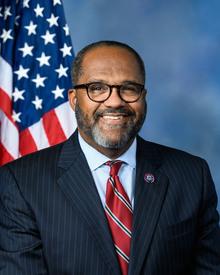
Official portrait of Troy A. Carter
DemocraticU.S. House · LA-2

Troy A. Carter

Louisiana · Official website · 202-225-6636
685
Positions recorded
119th Congress roll calls listing this member
9 of 685
Roll calls missed
Recorded "Not Voting" · House roll calls Jan 3, 2025 – Nov 12, 2026
35
Bills sponsored
119th Congress · Congress.gov
645
Bills cosponsored
119th Congress · Congress.gov

All figures are computed directly from the official House Clerk, senate.gov, and Congress.gov records for the 119th Congress. Methodology

Data last synced: votes Nov 17, 2026, 7:16 AM ET · bills Nov 17, 2026, 7:19 AM ET · floor remarks Nov 17, 2026, 8:56 AM ET · press releases Nov 17, 2026, 8:57 AM ET

119th CongressSponsored (35)Cosponsored (645)

H.Res. 550Original LGBTQIA+ Pride Month Resolution of 2025

Progress: Introduction / referral onlyLatest action: Sponsor introductory remarks on measure. (CR H3027-3028)
119th CongressPolicy area: Civil Rights and Liberties, Minority Issues
  • Original cosponsorJun 26, 2025
Official CRS summary
Official CRS summary (Introduced in House version) · Congress.gov(opens in a new tab)

This resolution expresses the sense of the House of Representatives that (1) lesbian, gay, bisexual, transgender, queer, intersex, and asexual (LGBTQIA+) rights are human rights and protected by the U.S. Constitution; (2) LGBTQIA+ Pride Month should be celebrated; and (3) all Americans should be treated equally regardless of sexual orientation, sex characteristics, or gender identity.

Introduced Jun 26, 2025
Latest action Jun 27, 2025Congress.gov(opens in a new tab)GovInfo action history(opens in a new tab)Status checked Nov 4, 2026Record permalink

H.Res. 549Expressing support for the designation of June 26 as "LGBTQI+ Equality Day".

Progress: Introduction / referral onlyLatest action: Referred to the House Committee on the Judiciary.
119th CongressPolicy area: Civil Rights and Liberties, Minority Issues
  • Original cosponsorJun 26, 2025
Official CRS summary
Official CRS summary (Introduced in House version) · Congress.gov(opens in a new tab)

This resolution expresses support for (1) equal rights and protections for all people, regardless of actual or perceived sexual orientation, gender identity, or sex characteristics; and (2) the designation of LGBTQI+ Equality Day to commemorate Supreme Court decisions handed down on June 26 in 2003, 2013, and 2015.

The resolution also acknowledges the need for further legislation to ensure that people in the United States are free from all forms of discrimination on the basis of actual or perceived sexual orientation, gender identity, or sex characteristics.

Introduced Jun 26, 2025
Latest action Jun 26, 2025Congress.gov(opens in a new tab)GovInfo action history(opens in a new tab)Status checked Nov 4, 2026Record permalink

H.Res. 543Recognizing the right to peacefully protest and condemning violence and authoritarian responses to expressions of dissent.

Progress: Introduction / referral onlyLatest action: Sponsor introductory remarks on measure. (CR H3021-3022)
119th CongressPolicy area: Civil Rights and Liberties, Minority Issues
  • Original cosponsorJun 25, 2025
Introduced Jun 25, 2025
Latest action Jun 27, 2025Congress.gov(opens in a new tab)GovInfo action history(opens in a new tab)Status checked Nov 4, 2026Record permalink

H.R. 4104Health Equity and Access under the Law for Immigrant Families Act of 2025

Progress: Introduction / referral onlyLatest action: Referred to the Committee on Energy and Commerce, and in addition to the Committee on Ways and Means, for a period to be subsequently determined by the Speaker, in each case for consideration of such provisions as fall within the jurisdiction of the committee concerned.
119th CongressPolicy area: Health
  • Original cosponsorJun 24, 2025
Introduced Jun 24, 2025
Latest action Jun 24, 2025Congress.gov(opens in a new tab)GovInfo action history(opens in a new tab)Status checked Nov 4, 2026Record permalink

H.R. 4103Break the Cycle of Violence Act

Progress: Introduction / referral onlyLatest action: Referred to the Committee on the Judiciary, and in addition to the Committee on Education and Workforce, for a period to be subsequently determined by the Speaker, in each case for consideration of such provisions as fall within the jurisdiction of the committee concerned.
119th CongressPolicy area: Crime and Law Enforcement
  • Original cosponsorJun 24, 2025
Official CRS summary
Official CRS summary (Introduced in House version) · Congress.gov(opens in a new tab)

This bill establishes federal grant programs and related entities to support violence intervention initiatives.

Specifically, the bill directs the Department of Health and Human Services (HHS) to award grants for coordinated community violence intervention initiatives in communities disproportionately impacted by homicides and community violence. HHS must also establish several related entities, including

  • an Office of Community Violence Intervention to administer programs and activities related to violence intervention;
  • the Community Violence Intervention Advisory Committee to advise and assist the office and HHS; and
  • the National Community Violence Response Center to provide training and technical assistance, coordinate research, and develop data collection policies.

Additionally, the bill directs the Department of Labor to award grants for job training and workforce programs in communities disproportionately affected by gun violence to connect youth ages 16 to 24 to in-demand occupations.

Introduced Jun 24, 2025
Latest action Jun 24, 2025Congress.gov(opens in a new tab)GovInfo action history(opens in a new tab)Status checked Nov 4, 2026Record permalink

H.R. 12Women’s Health Protection Act of 2025

Progress: Introduction / referral onlyLatest action: Referred to the Committee on Energy and Commerce, and in addition to the Committee on the Judiciary, for a period to be subsequently determined by the Speaker, in each case for consideration of such provisions as fall within the jurisdiction of the committee concerned.
119th CongressPolicy area: Health
  • Original cosponsorJun 24, 2025
Official CRS summary
Official CRS summary (Introduced in House version) · Congress.gov(opens in a new tab)

This bill prohibits governmental restrictions on the provision of, and access to, abortion services.

Before fetal viability, governments may not restrict providers from

  • using particular abortion procedures or drugs,
  • offering abortion services via telemedicine, or
  • immediately providing abortion services if delaying risks the patient's health.

Furthermore, governments may not require providers to

  • perform unnecessary medical procedures,
  • provide medically inaccurate information, or
  • comply with credentialing or other conditions that do not apply to providers who offer medically comparable services to abortions.

Additionally, governments may not require patients to make medically unnecessary in-person visits before receiving abortion services or disclose their reasons for obtaining services.

After fetal viability, governments may not restrict providers from performing abortions when necessary to protect a patient's life and health. The same provisions that apply to abortions before viability also apply to necessary abortions after viability. Additionally, states may authorize post-viability abortions in circumstances beyond those that the bill considers necessary.

Further, the bill recognizes an individual's right to interstate travel, including for abortion services.

The bill also prohibits governments from implementing measures that are similar to those restricted by the bill or that otherwise target and impede access to abortion services, unless the measure significantly advances the safety of abortion services or health of patients and cannot be achieved through less restrictive means.

The Department of Justice, individuals, or providers may sue states or government officials to enforce this bill, regardless of certain immunity that would otherwise apply.

Introduced Jun 24, 2025
Latest action Jun 24, 2025Congress.gov(opens in a new tab)GovInfo action history(opens in a new tab)Status checked Nov 4, 2026Record permalink

H.Con.Res. 38Directing the President pursuant to section 5(c) of the War Powers Resolution to remove United States Armed Forces from unauthorized hostilities in the Islamic Republic of Iran.

Progress: Other action recordedLatest action: Motion to reconsider laid on the table Agreed to without objection.
119th CongressPolicy area: International Affairs
  • CosponsorJun 23, 2025
Official CRS summary
Official CRS summary (Introduced in House version) · Congress.gov(opens in a new tab)

This concurrent resolution directs the President to terminate the use of U.S. Armed Forces from hostilities against Iran or any part of the Iranian government or military unless a declaration of war or authorization to use military force for such purpose has been enacted.

The resolution specifies that it shall not be construed to prevent the United States from defending itself from imminent attack.

Introduced Jun 23, 2025
Latest action Mar 5, 2026Congress.gov(opens in a new tab)GovInfo action history(opens in a new tab)Status checked Nov 4, 2026Record permalink

H.R. 979AM Radio for Every Vehicle Act of 2025

Progress: Passed / agreed in one chamberLatest action: Received in the Senate. Read twice. Placed on Senate Legislative Calendar under General Orders. Calendar No. 622.
119th CongressPolicy area: Science, Technology, Communications
  • CosponsorFeb 27, 2025
Official CRS summary
Official CRS summary (Introduced in House version) · Congress.gov(opens in a new tab)

This bill requires the Department of Transportation (DOT) to issue a rule requiring AM radio capabilities to be standard in all new passenger vehicles. (AM radio is often used to deliver emergency alerts and news and entertainment programming; some newer vehicles do not include AM equipment.)

Specifically, this bill applies to passenger vehicles (1) manufactured in the United States for sale in the United States, imported into the United States, or shipped in interstate commerce; and (2) manufactured after the rule's effective date. The rule must require all such vehicles to have devices that can receive signals and play content transmitted by AM stations or digital audio AM stations installed as standard equipment and made easily accessible to drivers.

Prior to the rule's effective date, manufacturers that do not include devices that can access AM radio as standard equipment (1) must inform purchasers of this fact through clear and conspicuous labeling, and (2) may not charge an additional or separate fee for AM radio access.

DOT may assess civil penalties for any violation of the rule. The Department of Justice may also bring a civil action to enjoin a violation.

The rule, including DOT’s authority to enforce it, must expire 10 years after the bill’s enactment.

Further, the Government Accountability Office must study and report on the dissemination of emergency alerts to the public, including by conducting an assessment of AM radio relative to other Integrated Public Alert and Warning System communication technologies.

Introduced Jun 23, 2025
Latest action Sep 16, 2026Congress.gov(opens in a new tab)GovInfo action history(opens in a new tab)Status checked Nov 17, 2026Record permalink

H.Res. 533Reaffirming the importance of the United States promoting the safety, health, and well-being of refugees and displaced persons in the United States and around the world.

Progress: Introduction / referral onlyLatest action: Referred to the Committee on Foreign Affairs, and in addition to the Committee on the Judiciary, for a period to be subsequently determined by the Speaker, in each case for consideration of such provisions as fall within the jurisdiction of the committee concerned.
119th CongressPolicy area: International Affairs
  • Original cosponsorJun 23, 2025
Introduced Jun 23, 2025
Latest action Jun 23, 2025Congress.gov(opens in a new tab)GovInfo action history(opens in a new tab)Status checked Nov 4, 2026Record permalink

H.R. 3971Domestic Workers Bill of Rights Act

Progress: Introduction / referral onlyLatest action: Referred to the Committee on Education and Workforce, and in addition to the Committees on House Administration, Energy and Commerce, Ways and Means, Oversight and Government Reform, and the Judiciary, for a period to be subsequently determined by the Speaker, in each case for consideration of such provisions as fall within the jurisdiction of the committee concerned.
119th CongressPolicy area: Labor and Employment
  • Original cosponsorJun 12, 2025
Introduced Jun 12, 2025
Latest action Jun 12, 2025Congress.gov(opens in a new tab)GovInfo action history(opens in a new tab)Status checked Nov 5, 2026Record permalink

H.Res. 509Expressing support for the designation of June 2025 as "Black Music Month".

Progress: Introduction / referral onlyLatest action: Referred to the House Committee on Education and Workforce.
119th CongressPolicy area: Arts, Culture, Religion
  • Original cosponsorJun 12, 2025
Introduced Jun 12, 2025
Latest action Jun 12, 2025Congress.gov(opens in a new tab)GovInfo action history(opens in a new tab)Status checked Nov 4, 2026Record permalink

H.R. 2290World War II Women's Memorial Location Act

Progress: Passed / agreed in one chamberLatest action: Received in the Senate and Read twice and referred to the Committee on Energy and Natural Resources.
119th CongressPolicy area: Public Lands and Natural Resources
  • CosponsorApr 9, 2025
Official CRS summary
Official CRS summary (Reported to House version) · Congress.gov(opens in a new tab)

This bill allows the commemorative work for women who worked on the home front during World War II to be located in either (1) the Reserve, an area that generally extends from the United States Capitol to the Lincoln Memorial, and from the White House to the Jefferson Memorial; or (2) the area just outside the Reserve, known as Area I. (This map shows the Reserve in red and Area I in yellow.)

Introduced Jun 11, 2025
Latest action Dec 10, 2025Congress.gov(opens in a new tab)GovInfo action history(opens in a new tab)Status checked Nov 4, 2026Record permalink

H.Res. 503Expressing support for the designation of June 11, 2025, as "World Franchise Day".

Progress: Introduction / referral onlyLatest action: Referred to the House Committee on Oversight and Government Reform.
119th CongressPolicy area: Commerce
  • Original cosponsorJun 11, 2025
Introduced Jun 11, 2025
Latest action Jun 11, 2025Congress.gov(opens in a new tab)GovInfo action history(opens in a new tab)Status checked Nov 5, 2026Record permalink

H.R. 3868Enhanced Background Checks Act of 2025

Progress: Introduction / referral onlyLatest action: Referred to the House Committee on the Judiciary.
119th CongressPolicy area: Crime and Law Enforcement
  • Original cosponsorJun 10, 2025
Official CRS summary
Official CRS summary (Introduced in House version) · Congress.gov(opens in a new tab)

This bill establishes more stringent background check requirements for proposed firearm transfers from a federal firearms licensee (e.g., a licensed gun dealer) to an unlicensed person.

Specifically, it increases the amount of time, from 3 business days to a minimum of 10 business days, that a federal firearms licensee must wait to receive a completed background check prior to transferring a firearm to an unlicensed person. (This type of transaction is often referred to as a default proceed transaction.)

If a submitted background check remains incomplete after 10 business days, then the prospective purchaser may submit a petition for a final firearms eligibility determination. If an additional 10 days elapse without a final determination, then the federal firearms licensee may transfer the firearm to the prospective purchaser.

The Government Accountability Office must report on the extent to which the changes have prevented firearms transfers to prohibited persons.

The Federal Bureau of Investigation must report on the number of petitions it receives for final federal firearms determinations.

The Department of Justice, in consultation with the National Resource Center on Domestic Violence and Firearms, must report on further amendments to the background check process that would likely reduce the risk of death or great bodily harm to victims of domestic violence, domestic abuse, dating partner violence, sexual assault, and stalking.

Introduced Jun 10, 2025
Latest action Jun 10, 2025Congress.gov(opens in a new tab)GovInfo action history(opens in a new tab)Status checked Nov 5, 2026Record permalink

H.R. 2048Metastatic Breast Cancer Access to Care Act

Progress: Introduction / referral onlyLatest action: Referred to the House Committee on Ways and Means.
119th CongressPolicy area: Social Welfare
  • CosponsorJun 24, 2025
Official CRS summary
Official CRS summary (Introduced in House version) · Congress.gov(opens in a new tab)

This bill expedites payment of Social Security Disability Insurance (SSDI) benefits and eligibility for Medicare coverage for those with metastatic breast cancer (i.e., breast cancer that has spread to other sites in the body).

Specifically, the bill eliminates the 5-month waiting period for SSDI benefits and the subsequent 24-month waiting period for Medicare coverage for individuals with metastatic breast cancer. Under current law, individuals generally must wait 5 months after the onset of disability to begin receiving SSDI benefits and an additional 24 months to become eligible for Medicare.

Introduced Jun 10, 2025
Latest action Mar 11, 2025Congress.gov(opens in a new tab)GovInfo action history(opens in a new tab)Status checked Nov 4, 2026Record permalink

H.R. 18Bipartisan Background Checks Act of 2025

Progress: Introduction / referral onlyLatest action: Referred to the House Committee on the Judiciary.
119th CongressPolicy area: Crime and Law Enforcement
  • Original cosponsorJun 10, 2025
Official CRS summary
Official CRS summary (Introduced in House version) · Congress.gov(opens in a new tab)

This bill establishes new background check requirements for firearm transfers between private parties (i.e., unlicensed individuals).

Specifically, it prohibits a firearm transfer between private parties unless a licensed gun dealer, manufacturer, or importer first takes possession of the firearm to conduct a background check.

The prohibition does not apply to certain firearm transfers or exchanges, such as a gift between spouses.

Introduced Jun 10, 2025
Latest action Jun 10, 2025Congress.gov(opens in a new tab)GovInfo action history(opens in a new tab)Status checked Nov 5, 2026Record permalink

H.R. 3842To amend title 46, United States Code, to include the replacement or purchase of additional cargo handling equipment as an eligible purpose for Capital Construction Funds, and for other purposes.

Progress: Other action recordedLatest action: Referred to the Subcommittee on Coast Guard and Maritime Transportation.
119th CongressPolicy area: Transportation and Public Works
  • Original cosponsorJun 9, 2025
Introduced Jun 9, 2025
Latest action Jun 10, 2025Congress.gov(opens in a new tab)GovInfo action history(opens in a new tab)Status checked Nov 5, 2026Record permalink

H.R. 3784Farmers Feeding America Act of 2025

Progress: Introduction / referral onlyLatest action: Referred to the House Committee on Agriculture.
119th CongressPolicy area: Agriculture and Food
  • Original cosponsorJun 5, 2025
Official CRS summary
Official CRS summary (Introduced in House version) · Congress.gov(opens in a new tab)

This bill reauthorizes The Emergency Food Assistance Program (TEFAP), increases funding for the program, and provides additional delivery options for geographically isolated states (i.e., Hawaii, Alaska, Puerto Rico, the Northern Mariana Islands, the U.S. Virgin Islands, and Guam).

TEFAP is a federal program that helps supplement the diets of people with low income by providing them with emergency food assistance at no cost. Through TEFAP, the Department of Agriculture (USDA) purchases a variety of commodities and makes those food products (e.g., canned, frozen, dried, and fresh fruits and vegetables, eggs, meat, dairy, and whole-grain and enriched grain products) available to state distributing agencies.

The bill increases funding for purchasing commodities under the program.

Further, the bill directs USDA to coordinate with geographically isolated states to (1) establish alternative delivery options for allocated commodities, and (2) allow for the states to order commodities through the USDA Department of Defense Fresh Fruit and Vegetable Program.

USDA may also provide geographically isolated states the ability to directly purchase domestically grown food in lieu of receiving a portion of the commodities. Under this option, USDA may distribute as cash to the state up to 20% of the cash value of the commodities that are allocated to the state under TEFAP.

Further, USDA may consider additional factors beyond lowest price in determining winning bids for contracts for fresh produce packages (including product variety and transportation distance).
Introduced Jun 5, 2025
Latest action Jun 5, 2025Congress.gov(opens in a new tab)GovInfo action history(opens in a new tab)Status checked Nov 5, 2026Record permalink

H.R. 793SNAP Benefits Fairness Act of 2025

Progress: Other action recordedLatest action: Referred to the Subcommittee on Nutrition and Foreign Agriculture.
119th CongressPolicy area: Agriculture and Food
  • CosponsorJun 5, 2025
Official CRS summary
Official CRS summary (Introduced in House version) · Congress.gov(opens in a new tab)

This bill repeals the shelter deduction cap for the Supplemental Nutrition Assistance Program (SNAP) benefit, thereby allowing a household to deduct all allowable housing expenses (e.g., rent or mortgage, electricity, and water costs) that exceed 50% of a household's income after other deductions when calculating net income to determine SNAP benefits.

Under current law, the shelter deduction is capped (unless at least one household member is an elderly or disabled individual), and the cap is adjusted annually for inflation. In FY2025, the shelter deduction is capped at $712 for households in the contiguous 48 states and the District of Columbia.

Introduced Jun 5, 2025
Latest action Feb 28, 2025Congress.gov(opens in a new tab)GovInfo action history(opens in a new tab)Status checked Nov 5, 2026Record permalink

H.R. 3340Modernizing Access to Our Public Oceans Act

Progress: Other action recordedLatest action: Placed on the Union Calendar, Calendar No. 438.
119th CongressPolicy area: Public Lands and Natural Resources
  • CosponsorJun 4, 2025
Official CRS summary
Official CRS summary (Reported to House version) · Congress.gov(opens in a new tab)

This bill directs the National Oceanic and Atmospheric Administration (NOAA) to publish geospatial data related to public recreational use of federal waterways (e.g., boating and fishing).

Under the bill, NOAA must consult with relevant stakeholders (including state and local governments, Indian tribes, and Native Hawaiian organizations) to develop and adopt standards for the coordination and dissemination of geospatial data relating to fishing restrictions and recreational vessels' use of federal waterways, including the exclusive economic zone of the United States (EEZ). (The EEZ generally includes waters between 3 and 200 miles seaward from the U.S. coastline.)

Within four years after the bill is enacted, NOAA must provide geographic information system data on a public website that identifies and describes the locations where and conditions under which certain recreational activities are restricted in federal waterways. Specifically, the website must identify (1) locations where fishing restrictions are imposed, (2) areas in the EEZ with restrictions on specified recreational vessel types, and (3) federally protected areas (e.g., National Marine Sanctuaries). NOAA must also continue to provide digitized navigation information related to the EEZ and make the information available on the website to the extent practicable.

The bill allows NOAA to coordinate and partner with nonfederal entities to carry out this bill. It also directs NOAA to work with other federal agencies to ensure compatibility and interoperability among federal databases with respect to collecting and disseminating geospatial data related to the public outdoor recreational use of the EEZ.

Introduced Jun 4, 2025
Latest action Feb 23, 2026Congress.gov(opens in a new tab)GovInfo action history(opens in a new tab)Status checked Nov 5, 2026Record permalink

H.R. 2913Ukraine Support Act

Progress: Passed / agreed in one chamberLatest action: Read the second time. Placed on Senate Legislative Calendar under General Orders. Calendar No. 462.
119th CongressPolicy area: International Affairs
  • CosponsorApr 21, 2025
Official CRS summary
Official CRS summary (Introduced in House version) · Congress.gov(opens in a new tab)

This bill addresses the war between Russia and Ukraine by (1) providing assistance to Ukraine and certain European countries, and (2) establishing penalties for Russia and certain foreign persons (individuals and entities).

Assistance provided under the bill includes

  • establishing a reconstruction trust fund for Ukraine,
  • requiring the U.S. International Development Finance Corporation to prioritize support for Ukraine,
  • reviving the President’s authority to lend or lease defense articles to Ukraine or Eastern European countries affected by the war through FY2028,
  • extending through 2027 the Department of Defense’s authority to provide security assistance and intelligence support to Ukrainian forces, and
  • requiring the Department of State to take certain actions to build the capacity of the militaries and border forces of Baltic countries.

Additionally, the President must periodically determine if the Russian government or any proxy is waging a war of aggression against Ukraine, refusing to sincerely negotiate a peace agreement with Ukraine, or acting in violation of a negotiated peace agreement with Ukraine. If the President makes such a determination, the President must impose certain penalties including

  • property- and visa-blocking sanctions on certain Russian officials;
  • property-blocking sanctions on Russian companies in the oil and mining sectors, Rosatom (Russia's state-owned nuclear enterprise) and its subsidiaries, and certain Russian financial institutions; and
  • increasing the rate of duty on all goods and services imported from Russia into the United States to at least 500% relative to the value of such goods and services.
Introduced Jun 4, 2025
Latest action Jul 20, 2026Congress.gov(opens in a new tab)GovInfo action history(opens in a new tab)Status checked Nov 4, 2026Record permalink

H.Res. 473Calling for the urgent delivery and disbursement of humanitarian aid to address the needs of civilians in Gaza.

Progress: Introduction / referral onlyLatest action: Referred to the House Committee on Foreign Affairs.
119th CongressPolicy area: International Affairs
  • Original cosponsorJun 4, 2025
Official CRS summary
Official CRS summary (Introduced in House version) · Congress.gov(opens in a new tab)

This resolution expresses the House of Representatives' grave concern with (1) the humanitarian crisis and acute suffering of Palestinian civilians in Gaza, and (2) the suffering of the hostages and hostage families.

The resolution also calls on the White House, the Department of State, and other relevant federal agencies to use all available diplomatic tools to bring about the release of the hostages, the disbursement of food and humanitarian aid to Palestinian civilians, and a durable end to the Gaza conflict.

Introduced Jun 4, 2025
Latest action Jun 4, 2025Congress.gov(opens in a new tab)GovInfo action history(opens in a new tab)Status checked Nov 5, 2026Record permalink

H.Res. 465Expressing the sense of the House of Representatives that the Congress should enact the Older Americans Bill of Rights to establish that older Americans should have the right to live with dignity and with independence.

Progress: Introduction / referral onlyLatest action: Referred to the Committee on Education and Workforce, and in addition to the Committees on Energy and Commerce, and Ways and Means, for a period to be subsequently determined by the Speaker, in each case for consideration of such provisions as fall within the jurisdiction of the committee concerned.
119th CongressPolicy area: Social Welfare
  • Original cosponsorJun 3, 2025
Introduced Jun 3, 2025
Latest action Jun 3, 2025Congress.gov(opens in a new tab)GovInfo action history(opens in a new tab)Status checked Nov 5, 2026Record permalink

H.R. 1589American Dream and Promise Act of 2025

Progress: Introduction / referral onlyLatest action: Sponsor introductory remarks on measure. (CR H884)
119th CongressPolicy area: Immigration
  • Original cosponsorFeb 26, 2025
Official CRS summary
Official CRS summary (Introduced in House version) · Congress.gov(opens in a new tab)

This bill provides certain non-U.S. nationals (aliens under federal law) with a path to receive permanent resident status and contains other immigration-related provisions.

The Department of Homeland Security (DHS) or the Department of Justice (DOJ) shall provide conditional permanent resident status for 10 years to a qualifying individual who entered the United States as a minor and (1) is deportable or inadmissible, (2) has deferred enforced departure (DED) status or temporary protected status (TPS), or (3) is the child of certain classes of nonimmigrants. The bill imposes various qualifying requirements, such as the individual being continuously physically present in the United States since January 1, 2021, passing a background check, and being enrolled in or having completed certain educational programs.

DHS shall remove the conditions placed on permanent resident status granted under this bill if the individual applies and meets certain requirements, such as completing certain programs at an educational institution, serving in the military, or being employed.

Furthermore, DHS or DOJ shall provide lawful permanent resident status to certain individuals who had TPS, were eligible for TPS, or were eligible for DED status on certain dates. Such individuals must meet certain requirements and apply for such status within three years of this bill's enactment.

This bill also repeals a restriction that bars a state from providing higher education benefits to undocumented individuals unless those benefits are available to all U.S. nationals without regard to residency in the state.

Introduced May 29, 2025
Latest action Feb 27, 2025Congress.gov(opens in a new tab)GovInfo action history(opens in a new tab)Status checked Nov 4, 2026Record permalink

H.Res. 446Expressing support for the recognition of July 3 through July 10, 2025, as "National Extreme Heat Awareness Week", a national event educating the public on the dangers of extreme heat and the risks of extreme heat events to public safety, infrastructure, agriculture, and much more, and supporting the goals of a National Extreme Heat Awareness Week.

Progress: Introduction / referral onlyLatest action: Referred to the Committee on Energy and Commerce, and in addition to the Committee on Science, Space, and Technology, for a period to be subsequently determined by the Speaker, in each case for consideration of such provisions as fall within the jurisdiction of the committee concerned.
119th CongressPolicy area: Emergency Management
  • CosponsorMay 29, 2025
Introduced May 29, 2025
Latest action May 23, 2025Congress.gov(opens in a new tab)GovInfo action history(opens in a new tab)Status checked Nov 5, 2026Record permalink

H.R. 3585Capacity Building for Business Districts Pilot Program Act of 2025

Progress: Other action recordedLatest action: Referred to the Subcommittee on Economic Development, Public Buildings, and Emergency Management.
119th CongressPolicy area: Commerce
  • Original cosponsorMay 23, 2025
Introduced May 23, 2025
Latest action May 24, 2025Congress.gov(opens in a new tab)GovInfo action history(opens in a new tab)Status checked Nov 5, 2026Record permalink

H.R. 3506Healthy Food Financing Initiative Reauthorization Act of 2025

Progress: Introduction / referral onlyLatest action: Referred to the House Committee on Agriculture.
119th CongressPolicy area: Agriculture and Food
  • CosponsorMay 23, 2025
Official CRS summary
Official CRS summary (Introduced in House version) · Congress.gov(opens in a new tab)

This bill reauthorizes and provides specified funds for the Department of Agriculture's Healthy Food Financing Initiative (HFFI) through FY2030 and for each fiscal year thereafter.

As background, HFFI provides loans, grants, and technical assistance resources to eligible healthy food retailers and food supply chain enterprises to improve and support access to fresh, healthy, and affordable food in urban and rural underserved communities.

Introduced May 23, 2025
Latest action May 20, 2025Congress.gov(opens in a new tab)GovInfo action history(opens in a new tab)Status checked Nov 5, 2026Record permalink

H.Res. 444Calling upon all Americans on this Memorial Day, 2025, to honor the men and women of the Armed Forces who have died in the pursuit of freedom and peace.

Progress: Introduction / referral onlyLatest action: Referred to the House Committee on Oversight and Government Reform.
119th CongressPolicy area: Armed Forces and National Security
  • Original cosponsorMay 23, 2025
Introduced May 23, 2025
Latest action May 23, 2025Congress.gov(opens in a new tab)GovInfo action history(opens in a new tab)Status checked Nov 5, 2026Record permalink

H.R. 3513Supreme Court Ethics, Recusal, and Transparency Act of 2025

Progress: Introduction / referral onlyLatest action: Referred to the House Committee on the Judiciary.
119th CongressPolicy area: Law
  • CosponsorAug 10, 2026
Official CRS summary
Official CRS summary (Introduced in House version) · Congress.gov(opens in a new tab)

This bill makes various changes related to the ethical standards, financial disclosure requirements, and recusal requirements that apply to Supreme Court Justices.

Among the changes, the bill requires the Supreme Court to

  • adopt a code of conduct for Justices and establish procedures to receive and investigate complaints of judicial misconduct;
  • adopt rules governing the disclosure of gifts, income, or reimbursements received by the Justices and law clerks that are at least as rigorous as the House and Senate disclosure rules; and
  • establish procedural rules requiring each party or amicus to disclose any gift, income, or reimbursement provided to Justices.

Additionally, the bill

  • expands the circumstances under which a Justice or judge must be disqualified; and
  • requires the Supreme Court and the Judicial Conference to establish procedural rules for prohibiting the filing of or striking an amicus brief that would result in the disqualification of a Justice, judge, or magistrate judge.
Introduced May 20, 2025
Latest action May 20, 2025Congress.gov(opens in a new tab)GovInfo action history(opens in a new tab)Status checked Nov 4, 2026Record permalink

H.R. 3498Henrietta Lacks Congressional Gold Medal Act

Progress: Introduction / referral onlyLatest action: Referred to the Committee on Financial Services, and in addition to the Committee on House Administration, for a period to be subsequently determined by the Speaker, in each case for consideration of such provisions as fall within the jurisdiction of the committee concerned.
119th CongressPolicy area: Health
  • Original cosponsorMay 19, 2025
Official CRS summary
Official CRS summary (Introduced in House version) · Congress.gov(opens in a new tab)

This bill awards posthumously a Congressional Gold Medal in commemoration of Henrietta Lacks, in recognition of the contributions of her immortal cells to global health, scientific research, quality of life, and patients' rights.

Introduced May 19, 2025
Latest action May 19, 2025Congress.gov(opens in a new tab)GovInfo action history(opens in a new tab)Status checked Nov 5, 2026Record permalink

H.R. 3454Protecting Our Constitution and Communities Act

Progress: Introduction / referral onlyLatest action: Referred to the Committee on the Budget, and in addition to the Committee on Rules, for a period to be subsequently determined by the Speaker, in each case for consideration of such provisions as fall within the jurisdiction of the committee concerned.
119th CongressPolicy area: Economics and Public Finance
  • Original cosponsorMay 15, 2025
Introduced May 15, 2025
Latest action May 15, 2025Congress.gov(opens in a new tab)GovInfo action history(opens in a new tab)Status checked Nov 5, 2026Record permalink

H.R. 3453Empower Charter School Educators to Lead Act

Progress: Other action recordedLatest action: Placed on the Union Calendar, Calendar No. 379.
119th CongressPolicy area: Education
  • CosponsorJun 10, 2025
Official CRS summary
Official CRS summary (Reported to House version) · Congress.gov(opens in a new tab)

This bill makes changes to the Charter Schools Program (CSP), which authorizes competitive grants to state entities (e.g., state educational agencies and state charter school boards) to support high-quality charter schools.

Specifically, the bill allows state entities to use up to 5% of their CSP grant funds to make pre-charter planning subgrants to certain prospective charter applicants.

The bill specifies that state entities may also (1) fund a revolving loan fund or similar mechanisms for the expenses of eligible applicants prior to receiving CSP subgrants, and (2) provide assistance to eligible applicants in locating and accessing a charter school facility.

Under the current CSP, state entities must use at least 7% of their CSP grant funds to provide technical assistance to eligible applicants and authorized public chartering agencies. The bill instead allows state entities to use not more than 10% of these funds for technical assistance.

Introduced May 15, 2025
Latest action Jan 13, 2026Congress.gov(opens in a new tab)GovInfo action history(opens in a new tab)Status checked Nov 17, 2026Record permalink

H.R. 3449Stronger Communities through Better Transit Act

Progress: Other action recordedLatest action: Referred to the Subcommittee on Highways and Transit.
119th CongressPolicy area: Transportation and Public Works
  • Original cosponsorMay 15, 2025
Official CRS summary
Official CRS summary (Introduced in House version) · Congress.gov(opens in a new tab)

This bill requires the Department of Transportation (DOT) to establish a grant program to support operating projects for public transportation and related service improvements, particularly in underserved communities and areas of persistent poverty.

Specifically, the bill requires DOT to allocate funding under the program for urbanized areas, states, and Indian tribes that are recipients of funds under either the Federal Transit Administration's (FTA's) Urbanized Area Formula Funding program or Formula Grants for Rural Areas program. Eligible recipients may use funding for operating costs associated with projects that improve public transportation service for transit-dependent populations and support increased transit ridership (e.g., service expansion, information technology enhancements, and workforce development). DOT must apportion the funding so that recipients receive funds that are proportional to their share of operating costs.

The bill also provides for an increased federal cost share for operating assistance for projects or programs carried out in areas of persistent poverty or underserved communities.

DOT must set up a multimodal access measurement interface for public agencies to aid transit agencies in determining and reporting on access to jobs and essential services.

A grant recipient must (1) report specific information to the FTA for inclusion in the National Transit Database, and (2) survey transit riders and non-riding residents regarding transit service improvements.

Further, the bill expands the purposes of the public transportation programs to include supporting public transportation's role in combating climate change through growing/retaining transit ridership.

Introduced May 15, 2025
Latest action May 16, 2025Congress.gov(opens in a new tab)GovInfo action history(opens in a new tab)Status checked Nov 5, 2026Record permalink

H.R. 3442SNAP Administrator Retention Act of 2025

Progress: Introduction / referral onlyLatest action: Referred to the House Committee on Agriculture.
119th CongressPolicy area: Agriculture and Food
  • Original cosponsorMay 15, 2025
Official CRS summary
Official CRS summary (Introduced in House version) · Congress.gov(opens in a new tab)

This bill directs the Food and Nutrition Service (FNS) to pay Supplemental Nutrition Assistance Program (SNAP) state agencies for 100% of SNAP administrative personnel costs. The bill also requires that state SNAP agency administrators be paid at least the same amount as federal employees. (Under current law, FNS generally pays 50% of a state's administrative costs for SNAP.)

Specifically, FNS must pay a state agency for 100% of all SNAP administrative personnel costs that are part of an FNS-approved state agency personnel wage plan. This must include all costs associated with hiring and training new employees, maintaining those personnel costs, and complying with wage standards. The state agency must use these funds (1) to supplement, not supplant, nonfederal funds used for existing administrative personnel costs; and (2) for existing or additional full-time positions that are above the number of positions that were held in FY2024.

The bill also requires that the wage standards for SNAP state agency administrators be (1) at least the same amount as the General Schedule (GS) pay rate for federal employees; and (2) updated annually based on any increase in the GS pay rate, including locality adjustments.

Introduced May 15, 2025
Latest action May 15, 2025Congress.gov(opens in a new tab)GovInfo action history(opens in a new tab)Status checked Nov 5, 2026Record permalink

H.R. 2189To modernize Federal firearms laws to account for advancements in technology and less-than-lethal weapons, and for other purposes.

Progress: Passed / agreed in one chamberLatest action: Received in the Senate.
119th CongressPolicy area: Crime and Law Enforcement
  • CosponsorOct 24, 2025
Official CRS summary
Official CRS summary (Reported to House version) · Congress.gov(opens in a new tab)

This bill removes less-than-lethal projectile devices (e.g., certain TASERs) from regulation under the Gun Control Act.

The term less-than-lethal projectile device means a device that (1) is not designed or intended to expel (and may not be readily converted to discharge) commonly used ammunition or projectiles exceeding a velocity of 500 feet per second; (2) is designed and intended to be used in a manner not likely to cause death or serious bodily injury; and (3) does not accept (and cannot be readily modified to accept) an ammunition feeding device.

The bill also requires the Bureau of Alcohol, Tobacco, Firearms and Explosives to determine whether a device satisfies the definition of a less-than-lethal projectile device within 90 days of a request.

Introduced May 15, 2025
Latest action Feb 24, 2026Congress.gov(opens in a new tab)GovInfo action history(opens in a new tab)Status checked Nov 4, 2026Record permalink

H.R. 1695Guarding Readiness Resources Act

Progress: Introduction / referral onlyLatest action: Referred to the House Committee on Armed Services.
119th CongressPolicy area: Armed Forces and National Security
  • CosponsorJul 23, 2025
Official CRS summary
Official CRS summary (Introduced in House version) · Congress.gov(opens in a new tab)

This bill modifies the treatment of funds received by the National Guard Bureau as a reimbursement from a state or other U.S. territory (e.g., Guam) for the use of military property.

Specifically, the funds must be credited to (1) the appropriation, fund, or account used in incurring the obligation; or (2) an appropriation, fund, or account currently available for the purposes of which the expenditures were made. Further, the funds may only be used by the Department of Defense for the repair, maintenance, replacement, or other similar functions related directly to assets used by National Guard units while operating under state active duty status.

Introduced May 15, 2025
Latest action Feb 27, 2025Congress.gov(opens in a new tab)GovInfo action history(opens in a new tab)Status checked Nov 4, 2026Record permalink

H.R. 3405Suspending Transfer of Property for Improper Trump Use Act

Progress: Introduction / referral onlyLatest action: Referred to the Committee on Foreign Affairs, and in addition to the Committee on Oversight and Government Reform, for a period to be subsequently determined by the Speaker, in each case for consideration of such provisions as fall within the jurisdiction of the committee concerned.
119th CongressPolicy area: International Affairs
  • Original cosponsorMay 14, 2025
Introduced May 14, 2025
Latest action May 14, 2025Congress.gov(opens in a new tab)GovInfo action history(opens in a new tab)Status checked Nov 5, 2026Record permalink

H.R. 3398Aaron Salter, Jr., Responsible Body Armor Possession Act

Progress: Introduction / referral onlyLatest action: Referred to the House Committee on the Judiciary.
119th CongressPolicy area: Crime and Law Enforcement
  • Original cosponsorMay 14, 2025
Official CRS summary
Official CRS summary (Introduced in House version) · Congress.gov(opens in a new tab)

This bill prohibits under federal law the purchase, ownership, or possession of enhanced body armor by civilians. The term enhanced body armor means body armor, including a helmet or shield, with a ballistic resistance that meets or exceeds the ballistic performance standard of RF1 armor, as determined using the National Institute of Justice standard in effect at the time the person purchases, owns, or possesses the armor.

Violations are subject to a fine, imprisonment of up to five years, or both.

The bill's prohibition does not apply to enhanced body armor that was lawfully possessed before the bill's effective date.

Introduced May 14, 2025
Latest action May 14, 2025Congress.gov(opens in a new tab)GovInfo action history(opens in a new tab)Status checked Nov 5, 2026Record permalink